 "
/>
"
/>

Anuradha Kapur’s Virasat Reimagines Mahesh Elkunchwar’s Wada Trilogy
A visceral, three-hour tour de force, Virasat distills Mahesh Elkunchwar’s iconic Wada Trilogy into a poignant saga of a feudal family decaying from within. The production serves as a powerful allegory that resonates strongly with contemporary issues, encapsulating the gradual erosion of human values and environmental stability that continues to shape our world today.
Background and Overview
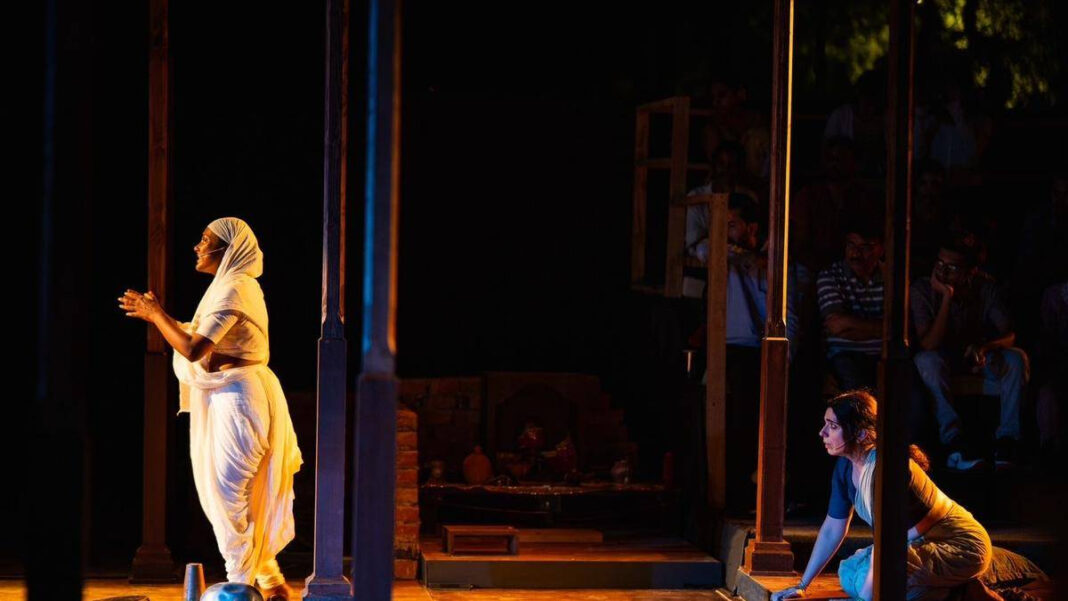
Directed by Anuradha Kapur, Virasat reimagines her earlier 2013 production through a hyperrealistic lens, set against the backdrop of New Delhi’s Sunder Nursery. The scenographer, Deepan Sivaraman, crafts a living, breathing landscape, stepping away from the traditional stage and immersing the audience within the lush biodiversity of a beautifully restored Mughal-era park. This innovative approach allows the audience to witness a family struggling with the slow loss of their land and heritage, heightening the contrast between the rich surroundings and the family’s internal struggles.
Key Developments
Long-time theatergoers recall the earlier staging in 2013 as a critically acclaimed experience that effectively condensed Elkunchwar’s sprawling trilogy into a single evening. However, the recent performance at Sunder Nursery breaks free from institutional constraints, commissioned by the Kiran Nadar Museum of Art. With a refreshed cast, the production shifts away from its experimental roots, establishing a spatial dramaturgy in which the environment narrates its own story. On the first performance night, rain interrupted the show, but the subsequent evening saw the simulated birdsong harmonizing with the natural sounds of Delhi’s evening parakeets, enhancing the immersion with the nostalgic aroma of cooking fires drifting into the audience.
In this immersive wada—a sprawling ancestral mansion—the audience is positioned on all four sides, mere feet away from the actors, placing them firmly within the intimate domestic sphere of the Deshpande family. This design element transforms the spectators into uninvited guests, offering a sense of entrapment as the story unfolds before them.
Detailed Examination of the Narrative
The play initiates in the 1970s, in Dharangaon, following the cremation of the Deshpande patriarch, Tatyaji. This event ignites bitter tensions within the household, as the family struggles with feelings of resentment and the fear of loss. Despite their familial stature, they lack financial liquidity even to cover the funeral rites. Bhaskar, the eldest son, becomes increasingly bitter as he is left to manage the crumbling estate, while his younger brother, Sudhir, moves to Mumbai in search of opportunity.
As the brothers clash over inheritance and the family gold, their sister Prabha yearns for an education she cannot attain. The women of the household are confined to the kitchen, trapped in the monotony of domesticity, while the men mask their moral decay under the guise of feudal prosperity. A particularly evocative scene features Bhaskar attempting to bribe his wife with ancestral gold jewelry, symbolizing the disintegration of feudal morality where material greed supersedes familial bonds.
As the feudal structure continues to collapse, Bhaskar’s son Parag inherits the burdens of the land, aligning himself with market forces that exploit his vulnerabilities. Instead of transcending the oppressive legacy, Parag gradually succumbs to it, yet his character offers a glimmer of hope that humanity may endure through adversity. His wife, Nandini, represents the emergence of a modern, self-actualized Indian woman who actively challenges the stifling norms of their household.
Contextual Analysis
Through the generational saga of the Deshpande family stretching into the 1990s, Anuradha Kapur maps the painful transformation of post-Independence India. The decline of this single rural Brahmin household serves as a microcosm for broader societal issues, including the erosion of feudal systems, agrarian distress, environmental crises, and the rise of predatory capitalism in concert with entrenched patriarchy.
Rather than presenting standard heroes, the narrative weaves together domestic disputes and rhythmic routines, resembling an epic that captures the essence of everyday life. The mundane tasks of bathing, changing sacred threads, or draping saris seamlessly connect with the desperate attempt to cleanse the family’s impending moral corruption. The household itself becomes a black hole that consumes individual aspirations, illustrating the relentless grip of patriarchy on personal ambitions.
Kapur ensures that profound truths are not merely broadcasted but are discovered in the subtleties of the performance. The cast embodies the text so convincingly that it invites audiences to unravel the deeper meanings within the pauses. Characters like Bhaskar, portrayed with precision by Yash Yogi, cling to relics of a bygone era, while Himanshu Kohli’s Sudhir encapsulates the dilemmas of those seeking a better life away from their roots. Sajida Saji powerfully portrays the complex plight of women conditioned to defend their oppressive environments due to their lack of alternatives. The younger generation, represented by Ajit Singh Palwat’s Parag, becomes increasingly transactional as capitalist values infiltrate their once-vibrant village, with escalating agrarian distress depicted both as a physical reality and existential challenge. Uma Katju’s Prabha expresses the gradual diminishment of spirit experienced by women constrained by these societal norms.
Statements and Reactions
While the characters struggle with their identities and their environment, the production faces some linguistic challenges, as the cast’s dialogue transitions away from the distinct Maharashtrian cadence, replacing it with North Indian dialects, occasionally pulling the audience from the meticulously constructed setting of Vidarbha.
As the narrative compresses Elkunchwar’s trilogy, it sometimes leads to abrupt transitions that hinder the flow. The final act adopts a stylistic shift toward the symbolic and philosophical, diverging from the grounded storytelling established earlier in the production.
Conclusion
Despite these minor challenges, Virasat remains an unmissable portrayal of contemporary relevance, presenting a hypnotic reflection of our societal structures and values. With its immersive environment and compelling storytelling, it serves as a poignant commentary that resonates well beyond the confines of the stage, inviting viewers to engage deeply with the unfolding story of the Deshpande family and, by extension, the nation.