 "
/>
"
/>

A Young Sikh Artiste’s Kathak Journey
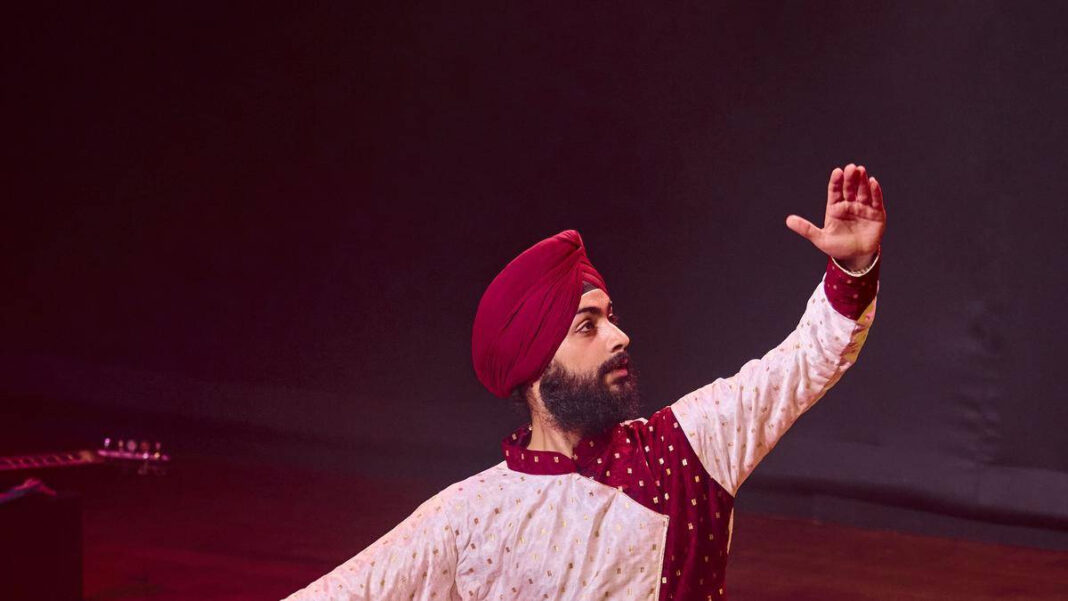
The first thing that captures one’s attention is the rhythmic jingles of Taranjot Singh’s ghungroos, the traditional ankle bells associated with Indian classical dance. Standing at 21, this young Sikh from Ludhiana, adorned in a turban, passionately navigates through the intricate tatkar (footwork), chakars (turns), and tukras (dance patterns) of Kathak. His journey as a dancer transcends mere performance; it resonates deeply with his identity and the aspirations of his family.
Background or Overview
In a society where traditional expectations often dictate personal choices, Taranjot’s pursuit of Kathak—as opposed to popular Punjabi dance forms like Bhangra—carries an unexpected significance. While Indian classical dance has been graced by esteemed male performers such as Pt. Birju Maharaj, Guru Kelucharan Mohapatra, and Kalamandalam Gopi, Taranjot broke through the societal norms that often limit men in the arts, particularly in his community.
The foundation of his journey can be attributed to one pivotal figure in his life—his mother. A trained classical singer, she fervently wished for a daughter to carry forward her artistic legacy. Fate intervened as she raised two sons, and years later, her dreams found a realization through Taranjot.
Detailed Explanation of the Main Event
Taranjot’s formal training began under Pulkit Jain, a disciple of the eminent Jaipur Gharana exponent, Pt. Rajendra Gangani. His path, however, has not been devoid of challenges; facing skepticism from neighbors and criticism on social media was part of his struggle. The COVID-19 pandemic also placed his early performance opportunities on hold until he participated in the reality show Dance Deewane Season 4 in 2024. This national exposure changed the conversation surrounding him, yet his passion for dance remains unaltered. Today, Taranjot graces the stage proudly in his turban, illustrating a narrative that intertwines his mother’s dream and his quest for self-expression.
Key Developments
His recent performance at Mumbai’s Nita Mukesh Ambani Cultural Centre showcased Nrityam by Taranjot Singh & Ensemble, where he brought the vibrant rhythms, intricate footwork, and expressive grace of the Jaipur gharana to life. Taranjot’s artistic journey is multifaceted; initially starting with hip-hop, Bhangra, and contemporary dance, he found his true calling in Kathak. The pivotal challenge of convincing his father, particularly in a patriarchal Sikh household, reflects the societal hurdles he has faced. Taranjot acknowledged, “Coming from a Sikh family, the idea of a son dancing in ghungroos was a huge taboo—and perhaps it still is.” Despite those challenges, Taranjot credits his mother’s unwavering support as a driving force behind his pursuit.
Practicing six to ten hours a day was both physically and emotionally demanding, but he describes those long hours as worthwhile. “At one point, it reached the 10-hour mark,” he recounted, highlighting the intensity of his training. However, the emotional toll accompanying his decision to delve into Kathak was notable, as he often faced derogatory comments about his appearance and choices, leading to self-doubt while battling societal expectations.
Context
Despite being introduced as “India’s first Sikh Kathak artiste” on national television, Taranjot is aware that he may not be the sole performer of his community in this art form. His immersion in reality television allowed him to see the value of hard work behind artistic success. Taranjot fondly recalled the dedication of esteemed actress and dancer Madhuri Dixit during the show, which reinforced his belief that there is always space for improvement, no matter one’s current achievements.
Statements and Reactions
Reflecting on his experience, Taranjot stated, “Many would comment on how effeminate I looked. It was not easy dealing with it. Instead of encouragement, people asked why I had chosen to become a Kathak dancer.” These societal stereotypes weigh heavily on those like Taranjot who dare to defy traditional norms. Yet, he perseveres, driven by the hope that his journey can inspire future generations to pursue their passions irrespective of gender or cultural expectations.
What Happened Next
Looking forward, Taranjot aspires to elevate his artistry and take it to international platforms. His goal extends beyond personal ambition; he is determined to showcase how dance can serve as a universal language that transcends boundaries of gender and religion.
Conclusion
Taranjot Singh’s journey is not merely a personal narrative; it is emblematic of the evolving landscape of Indian classical dance where traditional roles are being challenged. As he continues to perform and inspire, his story underscores the resilience of a young dancer committed to both his mother’s dreams and the art that speaks to his soul.