
Conversations play key role in preventing suicides, says psychiatrist
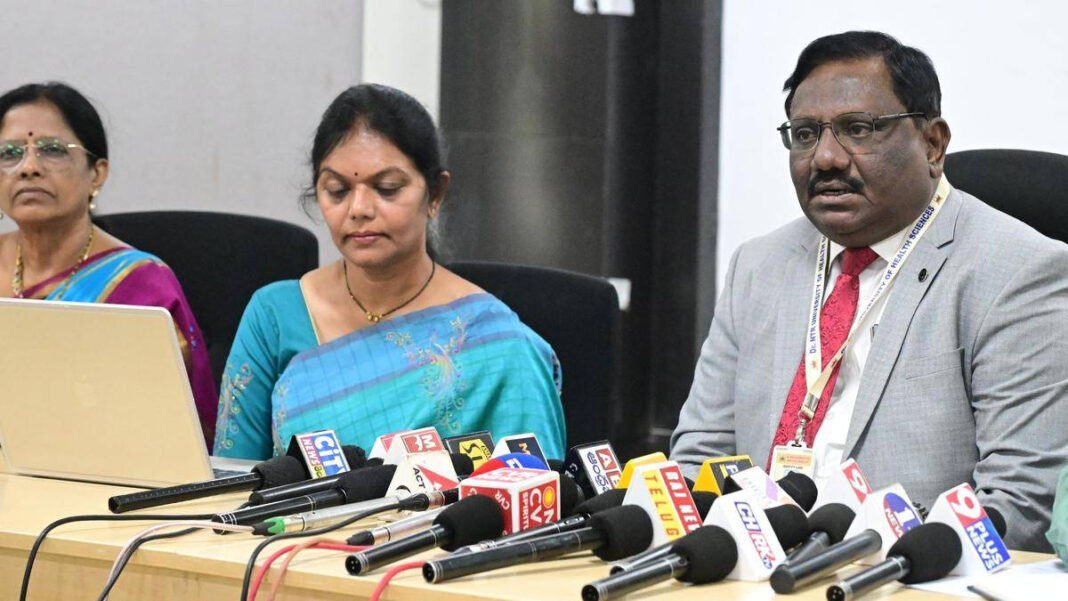
Calling for a decisive push to end stigma around mental health on medical campuses, EASE-A.P. Medical Director and child and adolescent psychiatrist Dr. Aparna Vuppala on Monday said that open conversations can play a pivotal role in preventing suicides among students. “It is high time we overcome the stigma around mental health and start a conversation about it,” she told reporters at Dr. NTR University of Health Sciences (Dr. NTRUHS) in Vijayawada on October 5, 2026.
Early identification through EASE
Dr. Vuppala outlined how the EASE—Emotional Assessment of Students by Educators—initiative is being implemented across Andhra Pradesh to detect mental stress and emotional difficulties among medical students at an early stage and connect them with timely support before problems escalate.
Launched on January 6, 2023, EASE is being carried out by QPR Institute India (QPRI) and Suicide Prevention India Foundation (SPIF), in collaboration with Dr. NTRUHS and the Directorate of Medical Education.
Stigma, stress and the need to listen
Highlighting the elevated pressures faced by medical undergraduates, Dr. Vuppala said, “Medical students face significantly higher stress when compared to peers in other fields, and when there is no support from parents or faculty too, it can leave a debilitating impact on them,” adding that parents and teachers must always lend a patient ear to students’ concerns.
Strengthening mentor–mentee support
To institutionalise regular check-ins and accessible support, Dr. Vuppala and Dr. NTRUHS Vice-Chancellor P. Chandrasekhar emphasised the need to strengthen the mentor–mentee system within medical colleges. “Every teacher should be a mentor for five–six students, and should interact with them once in a week to ensure their mental well-being,” she said.
Dr. Chandrasekhar underscored the stakes for the wider healthcare system, noting that the mental well-being of future doctors is inseparably linked to the quality of care they will deliver as professionals.
Training across government and private colleges
As part of EASE, focused training was conducted for students in 17 government and 19 private medical colleges between November 2025 and January 2026. The sessions covered a spectrum of topics central to student well-being and suicide prevention, including mental health and emotional distress, recognition of warning signs, stress management, sleep hygiene, active listening, peer support, appropriate referral pathways, and reducing stigma around seeking help.
Following the training, students showed improvement across various indicators, Dr. Vuppala said, without elaborating on specific metrics.
Officials present
Registrar T. Sai Sudheer and other university officials were present at the press conference alongside Dr. Chandrasekhar.
Why it matters
The push to normalise conversations and embed structured mentoring aims to ensure that students receive support early, before distress hardens into crisis. By integrating routine, faculty-led engagement with practical training and referral mechanisms, the EASE initiative seeks to reduce risk and foster a campus culture where asking for help is encouraged and accessible.