 "
/>

China Imposes Export Controls on Tunnel-Boring Machines: A Move Citing National Security
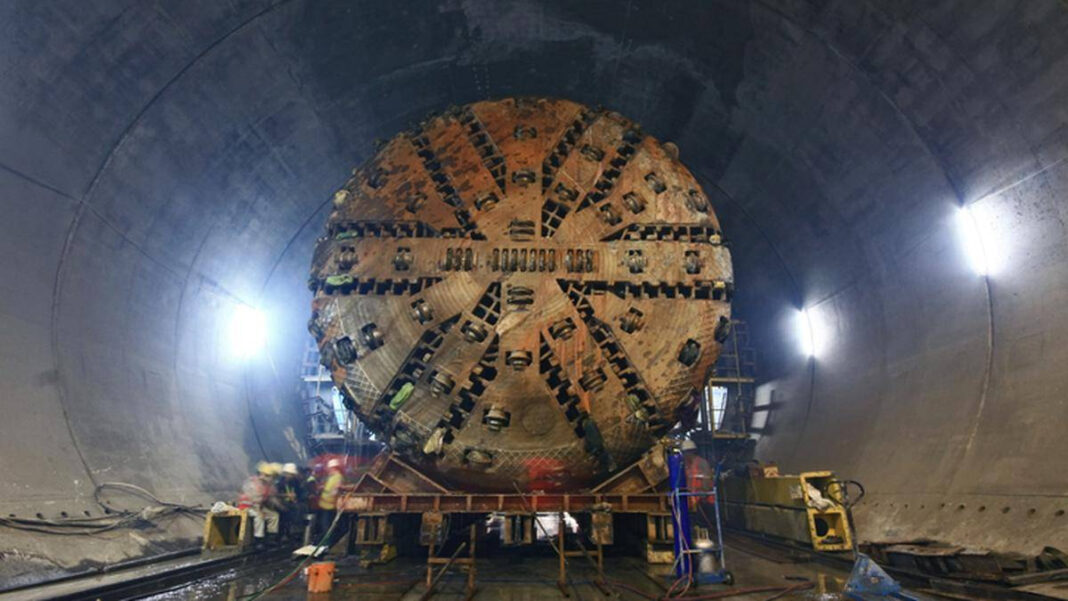
In a significant development that has the potential to influence regional infrastructure projects and economic cooperation, China has announced export controls on tunnel-boring machines (TBMs) sought by India. The decision, framed within the context of national security concerns, has raised eyebrows and sparked discussions regarding the implications for bilateral relations between the two neighboring giants.
The Decision and Its Context
In recent years, both China and India have increasingly sought to bolster their infrastructure capabilities as part of broader economic strategies. Tunnel-boring machines, which are essential for constructing subways, highways, and various underground facilities, have become pivotal in these efforts. India has been particularly invested in expanding its urban transport systems and enhancing connectivity across its vast geography.
China’s announcement comes amid a backdrop of heightened geopolitical tensions in the region. The two nations have been engaged in border disputes, notably in the eastern Ladakh region, which has led to a series of military standoffs. The imposition of export controls on essential machinery is seen as a strategic move, possibly designed to limit India’s infrastructural advancements at a critical time.
Citing National Security
The Chinese government has justified its decision by citing national security reasons. Officials have pointed to the potential military applications of tunnel-boring technologies, arguing that the equipment could be used to enhance infrastructure that supports military logistics or to develop strategic facilities in sensitive regions.
This rationale underscores China’s broader approach to technology and national security, which has seen it take protective stances over various industries and products. By restricting access to TBMs, Beijing aims to safeguard its technological edge while simultaneously asserting its geopolitical interests in the region.
Implications for India
The export controls could have wide-ranging implications for India’s infrastructure projects. Many of India’s ambitious projects, including metro systems in major cities and critical transport corridors, rely on advanced tunneling solutions. Delays in acquiring TBMs could hamper timelines and inflate costs, complicating India’s infrastructure development goals, which are intertwined with its aspirations for economic growth and urbanization.
Moreover, this move is likely to prompt India to reassess its supply chains and procurement strategies for critical machinery. Indian companies and governmental bodies may accelerate efforts to source technology and machinery from alternative suppliers, including domestic manufacturers, to reduce dependency on Chinese imports. This could lead to a diversification of supply chains, fostering greater resilience and self-reliance.
The Regional and Global Landscape
China’s action also resonates beyond India and has reverberations throughout the broader South Asian region. The export controls may lead neighboring countries to re-evaluate their own relations and dependencies on Chinese technology. As nations navigate their own infrastructure needs, there is an increasing recognition of the need for balanced partnerships that consider both economic benefits and strategic implications.
On a global scale, this decision reflects the increasing intertwining of technology, trade, and national security across the world. The rise of economic nationalism and protectionist measures has led countries to scrutinize international trade agreements and partnerships, balancing economic interests with security considerations.
Conclusion
China’s imposition of export controls on tunnel-boring machines destined for India marks a pivotal moment in the complex tapestry of Sino-Indian relations. As both countries navigate their geopolitical challenges, this development underlines the broader narrative of competition and cooperation in an increasingly multipolar world. The road ahead will require astute diplomacy and strategic foresight as India seeks to fulfill its infrastructure ambitions amid the shifting sands of regional power dynamics.