
Odisha to create additional storage for rice to accommodate paddy glut
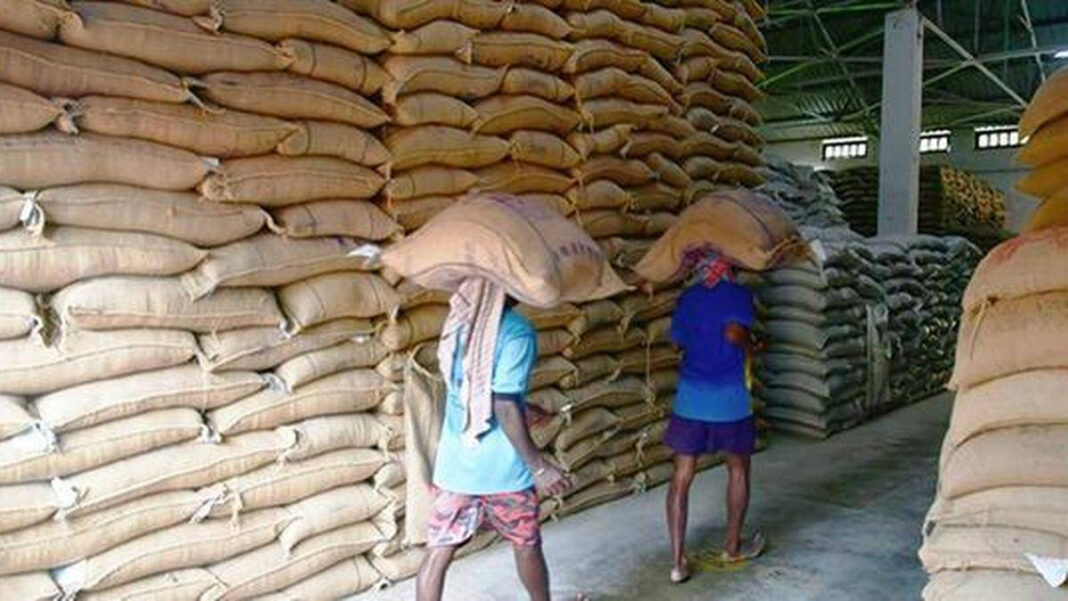
Facing a surge in paddy procurement and burgeoning rice stocks, the Odisha government has announced plans to build 10 lakh metric tonnes (LMT) of additional storage capacity across the State through a public–private partnership (PPP) model. The expansion, to be developed in two phases, is aimed at easing pressure on the existing network of godowns and ensuring safe, scientific storage and timely distribution under the Public Distribution System (PDS) and other welfare schemes.
Plan to expand storage in two phases
In a notification issued on October 1, 2026, the Food Supplies and Consumer Welfare Department said the State proposes to create 10 LMT of additional storage capacity under the Odisha State Private Entrepreneur Scheme (OSPEG) framework through the PPP mode. The government said 4 LMT will be developed in the first phase, followed by 6 LMT in the second phase. The initiative forms part of the Odisha State Private Entrepreneur Guarantee (PEG) Scheme, 2026.
According to the government, private entrepreneurs will develop, operate and maintain scientific storage facilities in line with prescribed specifications. The State will facilitate the creation of this capacity to strengthen the food supply chain and address the mounting logistical challenge posed by increased procurement.
Procurement surge and stock build-up
Odisha has recorded a massive rise in paddy harvests in recent years, with procurement volumes growing significantly on the back of higher minimum support price (MSP) and broader farmer participation. Total paddy procurement in the State rose from 70.88 LMT in 2023–24 to 97.94 LMT during 2025–26, the government said. Cumulatively, Odisha has spent ₹30,126.24 crore on procurement during this period.
However, the offtake of rice by the Food Corporation of India (FCI) has not kept pace with the increased procurement. Of the 26.27 LMT of rice received from custom millers, FCI lifted only 8.12 LMT in 2025–26, compared with 28.84 LMT in 2024–25. After meeting PDS and other welfare programme requirements, the State is left with large stocks of rice and inadequate storage to hold the surplus, officials said.
Existing capacity under strain
At present, procurement, storage and supply chain operations are handled by the Odisha State Civil Supplies Corporation Limited (OSCSC). The corporation uses around 160 godowns—both owned and hired—across the State, offering a combined storage capacity of about 6.73 LMT. With procurement volumes steadily climbing, this network faces “considerable pressure,” the department warned.
“In view of the steady increase in procurement volumes and the likelihood of further growth in procurement in the coming years, the existing storage infrastructure is expected to face considerable pressure,” the Food Supplies and Consumer Welfare Department stated in its notification. “Therefore, there is a pressing need to augment the existing storage capacity in a systematic and planned manner, so as to ensure safe storage of food grains, and ensure timely distribution under PDS and other welfare programmes.”
Implementation guidelines and standards
Under the scheme guidelines, storage capacity in surplus districts will be designed as a percentage of total procurement in those districts. In consuming districts, capacity will be determined based on the number of months of stock required to meet demand under the PDS and other welfare schemes.
All new godowns must support scientific storage standards for rice, with a minimum capacity of 2,500 metric tonnes per facility. The private partners will be responsible for developing, operating and maintaining these warehouses in accordance with the State’s specifications.
What comes next
The State’s move to enlist private entrepreneurs is intended to quickly scale up storage infrastructure in line with the ongoing growth in procurement. By phasing the creation of 10 LMT of capacity and tailoring facilities to both surplus and consuming districts, the government aims to safeguard grain quality, reduce post-harvest losses, and ensure uninterrupted supply under the PDS and allied programmes.
Further operational details, including timelines and district-wise allocations, are expected as the Odisha State Private Entrepreneur Guarantee (PEG) Scheme, 2026, is rolled out.