
CEC Gyanesh Kumar has lost public trust and must be removed, say former bureaucrats, activists
A coalition of retired senior bureaucrats, civil society activists, and academics on Monday accused Chief Election Commissioner (CEC) Gyanesh Kumar of “proved misbehaviour” across six instances and demanded his removal from office, saying he has lost the public trust required to head the Election Commission of India (ECI). The 14-member group attempted to submit a “people’s impeachment notice” and a detailed chargesheet at the ECI’s headquarters in New Delhi but said they were prevented from reaching the building due to heavy barricading and police deployment. They subsequently emailed the document to the CEC.
Delegation blocked; chargesheet emailed
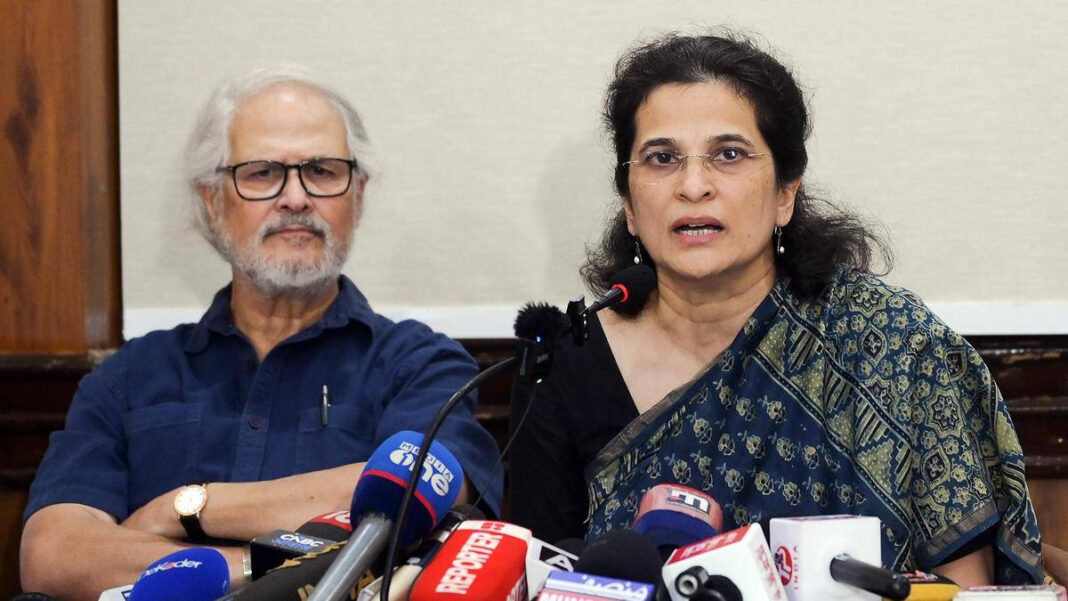
The delegation gathered in the capital on October 5, 2026, and planned to walk from the Constitution Club to the ECI’s Nirvachan Bhawan to deliver the chargesheet in person. “Since we could not reach there, we emailed them the chargesheet,” activist Anjali Bhardwaj said at a press conference held at the Press Club of India alongside former Delhi Lieutenant-Governor Najeeb Jung. “We first planned to meet at the Constitution Club and then go to the Nirvachan Bhawan [the Commission building] from there. But we couldn’t reach there because of barricading. Then we met at the Press Club and decided to go from there, and we got to know Election Commission itself is heavily barricaded and police deployment is there. Whichever roads we were taking were barricaded,” she added.
Allegations under Article 324(5)
The chargesheet invokes Article 324(5) of the Constitution, which protects the CEC from removal except on grounds of “proved misbehaviour or incapacity.” The signatories alleged that Mr. Kumar’s conduct demonstrated a sustained disregard of law and constitutional duty and therefore met the constitutional threshold warranting removal. They described their move as a “people’s impeachment” and said the Commission, under the present leadership, was “functioning illegally and failing in its responsibility.”
“EC is functioning illegally and failing in its responsibility. We believe that the CEC must resign,” Ms. Bhardwaj said, arguing that the Commission’s recent actions had eroded public confidence. “It is losing the trust. CEC Gyanesh Kumar has no moral authority to stay in office. First [it] defended [the changes], saying changes to Form 6 have been upheld by the Supreme Court but the court denied that today. How do people trust the Commission?”
Six charges detailed by the group
The chargesheet outlines six core allegations against Mr. Kumar:
• Undermining the collective functioning of the ECI and weakening the Commission’s collegial decision-making processes.
• Making unauthorised changes to the statutory Form 6, which is used by citizens to apply for inclusion in electoral rolls, thereby placing an additional burden on applicants.
• Centralising electoral-roll management functions through the ECINET platform in a manner the group said encroached upon the legally defined roles of Electoral Registration Officers (EROs).
• Presiding over a Special Intensive Revision (SIR) of electoral rolls that, according to the activists, has resulted in large-scale disenfranchisement.
• Using technological systems and administrative measures in ways that they allege curtailed citizens’ ability to establish eligibility for inclusion in the electoral rolls.
• Engaging in conduct that, taken together, undermined the Commission’s independence and damaged its public credibility.
The signatories contend that these actions collectively demonstrate misbehaviour by the CEC, distort statutory procedures, and jeopardise voters’ access to the rolls—particularly during the SIR exercise.
Who is in the delegation
The 14-member delegation comprises several high-profile former officials and prominent public figures: former Delhi Lieutenant-Governor Najeeb Jung; former Union Home Secretary G.K. Pillai; former Union Secretary Amitabha Pande; retired IAS officer Jayashree Mukherjee; former Ambassador Ashok Sharma; former Special Director of the Intelligence Bureau and Central Information Commissioner Yashovardhan Azad; former civil servant Ashish Joshi; student activist Aishe Ghosh; N. Sai Balaji; Dinesh Srirangarajan; Sandeep Yadav; Amrita Johri; Yogendra Yadav; and Anjali Bhardwaj.
Press conference and public appeal
Addressing reporters in New Delhi, members of the group said their action was a public appeal to restore the Commission’s integrity and to safeguard democratic processes. They reiterated that their demands flow directly from constitutional provisions and statutory norms that, in their view, have been eroded under the current CEC’s leadership.
The activists underscored that changes to key electoral instruments—particularly Form 6 and the roll-revision process—had a direct impact on citizens’ ability to vote and on the transparency of electoral administration. They argued that the centralisation of electoral-roll functions through ECINET had displaced local oversight and accountability, and that recent revisions to the rolls had made it harder for eligible voters to establish or maintain their registration.
What they want next
The delegation has asked for the removal of CEC Gyanesh Kumar on the grounds summarised in their chargesheet and urged him to step down in the interim. They framed the submission as a citizen-led accountability measure, asserting that the Commission must reaffirm its independence and restore public faith in the electoral process.
As of Monday, the group said the chargesheet had been formally sent to the Election Commission via email after the physical submission was thwarted by barricades and police presence around the Commission’s office and surrounding routes.
Significance
The move by a cross-section of former top civil servants, diplomats, and activists marks an escalation in public scrutiny of the Election Commission’s recent decisions on electoral rolls and administrative procedures. By invoking Article 324(5), the group is seeking to trigger the highest level of accountability for the CEC, arguing that confidence in the Commission’s impartiality and procedural fairness is essential to the legitimacy of India’s elections.