 "
/>
"
/>

Purab Anga Gayaki: A Tradition at the Crossroads
In recent years, the revival of Purab Anga Gayaki (PAG) has sparked discussions about its evolving nature within Bengal’s vibrant musical landscape. While this traditional art form, rich in rural charm, initially celebrated its emotive roots, it now faces a drift towards a more urbane and flamboyant presentation influenced by the ornamentation of khayal. Young vocalists are increasingly blending thumris with complex taans, raising a pivotal question: Is this transformation beneficial or detrimental to the essence of Purab Anga Gayaki?
Reviving a Musical Heritage
To delve deeper into this evolution, the PAG Parivar, in collaboration with Sree Satyananda Devayatan, organized a baithak at Devayatan Hall. This gathering united gurus and scholars involved in the PAG Project, notably supported by Vinod Kapur, who has been a driving force behind the celebration of this art form, including the VSK Baithak initiated in New Delhi.
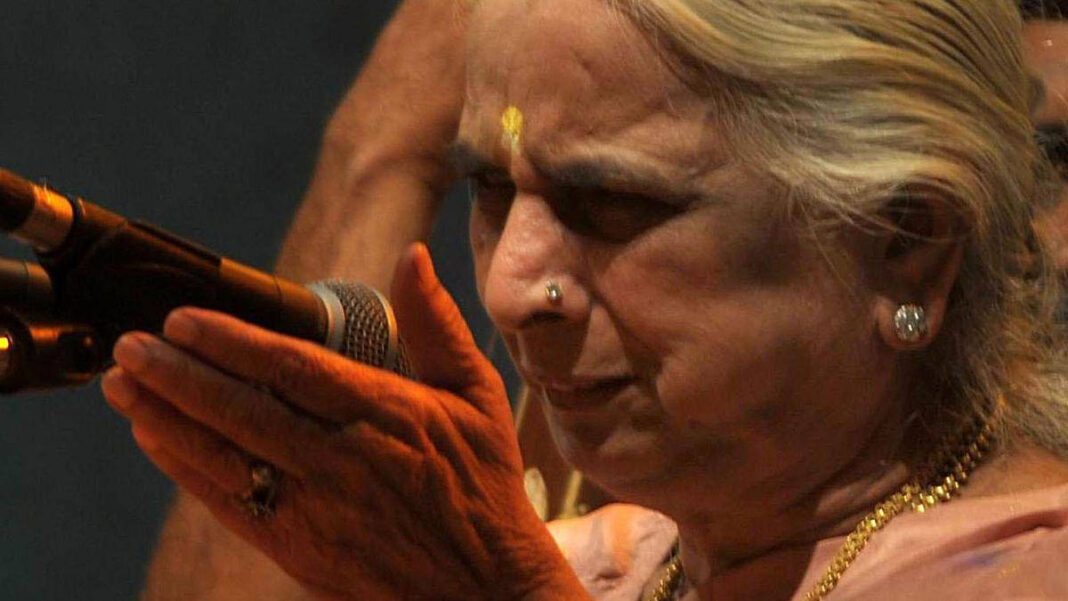
The roots of the Purab Anga Gayaki can be traced back almost two decades when Vinod Kapur launched a nationwide talent hunt known as the ‘Purab Anga Gayaki Utsav.’ This initiative aimed to elevate the status of kajri, bringing it into the limelight as a standalone genre, distinct from khayal. Under the guidance of esteemed musicians like guru Girija Devi and vidushi Purnima Chaudhuri, Kapur identified a wealth of talent that embodied the spirit of thumri, dadra, kajri, and chaiti.
Enduring Legacy and Challenges
Bengal, with its fertile cultural soil, became a natural home for the emotive and pada-pradhan style of gayaki, resonating deeply with local audiences. However, the loss of stalwarts like Girija Devi in 2017 and Purnima Chaudhuri—whose untimely passing left a significant void—did not deter the PAG Parivar. Resilient in their mission, Kapur saw to it that young contestants pursued advanced training with gurus such as Manju Sundaram from Benares and Dalia Rahut from Kolkata. This strategy has fostered the PAG Parivar’s adherence to authenticity while upholding traditional values amidst changing musical sensibilities.
The Essence and Emotional Depth of Purab Anga Gayaki
During the baithak, I presented an introductory speech exploring how our ancestors communicated through harmonious sounds originating from nature, evolving into expressive syllables. These sounds, over millennia, formed melodic notes that embodied the human experience of joy and sorrow. While some melodies developed into structured classical music, others resisted formal constraints, retaining their roots in folk traditions.
Purab Anga Gayaki encapsulates a rich tapestry of women’s emotions, particularly those constrained by the social norms of the medieval period. Many of its compositions depict women’s longing, especially during the monsoon season—illustrated in the poignant song, “Chhayi kari badariya anganawa ho Ram… morey sainya bidesawa se na aaye ho.”
Sudha Dutta, the daughter of the late Girija Devi, reflected on her upbringing in Benares, where she witnessed these traditions firsthand. She highlighted the significance of ritualistic songs within the gayaki, particularly noting a Rakhi-centric ritual. The refrain “Hamko sawan mein jhulani gadhay de, piya” captures the essence of a woman’s status within her marital household, with the character of ‘Beeran Bhaiya’ symbolizing either a bridge to her parental home or a reminder of her ties to her husband’s family. Such lively Mizapuri kajris focus on emotional depth rather than the intricate taans associated with khayal.
Adapting Without Losing Identity
The baithak featured performances by PAG exponents, including Sucheta Ganguly, Dalia Rahut, Madhumita Chattopadhyay, and Nandini Chakraborty, who each demonstrated the fluidity of thumri-anga kajris while maintaining their distinct identities. Both Girija Devi and Siddheshwari Devi were known for their ability to seamlessly weave bol-banav kajris into their performances. Appaji skillfully adapted expressions, like transforming “Dil Jani” into “Kahanwa mano O Radharani,” showcasing the adaptability of this form to the evolving sensibilities of their time.
Other talented singers, like Madhumita Chattopadhyay, carried the torch of Purnima Chaudhuri’s legacy, delivering captivating renditions of “Hamko sawan me” while exhibiting mastery in rhythm through the technique of talfirta—where rhythmic patterns vary in between stanzas. Alas, such engaging renditions are becoming scarce in contemporary performances.
Preserving the Essence of Kajris
The baithak unfolded as a reunion of kindred spirits, each gaining insights into the various forms of kajris: bol-banav ki kajri of thumri anga, bandishi kajri of khayal anga, and tappa anga ki kajri. While some have marginally incorporated khayal elements, the lively and narrative nature of most dadra and Mirzapuri kajris remains true to their origins, best preserved in their rural simplicity and the traditional group dances accompanying Chalti Kajris, exemplified in “Gheri gheri aayi sawan ki badariya na.”
Crucially, the narratives surrounding each composition enrich the performance. Dalia’s recounting of the inspiration behind “Radhe bina laage na mora jiya” caught the audience’s attention, illustrating the emotional journey that resonates within the music—a poignant reminder of the depth and meaning behind each piece.
Moreover, a pressing issue highlighted during the discussions is the need for clear and flawless enunciation. Bengal faces challenges with ‘Bhrashta uccharan’ (faulty pronunciation), which demands rectification in an era populated by highly educated musicians. The emphasis on clear articulation is essential for preserving the integrity of this cherished art form.
Conclusion
The evolution of Purab Anga Gayaki stands at a critical juncture, teetering between tradition and modernity. As this vibrant art form navigates its transformation, the community of musicians and scholars must remain vigilant to preserve its core essence while adapting to contemporary expressions. The baithak serves as a reminder of the rich cultural heritage that must be both celebrated and safeguarded for future generations.