 "
/>
"
/>

In This Delhi Studio, Tintype Brings Chemistry Into Every Portrait
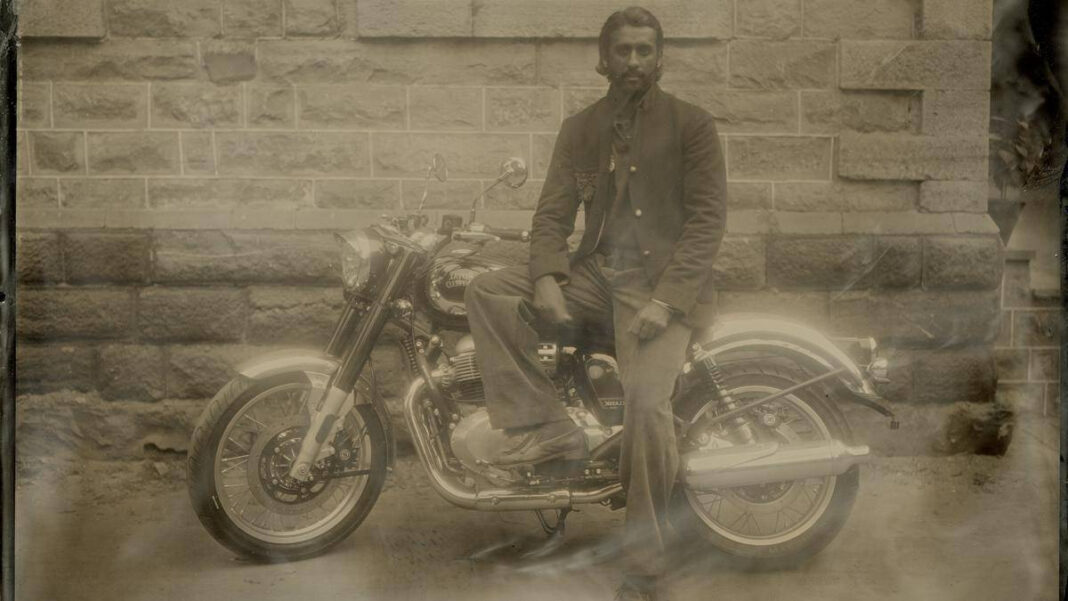
In a world where portraits can be captured in the blink of an eye, Vibhav Kapoor, an artist and assistant professor at O.P. Jindal Global University in Sonipat, takes a decidedly different approach. He spends several minutes crafting each portrait, most of which is devoted to the intricate chemistry involved in the tintype photographic process. Within his studio in the Delhi-NCR region, Kapoor revives this 19th-century technique that creates images on metal plates rather than on conventional film or digital formats.
The Art of Tintype Photography
Initially developed in 1853 by French photographer Adolphe Alexandre Martin two years after the invention of the wet-plate collodion process by Frederick Scott Archer, tintype photography allows for a direct positive image to be captured on a dark metal plate. This method differs significantly from other photographic processes that rely on glass negatives or paper prints, making it a unique art form celebrated for its tactile and historical qualities.
A Chemically Intensive Process
Kapoor’s work begins with a preparation involving collodion, a syrupy solution made of nitrocellulose dissolved in ether and alcohol. He carefully pours this substance onto a metal plate to create a thin, adhesive film. The plate is then sensitized in a silver-nitrate bath, where reactions occur to produce light-sensitive silver iodide and silver bromide components.
The exposure occurs through a large-format camera, capturing the light-sensitive compounds. Preparing the images requires swift action; as the entire sequence – from coating the plate to developing the image – must be executed while the plate remains wet. The lack of a negative means that producing duplicates of tintypes poses a significant challenge.
A Historical Perspective
The tintype method gained remarkable popularity in the mid-19th century due to its affordability and durability, contrasting sharply with the daguerreotype, which was considered a luxury item due to its expensive materials and labor-intensive process. In India, tintype photography was part of the early historical narrative of the medium. It arrived in 1864, introduced by British photographer T. Murray to Sawai Ram Singh II of Jaipur, cataloging his court and the lives surrounding it. Murray contributed significantly to developing a royal visual archive, employing the same tintype process that Kapoor revives today.
Kapoor notes, “It is a very traditional, hand-made process,” yet emphasizes the scientific precision that underlies the apparent simplicity of tintype photography.
The Lengthy Exposure
In contrast to modern digital cameras, which require subjects to pose for mere seconds, the tintype process demands that a subject remains still for 8 to 10 seconds as light is absorbed by the chemicals on the plate. For Kapoor, this moment fosters connection; “The person is performing … presenting themselves,” he describes. Once developed, the image appears within 10 to 15 minutes, capturing a brief interplay of light and time accurately.
Environmental Considerations
The unpredictability of weather adds another layer of complexity to the tintype process. Kapoor notes that humidity levels can significantly affect results. “During the monsoon, the humidity causes the tintypes to develop spots,” he explains. Dust particles pose another threat, settling on the wet collodion and disrupting the crucial formation of silver halide crystals, resulting in imperfections on the final image.
Temperature fluctuations also impact the chemical reactions involved in developing tintypes. For example, increased heat causes the collodion solvents to evaporate more quickly, leading to a sticky film and unequal setting before moving the plate into the silver-nitrate bath. Kapoor strategically adapts his solutions for the Delhi-NCR climate, noting that “heat acts as a catalyst, and more heat means reactions are faster.” He meticulously manages the developer solution’s strength to ensure a clear and consistent image.
Modern Applications and Future Aspirations
Kapoor has collaborated with fashion brand rkive.city to produce tintypes of notable individuals, including the Maharaja of Jaipur, Sawai Padmanabh Singh. Currently, he is eager to expand his body of work and create more tintype portraits from his newly established studio in Shahpur Jat, Delhi.
Tintype photography gained traction in India in the late 19th and early 20th centuries, yet today, only a handful of photographers continue this artistic tradition. Kapoor works with a vintage large-format camera that utilizes 5×7-inch plates, characterized by its elegant polished wood and leather bellows that extend like an accordion.
“When I am taking tintypes of people,” Kapoor shares, “I think they are very fascinated, first of all by the camera, and by the spectacle of the process.” This fascination serves as a bridge connecting the rich historical legacy of photography with contemporary art practices.