 "
/>
"
/>

Discover The Hungry Caterpillar: The Award-Winning Bamboo Pavilion at Ashoka University Marks One Year
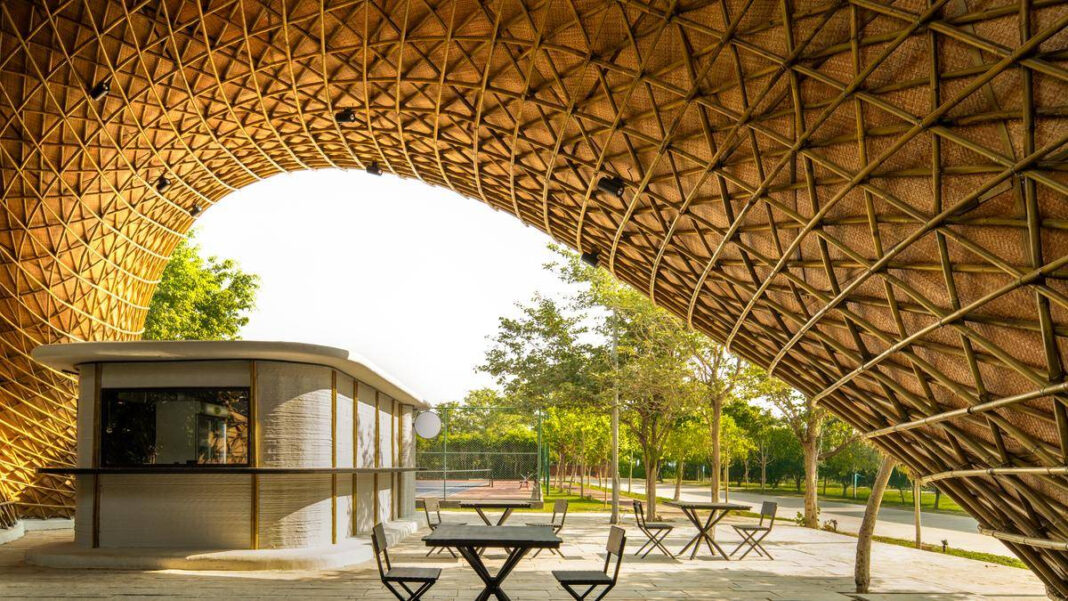
The Hungry Caterpillar, an innovative bamboo pavilion located at Ashoka University, has celebrated its first anniversary, marking a significant milestone since its launch in September 2025. Designed by architect Apoorva Shroff from Mumbai-based lyth Design, this unique structure has quickly garnered recognition, including a Blue Elephant Award at the Kyoorious Design Awards 2026 and a Platinum Award at the International Architecture and Design Awards (IADA) 2026.
Concept and Design
The genesis of The Hungry Caterpillar began in 2024 when Shroff was tasked with designing an architectural space for Ashish Dhwan, the university’s founder. Upon her initial visit to the proposed site, Shroff envisioned a structure that resembled a cocoon nestled amid the lush greenery. “I immediately visualised a cocoon nestled among the lush canopies, almost like a caterpillar feeding slowly, feeling safe and sheltered,” she explained.
This metaphor of a caterpillar resonated deeply with Shroff, who sees universities as nurturing environments that foster growth and evolution among young minds. Beyond its form, the pavilion symbolizes concepts of lifelong learning, growth, and harmony with nature—values she aimed to incorporate in the design.
Architectural Features
Spread across 650 square meters, The Hungry Caterpillar reimagines the traditional food street into what Shroff describes as “a playful, immersive ecosystem.” The pavilion features bamboo gridshell canopies, intricately designed by Jans Bamboo, with a structural layout conceived by Atelier One. The design is inspired by the geometry of folding leaves, enhancing its connection to the natural environment.
Shroff emphasizes that this project was envisioned not just as a functional space but as a holistic environment where sustainability, materiality, and experiential aspects converge. “The intention was to rethink the food street as an ecosystem rather than a row of outlets,” she noted.
Sustainable Practices in Construction
The pavilion’s kitchens utilize modular units that are 3D printed in concrete, providing a low-waste and energy-efficient alternative to traditional construction methods. Additionally, the furniture within the pavilion is manufactured from recycled plastic waste and sourced from a company called Placyle. Shroff highlights that sustainability was at the core of the project, prompting deliberate decisions at every stage. “Rather than treating it like a substitute for steel, we had to work within the structural capabilities and behavior of bamboo,” she explained, underscoring the importance of resource efficiency in design.
Shroff’s background in conventional materials such as concrete and steel meant that this project was a significant departure from her previous work. “Studying bamboo in Bali deepened my fascination with natural materials and their potential within contemporary architecture,” she shared, illustrating how this exploration influenced the pavilion’s design.
The Role of Community Engagement
The creation of The Hungry Caterpillar was also informed by extensive community conversations, which played a crucial role in shaping the space. “A liberal arts campus is fundamentally built around dialogue, curiosity, and the meeting of different ways of thinking, and that ethos strongly shaped how we approached the pavilion,” Shroff remarked. The design facilitates a sequence of shared spaces that encourage interaction among students, faculty, and visitors. It allows for spontaneous encounters, echoing the fluidity often found in liberal arts education.
Shroff aims for the pavilion to not only serve its immediate purpose but also to exemplify a sustainable architectural solution that emphasizes beauty and functionality. “It was about using resources responsibly, ensuring the longevity of design and every element that contributes to the well-being of those who inhabit the space and the planet,” she concluded.
Conclusion
The Hungry Caterpillar stands as a pioneering example of how architectural design can intersect with ecological and community principles, offering a nurturing environment where ideas can flourish. As it enters its second year, the pavilion continues to inspire and impact the Ashoka University community and beyond.