
Lessons from the history of rebellions in AIADMK and DMK in Tamil Nadu
As the All India Anna Dravida Munnetra Kazhagam (AIADMK) navigates a fresh bout of internal convulsions, a familiar question has resurfaced in Tamil Nadu’s political discourse: should party general secretary Edappadi K. Palaniswami consider bringing back leaders who were once sharply critical of him, just as former chief ministers Jayalalithaa and party founder M.G. Ramachandran did during their tenures?
Historical precedents within the AIADMK
The debate has drawn pointed references to two notable precedents. Former Ministers S.D. Somasundaram (widely known as SDS) and K. Kalimuthu, both of whom had publicly broken with the AIADMK leadership and mounted strong criticism, were later re-accommodated by the very leaders they had opposed. Somasundaram was taken back by M.G. Ramachandran, while Kalimuthu returned under Jayalalithaa’s leadership. These episodes, occurring after periods of bitter estrangement, are frequently cited to illustrate a tradition of strategic reconciliation within the party.
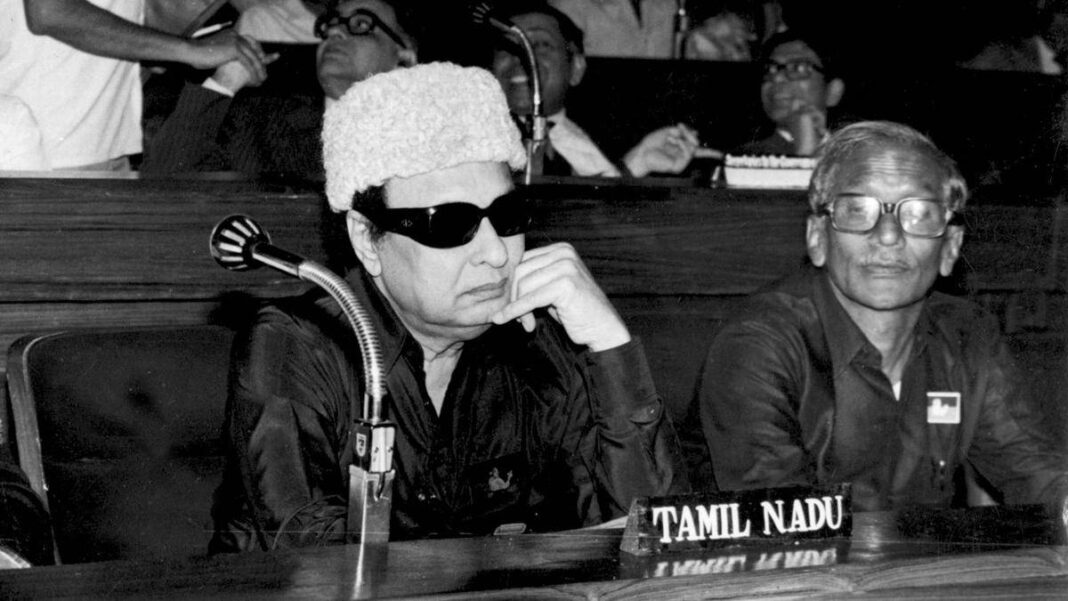
A 1983 photograph of M.G. Ramachandran with S.D. Somasundaram is often recalled in this context, underscoring the complex and cyclical nature of political relationships in Tamil Nadu’s Dravidian parties.
The current debate
Palaniswami’s stewardship of the AIADMK has been marked by questions about how to handle dissent and whether there is space for former critics to return. The party’s founder, M.G. Ramachandran, set an early precedent for such recalibration, and Jayalalithaa, who succeeded him in shaping the party’s identity and discipline, also demonstrated a willingness at times to revive ties with estranged colleagues. Those choices are now at the centre of arguments urging a more inclusive approach toward ex-detractors.
Context and continuity
The AIADMK’s institutional memory includes moments when political pragmatism prevailed over prolonged factionalism. As in the cases of S.D. Somasundaram and K. Kalimuthu, reintegration followed phases of sharp criticism and organisational rupture, suggesting that the party’s leadership has historically weighed unity and electoral calculus alongside disciplinary considerations. With Palaniswami at the helm as general secretary, that legacy is being invoked by those who see value in leveraging experience within the cadre, even when it comes from recent adversaries.
Significance for the present moment
While opinions vary on the merits and risks of readmitting critics, the examples of Somasundaram and Kalimuthu—each restored to the fold by MGR and Jayalalithaa, respectively—remain touchstones in the conversation. As the AIADMK charts its course through turbulence, these historical lessons continue to inform expectations about leadership style, party cohesion and the balance between discipline and inclusion.
Published: September 24, 2025