 "
/>
"
/>

Real or Reel: This New Photo Book Delves into the Film Culture of a Working-Class Neighbourhood in Bengaluru
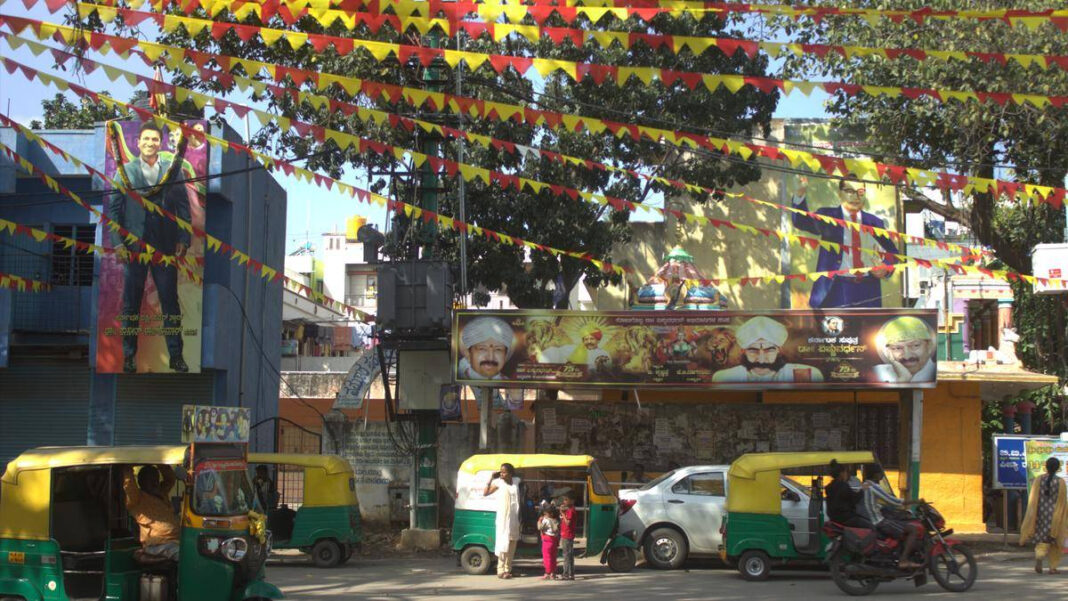
In a bid to explore the rich tapestry of film culture in Bengaluru, Eshwari R and Mahima Gowda, two local residents, ventured into the industrial neighbourhood of Laggere in 2024. Their discovery journey began with a striking statue of Kannada actor Vishnuvardhan situated prominently outside a residence. “Both of us are from Bengaluru and so familiar with the film culture here, it was the first thing we recognised. We had never seen such a wonderful statue of him before, and that too, right outside someone’s house. It was a public thing, but also very personal,” Mahima recounts, reflecting on their initial encounter with the area.
Overview of Laggere’s Cinema Culture
As the duo explored further, they encountered more evidence of Laggere’s deep ties to cinema, notably the Akash Cinemas, a single-screen theatre distinguished by its large footprint within a residential structure. “The fact that so much space was allotted to a single screen, given that most single screens in the city had been demolished, made us curious about Laggere, its people, and cinema culture,” Eshwari stated.
This curiosity blossomed into a photo-illustrated essay book titled Reel Duniya, Real Duniya: Cinema, Memory, and Leisure in Laggere. Launched at the BLR Design Centre earlier this month, the book is described in the preface as “born out of friendship, fieldwork, and endless talk about cinema in our shared accommodation room, on WhatsApp, over Instagram, and while eating puffs at Friends Bakery.” The work combines drawings, photographs, and fragments of dialogue to illustrate how cinema influences the social life in Laggere and the authors themselves.
Research and Community Engagement
Following their first visit, Eshwari and Mahima sought to immerse themselves deeper into the community. In April last year, they applied for a fellowship through the India Foundation for the Arts’ Project 560 programme, which encourages artistic exploration of less familiar urban areas and their complex narratives. “We thought this was a perfect opportunity for us to discover Laggere,” Eshwari mentioned, acknowledging that, despite their long residence in Bengaluru, they had not previously heard of this vibrant neighbourhood.
The research for the project was rooted in community engagement, featuring informal gatherings known as baithaks, where discussions with garment workers, theatre employees, fan club members, and local cinema aficionados took place. “There is a sort of learning exchange that happens, something that is non-negotiable. When we go there, we learn something about their life, while also sharing things about our life,” Eshwari said, highlighting the collaborative nature of their work.
Gender and Leisure in Laggere
A notable thread explored in the book is the intersection of gender and leisure within the local cinema culture. During a visit to Akash Cinemas, Eshwari and Mahima encountered two female employees, Mabu and Chanbi, who provided insightful perspectives on their unique work environment. “Both of them had left by the time we returned to Laggere with the IFA project,” Eshwari recalled, emphasizing the benefits they shared: “The advantage of the job was that they could watch films whenever they wanted and bring their children to work.”
A similar narrative emerged from their discussions at Maruthi Theatre, just two kilometres away, where other female workers voiced their contentment with a job that intertwined leisure and labor. Mahima noted, “Their idea of leisure and work within the same space was surprising to us.” This was contrasted by the more accessible conversations they had with men in the area, as Mahima pointed out, “Our conversations with women would not happen in the same way as our conversations with men. There was such a huge time and space restraint.”
While time and availability posed a challenge, the authors engaged with around 35 to 40 individuals from Laggere over six months. These conversations not only shed light on the neighborhood but also illustrated the myriad ways in which people celebrate cinema.
Development and Publication of the Book
What initially began as a plan to compile a zine from their conversations expanded into the publication of the book. Numerous individuals they spoke with showed a willingness to contribute essays, further enriching the narrative they sought to portray. With support from LLN Press – Living Labs Institute, where Eshwari is employed, they were able to print 200 copies of the book. Some were distributed to the local contributors, with the remainder available for purchase on the press’s website.
Future Aspirations
While both authors celebrate the release of their book, they view this project as just the beginning. “We have a lot of different threads to follow, and I hope we can do that in the future,” Mahima expressed, suggesting that further exploration of Laggere’s community and its cinematic culture is on the horizon.
Ultimately, Reel Duniya, Real Duniya serves as a noteworthy reflection on the interplay between cinema and the lives of those in Laggere, inviting readers to consider the multifaceted relationships that exist between art and community.