
Democracy Without Choice: How Unopposed Rural Polls in Maharashtra Silence Dissent
Amid ongoing debates over the Election Commission’s special intensive revision (SIR) drive, voter name deletions, and electoral transparency, a quieter disenfranchisement persists in rural Maharashtra. In hundreds of villages, local self-government bodies have gone decades—sometimes as long as 70 years—without a genuine ballot. Instead, gram panchayat members are “elected” unopposed, allowing dominant families or factions to retain power while bypassing competitive polls altogether.
A culture of consensus—or control?
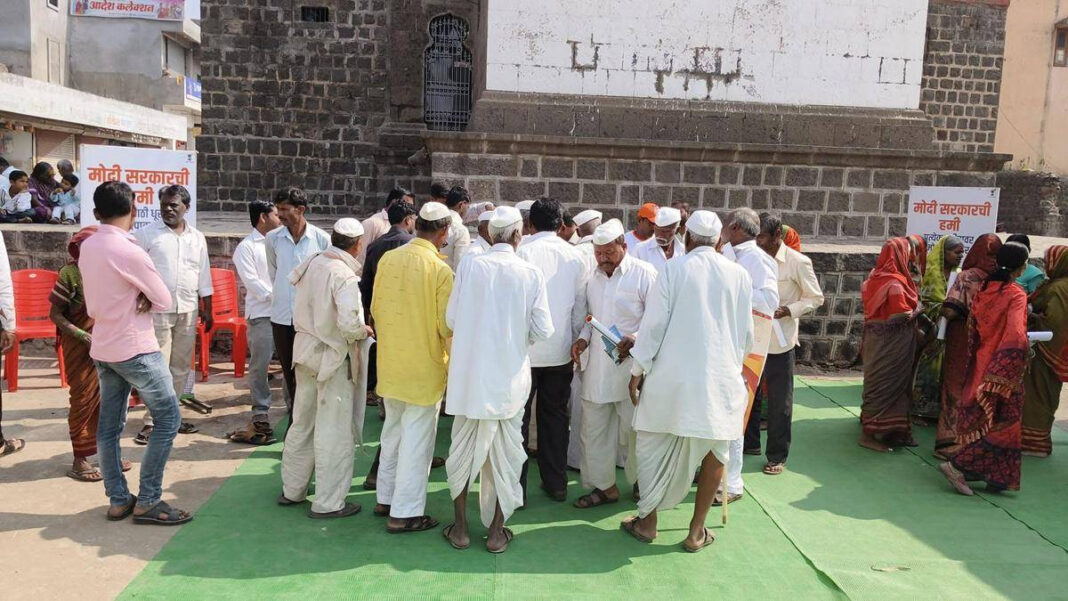
The practice, entrenched in many parts of the State, is often defended in the name of social harmony and development. Proponents argue that unanimity prevents the acrimony and expense associated with elections. Critics respond that it blunts democracy, stifles dissent, and entrenches local dynasties.
The pattern is striking in places like Angar in Solapur district and Perid in Kolhapur district, where local leaders, often from powerful families, have held sway across generations. The result is a system where villagers cast ballots for State Assembly and Lok Sabha elections, but skip the most immediate tier of governance that affects their daily lives.
Angar, Solapur: Six decades without a gram panchayat poll
In Angar town of Solapur district, a gram panchayat election has not been held in 60 years. Even after the village was upgraded to a nagar panchayat last year due to population growth, leadership remained uncontested.
“We don’t have local elections; our people only vote for the Assembly and Lok Sabha. We have stood united for all these years, and people have faith in our family,” said former MLA Rajan Patil, whose family has controlled local politics for generations. Over the decades, the family has transitioned through the Congress and the Nationalist Congress Party, and is currently aligned with the BJP.
Mr. Patil, who succeeded his late father Baburao, now shares political influence with his sons, Ajinkya and Vikrant. His daughter-in-law, Prajakta, was elected unopposed as the nagar panchayat’s first president last year. The transition wasn’t without controversy: opponents alleged that aspiring candidates were threatened and pressured not to file nominations—allegations the Patils strongly deny.
Defending the practice more broadly, Mr. Patil argues that contested elections divide communities, waste money, and hinder development work. “Unity” and “trust,” he says, form the bedrock of Angar’s local governance model.
Perid, Kolhapur: A 1956 tradition that still holds
Perid village in Kolhapur district offers a similar story. With a population of about 3,000, Perid has not held a contested gram panchayat election since 1956, leaving the local Patil family firmly in charge.
“This is our tradition, where all villagers come together and decide who should be the member of the gram panchayat. In the last election, one person went against this tradition and an election was held for one of the nine seats, but he didn’t even turn up to vote,” said deputy sarpanch Shivaji Patil.
He added that the unopposed culture extends beyond village politics to local milk societies and other cooperative bodies. According to him, the practice dates back to a collective decision by forefathers to avoid the bitterness and social ruptures that intense political rivalry can cause in close-knit rural communities.
Model villages, model unanimity—and emerging pushback
Some of Maharashtra’s often-cited “model villages” for water conservation and rural development have also preserved this tradition of unopposed decision-making. Among them are Anna Hazare’s Ralegan Siddhi and Popatrao Pawar’s Hiware Bazar in the Ahilyanagar district. Mr. Pawar has long argued that village decisions should be made in a gram sabha through broad consensus so the community can act as a united front.
Yet even in these villages, dissenting voices have grown louder in recent years. In the 2021 elections, panels backed by Mr. Hazare and Mr. Pawar won, but opposition panels still entered the fray—breaking the previous streak of complete unanimity and signaling a willingness among some residents to test consensus against competitive choice.
Analysts warn of a democracy dulled by dominance
Kolhapur-based political analyst Dr. Ashok Chousalkar says the concept of unopposed panchayat elections is not new—but it is not necessarily a healthy sign of democracy either. He ties the practice to a wider culture in Maharashtra’s cooperative sector, particularly sugar cooperatives, where leaderships have used mechanisms of unanimity to suppress dissenting voices.
“Of course, there are some villages where all residents are taken into confidence for unopposed elections, but these are rare cases,” Dr. Chousalkar noted. “In the majority of villages, the dominant political family makes the decisions and uses its full power to suppress any opposition.”
His assessment underscores a central dilemma: while village leaders cite social cohesion and efficiency, the absence of contested polls can entrench power structures and erode the habit of democratic choice.
When unanimity sidelines the marginalised
The toll of unopposed politics is felt most acutely by marginalised groups, according to those who have tried to participate from the fringes. Alka Kamble, former sarpanch of Waghapur-Lasina in Yavatmal district in Vidarbha, said the system often reduces reserved seats to a formality by elevating pliant representatives selected by local elites.
“Village bigwigs generally manage unopposed elections by selecting compliant members who offer no opposition,” Ms. Kamble said. “When seats are reserved for women, particularly Dalit and other backward class women, active women are completely sidelined in favour of candidates who will not raise their voices.”
She added a crucial caveat: “I have been demanding that if we go for unopposed elections in our village, the decision must not be imposed by bigwigs in the village. It should be unanimous.” Her appeal points to a key distinction—consensus must be voluntary and inclusive, not orchestrated by those already in power.
Beyond voter lists: The quiet bypassing of the ballot
The persistence of unopposed village elections unfolds against the backdrop of State-level concerns over the SIR drive, voter list revisions, and transparency. While these debates focus attention on who gets to vote and whether rolls are accurate, the deeper question in many rural pockets is whether there is anything to vote on at all.
In villages like Angar and Perid, the “consensus” model is presented as a lubricant for development; in practice, it often means residents have not witnessed a functioning local campaign or cast a local ballot in decades. As some communities begin to test unanimity with opposition panels, and as political analysts and former grassroots leaders speak out, Maharashtra’s rural democracy faces a reckoning over what choice—and consent—should look like at the most local level.
The road ahead
Whether the drift toward unopposed panchayat bodies continues or gives way to competitive polls will depend on how communities balance social cohesion against the need for accountability. For now, the practice remains entrenched in parts of Maharashtra, buoyed by arguments of unity and efficiency, and challenged by those who warn that consensus without consent risks silencing precisely the voices democracy is meant to amplify.