 "
/>
"
/>

‘Impure’ Movie Review: A Sharp Social Satire Disguised as a Coming-of-Age Tale
Telugu cinema, known for its cultural reach and significant influence, often struggles to portray urban women in their multifaceted reality. Many films fall into the trap of simplistic or stereotyped representations. However, Impure, the feature directorial debut of Nishanti Evani, breaks this mold, presenting women who are complex, full of contradictions, and deeply human.
Background and Overview
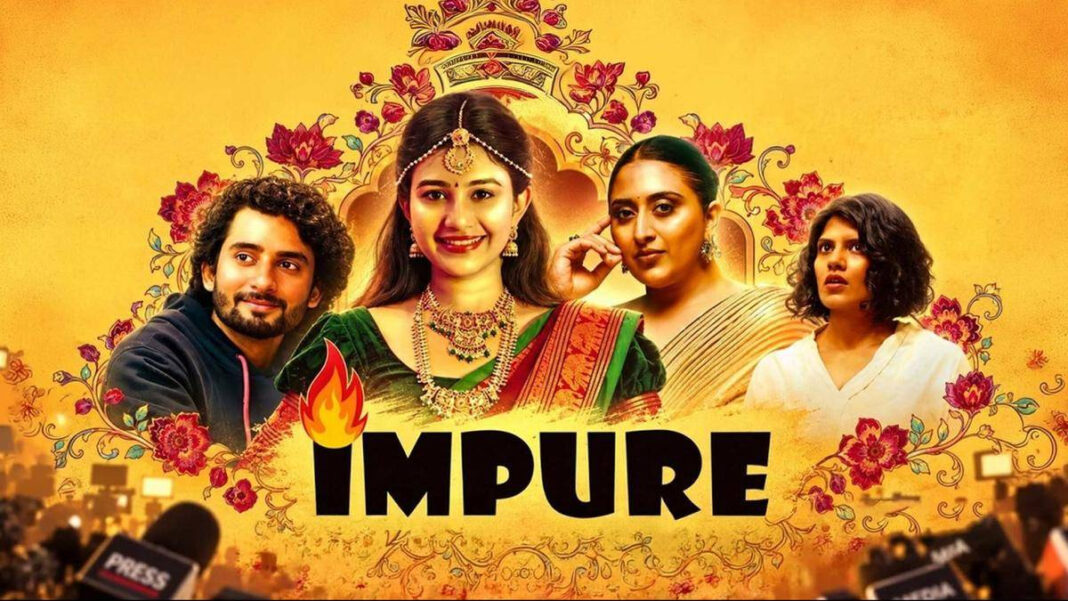
At its heart, Impure unfolds the story of two feuding cousins, Veera (played by Varahi Mallipamula) and Sandhya (Yashna Muthaluri), and their friend Pranav (Sai Krishna), as they navigate the murky waters of societal expectations while seeking personal identity. The narrative bears a striking resemblance to the spirit of Jane Austen’s Emma, wherein the protagonists grapple with the rigid norms imposed by their orthodox family in Visakhapatnam.
This nuanced film captures the turbulent emotions of its characters—messy, frustrated, and occasionally lost—allowing them to explore their desires and relationships amid the chaos of their lives. Veera, a returnee from the US, is attempting to restore her sense of purpose after a failed marriage. Meanwhile, Sandhya faces the repercussions of an ill-fated marriage proposal, triggered by an encounter from her past. Together with Pranav, who struggles to shift from child actor fame to adult roles, they exhibit a rich tapestry of self-discovery that resonates throughout the film’s runtime.
Key Developments
Impure runs for 102 minutes and deftly balances humor with poignant social commentary. The film illustrates the lives of its characters in meticulous detail, from Sandhya’s failed romance to Veera’s attempts to engage with her classical dance heritage through Kuchipudi lessons. These artistic endeavors serve as a backdrop for their struggles with identity and acceptance.
Several key moments drive the narrative: Sandhya’s job termination following her resistance against the advances of a lecherous boss forces her to reevaluate her self-worth, while the familial pressure to marry evokes confrontation between the characters. The film captures this drama with sharp dialogue and wit, weaving a social satire that critiques societal norms surrounding women’s roles and expectations.
Context and Themes
The film’s representation of its setting—a privileged, anglophone family—provides a critical lens through which it examines societal contradictions. While the initial portrayal of Sandhya’s parents may seem one-dimensional, their development throughout the film unveils underlying motivations and desires for their daughter’s happiness. The storytelling culminates in a powerful mother-daughter exchange, where Sandhya confronts her mother regarding her perceived ‘impurity’. This pivotal moment reshapes their relationship and highlights the film’s themes of liberation and self-acceptance.
The dynamics between the lead characters create compelling tension, as Veera grapples with her desire for connection and belonging, often leading her onto misguided paths. The film’s exploration of femininity, represented through elements like Shakti, deepens its narrative layer, giving audiences a multifaceted view of the female experience.
Statements and Reactions
While the male characters serve more as narrative tools than fully fleshed-out individuals, certain performances stand out. Pranav’s character is portrayed as a former child star searching for authentic connection amidst industry expectations, though his storyline feels somewhat underdeveloped. In contrast, the acceptance portrayed by Nish (Abhijit Sreenath), Sandhya’s romantic interest, offers a refreshing balance to the predominantly female-centric narrative.
Critics have noted the film’s tendency to rely heavily on dialogue, at times overshadowing visual storytelling. Yet, the bilingual script—while benefiting from sharper English dialogue—sometimes falters in seamless transitions between Telugu and English, presenting a unique challenge to its characters’ expression.
What Happens Next
The film’s closing sentiments underscore a vital message: happiness is not an ultimate destination but rather a conscious choice throughout one’s journey. This poignant reflection resonates with audiences, marking Impure as a significant contribution to Telugu cinema. Despite its imperfections, the film’s ambition to explore complex themes through varied storytelling showcases a fresh perspective.
Conclusion
Overall, Impure emerges as a sharp social satire masked as a coming-of-age tale, leaving an indelible mark through its engaging narrative, rich character work, and vivid performances. Under Nishanti Evani’s direction and Varahi Mallipamula’s writing, the film succeeds in crafting a distinctive identity that encourages its characters—and its viewers—to embrace the messiness of life and self-discovery.