
 "
/>
"
/>

‘Drishyam The Conclusion’: Ajay Devgn’s Bollywood-sized Allegory of a Post-Truth World
(This piece may contain mild spoilers)
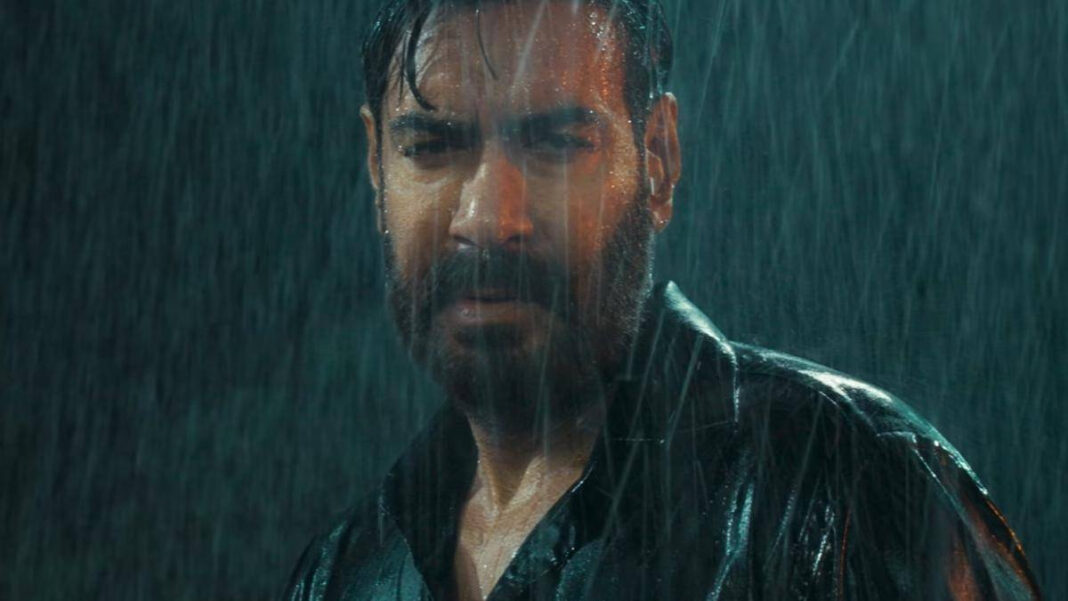
Drishyam The Conclusion presents a compelling narrative in which truth is weaponized, resting in the capable hands of Vijay Salgaonkar, portrayed by Ajay Devgn. Vijay, a seemingly simple cable operator, morphs into a master manipulator as he deploys a calculated scheme to shield his family from the oppressive forces of authority. This film explores the capabilities of a common man as he channels his inner authority to navigate and outwit various levels of state machinery, utilizing the very language that often obscures truth to mask violence. Under Vijay’s manipulative grasp, truth becomes not just mutable but corrosively deceptive.
Background and Overview
At the crux of the story lies a grievous crime: Vijay’s wife, Nandini (played by Shriya Saran), and their daughter Anju (Ishita Dutta) find themselves entangled in the murder of Sameer Deshmukh, the son of a powerful police officer. Faced with Sameer’s obsessive misconduct, which escalates to a violent culmination, the act of self-defense propels the Salgaonkar family into a spiral of deception. Vijay, acutely aware of the systemic injustices that often play out in his reality, swiftly pivots from passive victim to an assertive protector, deeply aware that their reasoning would be overshadowed by the influential Deshmukh family.
Key Developments
As the film unfolds, the narrative intricately reverses the dynamics typically found in stories of underdogs versus the system. Here, the power lies predominantly with the deceased; his mother, IG Meera Deshmukh (played by Tabu), spearheads an investigation determined to secure revenge for her son’s death. The film further complicates the notion of victimhood. While Vijay’s family embodies the traditional victim archetype, Meera operates within the confines of her loss, tirelessly pursuing justice for her son at any cost. This duality complicates the ethics of vengeance and justice as each character’s moral standing unravels.
In Drishyam The Conclusion, fresh evidence prompts a reopening of the case, challenging Vijay to maintain his carefully constructed facade. This installment broadens the scope of the initial storyline, inviting deeper metaphors to emerge from Vijay’s character. At one point, he asserts, “Kahani ka sach hona zaruri nahi, sach lagna zaroori hai” (A story doesn’t have to be true; it has to seem true). This ethos underpins his entire strategy as he attempts to weave a narrative that not only protects his family but also critiques the inherent power structures at play.
Contextualizing the Manipulation
Vijay’s journey through deception and misinformation reflects astonishing parallels to contemporary realities. The plot delivers unexpected twists, gradually revealing the elaborate schemes Vijay employs as he delivers a critique on how repeated falsehoods can morph into accepted truths. In an impactful scene, a lawyer, two police officers, and a businessman—the supposed bastions of society—are bested by Vijay, who, devoid of formal education, outsmarts them using their own rules against them.
The irony of this role reversal illustrates how the ostensibly naive protagonist employs familiar instruments of persuasion and deception that mirror those often wielded by the state. This leads to an unsettling reflection of authority where Vijay’s cunning undermines the very systems that should bring about justice.
Statements and Reactions
Beneath the layers of entertainment, Drishyam The Conclusion serves as a cautionary tale about authoritarianism. Here, Vijay’s subversion of state-sanctioned narratives forces a reckoning with the tools of mass control that have become commonplace in both film and society. The tension within the film arises from Vijay’s readiness to employ manipulation for what he perceives to be a just cause.
This nuanced portrayal diverges significantly from its Malayalam counterpart, presenting a Vijay who embodies the complexities of a post-truth world—a stark contrast to earlier heroic figures in Bollywood known for their straightforward righteousness. His calculated stance, marked by an unwavering commitment to deception, positions him as an icon of contemporary dilemmas faced in a society where narrative supremacy often triumphs over factual clarity.
What Happens Next
As the film progresses, viewers are left to ponder the ramifications of Vijay’s victories against the systemic evils he confronts. Each calculated move he makes against law enforcement not only emphasizes his intellect but also highlights the ironic shortcomings of those in power, suggesting that institutions designed to uphold justice can paradoxically become tools of oppression.
Conclusion
Drishyam The Conclusion extends an invitation for audiences to reflect on the blurred lines between truth and manifestation—a relevant discourse in today’s rapidly evolving landscape of information. The film ultimately champions a narrative steeped in moral ambiguity, compelling viewers to consider the potential dangers and implications of adopting a flexible approach to truth in an age dominated by misinformation and manipulation. Currently running in theaters, this gripping tale resonates with an evolving consciousness, elevating Vijay Salgaonkar to the status of an unlikely anti-hero in a post-truth era.