
Nation, Parliament must debate political appeals to children during elections: Madras High Court
The Madras High Court has called for a broader national and parliamentary debate on whether politicians should be permitted to appeal to children to influence family voting choices, and on the propriety of parents turning such interactions into social media content for “cheap” publicity. While condemning the practice as being in “bad taste” and reflective of “poor parenting,” the court declined to set aside an election result on this ground, holding that the current law does not treat such conduct as undue influence.
Court rejects petition challenging Salem North result
Justice D. Bharatha Chakravarthy made the observations while dismissing an election petition filed by DMK candidate R. Rajendran, who had challenged the election of TVK MLA K. Sivakumar from the Salem North constituency in the 2026 Assembly elections. The petitioner argued that TVK president and incumbent Chief Minister C. Joseph Vijay had, during the campaign, appealed to children to pester the adults in their families to vote for TVK candidates—an appeal alleged to exploit familial bonds and exert emotional pressure on voters.
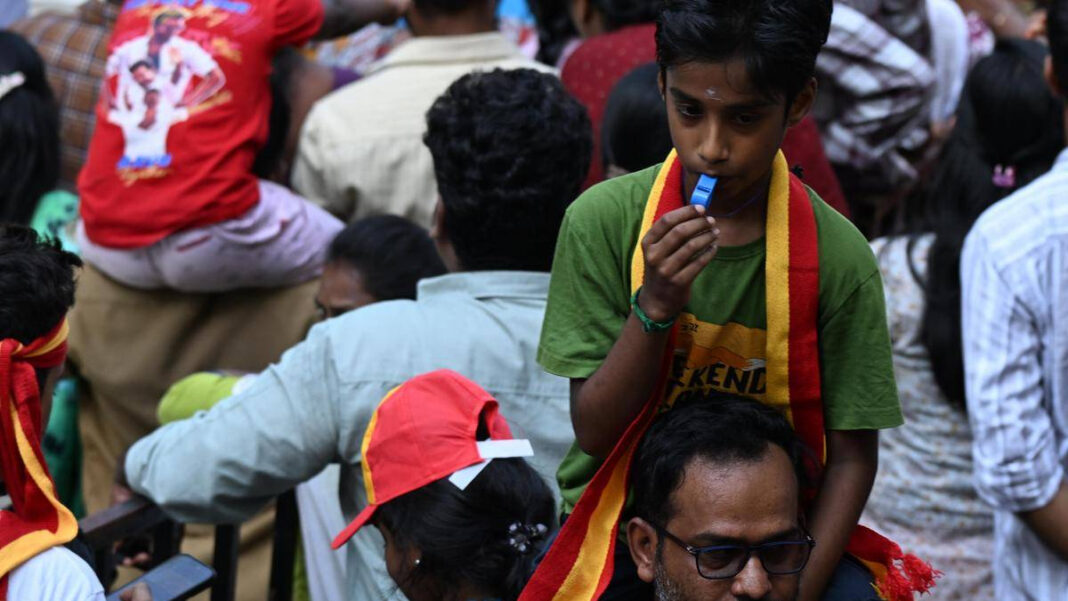
To substantiate the claim, Rajendran placed before the court a series of YouTube reels and videos, reportedly shot and posted by parents, showing children pressuring family members to vote for TVK. In several clips, children were seen pleading with, threatening, and in some instances even physically hitting and slapping adult relatives who resisted their demands to support the party.
‘Involving tender children in elections is in bad taste’
After viewing the materials, Justice Chakravarthy criticized the involvement of children in political messaging. “The entire act of involving tender children in elections is in bad taste, and the tasks they are made to perform at home for making YouTube reels reflect poor parenting besides being a cheap and politically motivated act,” he observed. He further questioned the propriety of parents making and posting such content for social media traction, stating that the phenomenon warrants serious public and legislative attention.
However, the court emphasized that under the law as it stands, such behavior does not meet the threshold required to annul a returned candidate’s election. “It is for the nation and Parliament to debate whether politicians should be allowed to make an appeal to children to influence their family members to vote for a party and whether it is right on the part of the parents to make YouTube reels out of such pestering,” Justice Chakravarthy said. He added that it was for Parliament to consider whether such acts should be statutorily recognized as grounds for setting aside an election.
‘Adults have free will’ and familial influence cuts both ways
The judge underscored the autonomy of adult voters, noting that the videos themselves suggested that parents had shown the children the TVK leader’s appeal and then encouraged them to perform for the recordings. “Even if the materials presented are true and correct, exploitation of the familial bond and emotions to sway the choice cannot be elevated to a status where the free will of adults is overpowered,” he wrote.
Justice Chakravarthy placed the issue in a wider social context, noting that the influence of children on household decisions—ranging from purchasing choices to political preferences—is a matter of global debate. “Just as parents influence children, children also influence parents and elders at home,” he observed, adding that this dynamic is especially pronounced in India, where children are often regarded with deep reverence and seen, in some traditions, as incarnations of ancestors or forebears. In such a setting, children’s words can carry significant weight in family decision-making, particularly in contemporary times.
Yet this influence, the court held, does not equate to an override of adult volition. “If the adults in the given situation (of choosing a candidate to represent them in the Legislative Assembly) take umbrage at the children’s pestering to give themselves an excuse to make a particular choice, that is again their volition and does not overpower their free will,” the judgment stated.
Legal threshold for undue influence not met
The court’s ruling turned on the interpretation of “undue influence” under Section 123 of the Representation of the People Act, 1951 (RPA). Justice Chakravarthy held that the statutory term must be construed strictly. While persuasion or canvassing, by itself, does not constitute interference, undue influence arises when the conduct reaches “the point of tyranny over the mind, overpowering the volition without convincing the judgment.”
Applying that test, the court found that the behavior depicted in the reels did not satisfy the legal threshold. The judge noted that the videos “cannot be seen as the tender children’s sole act of committing tyranny over the mind, overpowering volition. At best, they can be seen as convincing adults to vote for the party and the candidate. It is not based on informed consideration of the candidates or the way adults are supposed to make choices in a democracy,” he concluded. Nonetheless, he maintained that such persuasion—even when ethically questionable—falls short of the statutory grounds to nullify an election.
Parliament urged to consider legislative clarity
Although the court declined to invalidate the Salem North result, Justice Chakravarthy’s remarks strongly signaled concern over the appropriateness of using children as instruments of political messaging and of commodifying family dynamics for online visibility. Describing the practice as “cheap” and “politically motivated,” he urged that it be taken up for serious reflection beyond the courtroom.
Specifically, the judge said it was for Parliament to deliberate on whether direct political appeals to children should be prohibited during campaigns and whether acts intended to exploit familial relationships—particularly those amplified on social media—ought to be expressly recognized in election law as undue influence or as independent grounds for setting aside a candidate’s election. Such legislative clarity, he suggested, would help courts assess future disputes with a more precise statutory framework.
Outcome and significance
With these observations, the High Court dismissed the petition challenging K. Sivakumar’s election from Salem North, holding that the current legal standard under the RPA does not encompass the conduct alleged by the petitioner. The decision underscores a key boundary in India’s electoral jurisprudence: moral and social disapproval of campaign tactics does not, by itself, translate into legal invalidation of an election unless the conduct crosses the defined statutory thresholds.
The judgment leaves open the possibility of legislative intervention. By placing the issue before the nation and Parliament, the court highlighted a growing intersection of political campaigning, family life, and digital media—one that raises urgent questions about consent, influence, and the ethics of political persuasion involving children. Until Parliament acts, however, the court made clear that such appeals, while objectionable in the court’s view, do not amount to undue influence under existing law.
Published: October 16, 2026