
Greens question expertise of members on Keralam’s human-wildlife conflict panel
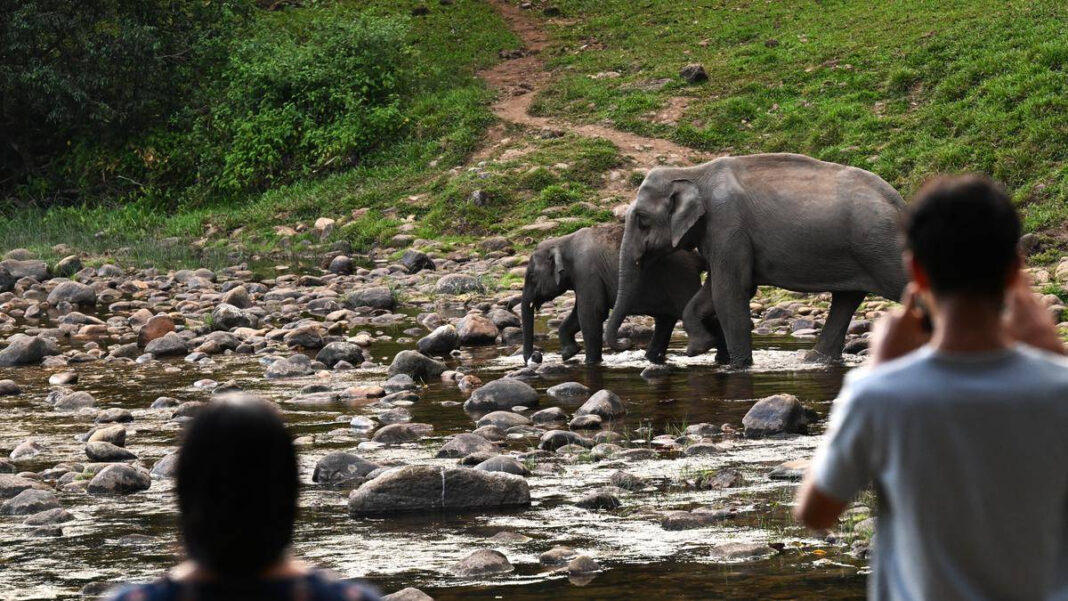
The Keralam government’s decision to constitute a seven-member State-level Advisory Committee on human-wildlife conflict mitigation has drawn sharp criticism from environmental and animal-rights groups, which allege that the panel lacks specialist expertise and adequate representation from communities most affected by the issue.
Panel’s formation and membership
The committee, set up on the recommendation of the State Forest and Wildlife department, brings together a mix of professionals. Conservationist M.K. Ranjitsinh is among those named to the panel, along with a hospitality-sector professional, a horticulture entrepreneur and Baiju Paul Mathews, who has reportedly been associated with the Kerala Independent Farmers Association (KIFA), a group that has campaigned aggressively for farmers’ rights. Mr. Mathews had earlier filed complaints concerning the actions of Forest department officers.
Besides Mr. Ranjitsinh, the other members are I.C. Balakrishnan, MLA; Michael Dominic of Casino Hotel, Willingdon Island, Kochi; Arun Zachariah, a former Chief Forest Veterinary Officer; Jose Jacob, managing director, Home Grown Nursery and Farms, Kanjirappally; Anand Kumar, Senior Scientist, Nature Conservation Foundation, Mysuru; and Mr. Mathews.
Concerns over expertise and representation
Environmental groups contend that the committee’s composition does not adequately reflect the breadth of expertise or on-the-ground experience needed to address escalating human-wildlife interactions. Critics say the panel lacks sufficient representation from Adivasi communities and traditional forest-dwelling farmers who routinely confront wildlife incursions, as well as from conservationists, scientists, biologists, animal behaviour experts and NGOs with direct experience in mitigating human-wildlife conflict.
The Wayanad Prakruthi Samrakshana Samiti (WPSS) questioned the criteria used to select members, arguing that some appointees lack relevant experience. WPSS president N. Badusha described Mr. Ranjitsinh as a prominent wildlife conservationist but alleged that his inclusion serves largely to lend credibility to the panel.
“Several scientists, biologists and experts in Keralam who have studied human-wildlife conflict and advised the government on the issue have been left out. The committee is a farce and an exercise to create an impression of action. Its composition is unlikely to produce meaningful recommendations to address the conflict. At the same time, at least one member of the committee has already demonstrated hostility towards forests and wildlife and could potentially contribute to further aggravating tensions,” said Mr. Badusha.
Allegations of bias and calls for review
Animal-rights advocates also voiced apprehensions. M.N. Jayachandran, State president of the Samasrishti Federation of Animal Rights Organisations of Kerala, warned that the current lineup could deepen rather than defuse tensions.
“Some members of the committee have supported the killing of wild animals as a means of addressing the conflict, and their inclusion raises serious concerns. Someone has seriously misled the Forest Minister. The Chief Minister should examine the matter more seriously, rather than assuming that everything the Minister has said is correct,” Mr. Jayachandran said.
The Animal and Nature Ethics Community (ANEC) Trust specifically questioned the inclusion of Mr. Mathews, citing his alleged opposition to the Forest and Wildlife department. “The contributions of the some of the members of the panel regarding the management of human-wildlife conflicts are unknown to the public. Only those persons with proven track record should have been included in the committee considering its sensitive mandate. The government should immediately reconstitute the panel by incorporating experts from the field,” said T.S. Santhosh, legal representative of ANEC.
Panel member’s response and farmer group’s clarification
Responding to the criticism, Mr. Mathews said he intends to bring a balanced perspective to the committee’s deliberations. “I have conducted several scientific studies on human-animal conflict and submitted recommendations to the Kerala High Court as suggested by the court. Perhaps it was this work that led to my inclusion in the advisory committee. My aim is to contribute a balanced perspective to solving the problem—enabling farmers to cultivate their land and people to live in the hilly regions without fear, while ensuring that wild animals have the space and opportunity to survive.”
KIFA chairperson Alex Ozhukayil confirmed that Mr. Mathews is a member of the organisation but stressed he does not represent KIFA on the committee. “He is a KIFA member, but he is not representing KIFA in any official capacity. He is just a member. He has become a member of the advisory committee in his individual capacity and not as a representative of KIFA,” Mr. Ozhukayil said.
Government response awaited
As the controversy builds, calls for the government to reconsider and reconstitute the panel have intensified. Chief Wildlife Warden P. Pugazhendi did not immediately respond to the criticism. It remains to be seen whether the Forest and Wildlife department or the State government will revisit the selection process or expand the panel to include more field experts and representatives from affected communities.
The dispute underscores the high stakes and deep sensitivities around crafting a durable framework to reduce human-wildlife conflict in Keralam—one that balances safety and livelihoods with wildlife conservation, and commands public confidence through demonstrable expertise and inclusive representation.