
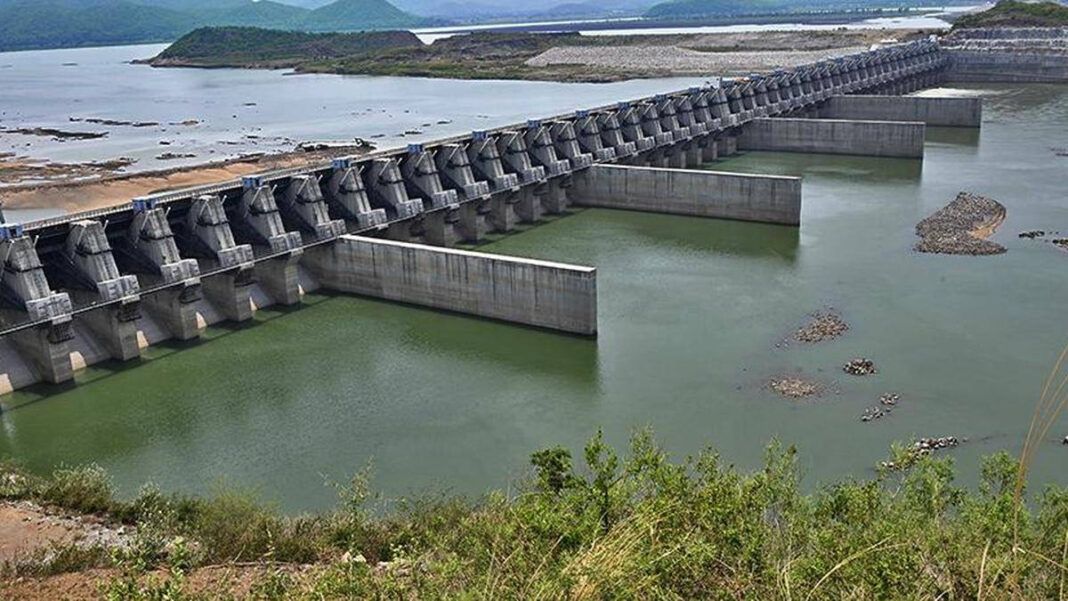

Progress, quality of Polavaram project works satisfactory, says expert panel
An international Panel of Experts (PoE) assisting the Andhra Pradesh government and Central agencies on the Polavaram Irrigation Project has recorded satisfactory progress and construction quality at the site, noting that key issues flagged in earlier reviews have been addressed. In its seventh site visit report, the panel confirmed that the project’s Diaphragm Wall (D-Wall) was completed on April 2, 2026, and said a comprehensive quality assurance and quality control (QA/QC) programme is in place.
Project overview
The Polavaram project, an ambitious multipurpose irrigation undertaking under construction across the Godavari river in Andhra Pradesh, has been under continuous technical scrutiny by an international panel to ensure adherence to design, safety and quality benchmarks. The PoE works with state and central authorities to review methodology, materials and execution across major components of the project.
Key findings from the seventh site visit
According to the PoE, the D-Wall—an essential element providing cutoff and seepage control—has been completed, with the exposed sections appearing to be of good quality and showing no visible defects. The panel reported that past concerns relating to “bleeding” and “bedrock embedment” have been resolved. QA/QC results presented to the experts indicated that specified material performance requirements have generally been met.
The panel further noted that a dedicated quality control and assurance manual contains the necessary guidance for dam construction, including testing regimes. It found that the specified types and frequency of testing are being followed, and that materials failing to meet standards are being removed with corrective works subsequently undertaken.
Design updates and technical advances
The PoE highlighted that the updated design for the second gap in the Earth-cum-Rock Fill (ECRF) dam is grounded in thorough geological, geotechnical and engineering investigations. These include permeability testing and laboratory consolidation analysis. The panel described the current design methodology as a substantial advancement over earlier design stages, reflecting more refined understanding of site conditions and performance criteria.
Construction quality and progress
Construction quality has improved notably in critical areas such as clay-core compaction and zone definition, the report observed. The panel concluded that it found no major deficiencies that would impede progress on the second gap of the ECRF dam.
In GAP-I of the ECRF dam, the PoE recorded satisfactory progress, citing improved placement and compaction methods. Grouting works presented to the panel were assessed as yielding good results. The experts recommended continued documentation and monitoring as integral to the project’s ongoing quality and safety management.
Instrumentation and monitoring
The experts described the planned instrumentation for the dams as “very comprehensive,” indicating confidence in the system’s capacity to monitor performance and safety parameters. They also noted that recommendations from the previous site visit have been addressed satisfactorily.
Next steps
While endorsing the overall trajectory of the works, the PoE underscored the need to continue rigorous QA/QC processes, sustain detailed documentation and maintain real-time monitoring as construction advances on key components, including the ECRF dam. These measures, the panel indicated, are central to ensuring long-term performance and safety.
Conclusion
The PoE’s latest assessment signals a positive turn for the Polavaram Irrigation Project, with improved construction standards, resolved technical issues and strengthened design approaches. With the D-Wall completed and quality controls in place, the project’s next phases will proceed under reinforced oversight and instrumentation designed to uphold safety and performance benchmarks.