 "
/>
"
/>

Singeetham Srinivasa Rao and Dr. Rajkumar Family: A Lasting Bond
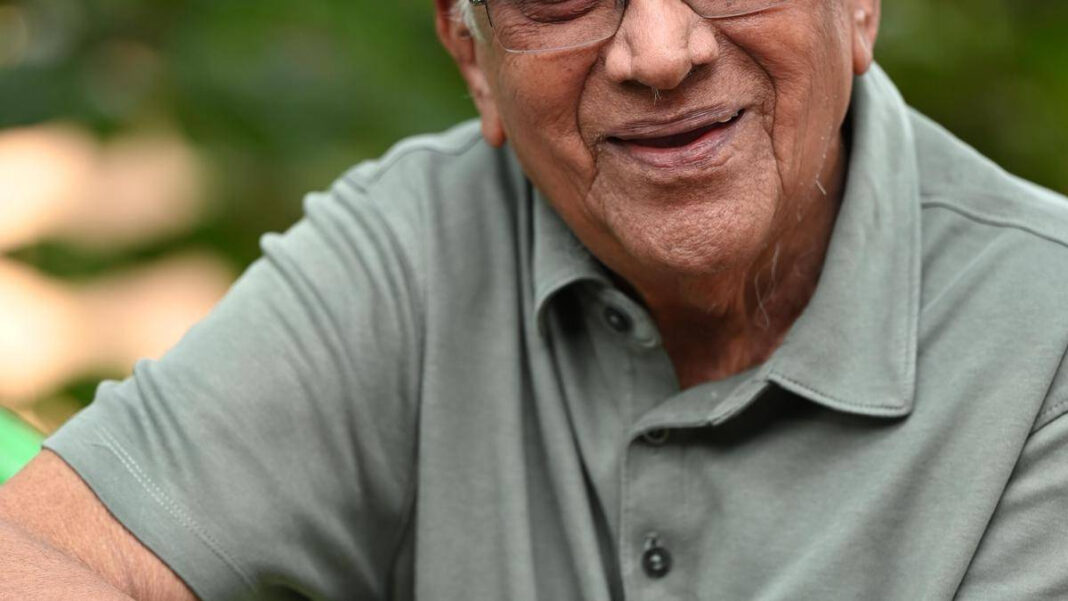
Legendary filmmaker Singeetham Srinivasa Rao, who passed away at the age of 94 on October 4, 2026, left behind a significant legacy defined by his cherished association with the illustrious Dr. Rajkumar and his family. Their enduring bond profoundly influenced the trajectory of Kannada cinema and enriched the careers of the Rajkumar family.
Background of Their Collaboration
Singeetham’s relationship with Dr. Rajkumar began when he made his Kannada film debut with Halu Jenu in 1982, starring Rajkumar, alongside Madhavi and Roopa Devi. This film quickly established itself as a classic, forming a blueprint for tragic-comedies that resonated deeply with audiences. Following the success of Halu Jenu, their collaboration continued with the massive blockbuster Chalisuva Modagalu in the same year. The marital drama, which featured a courtroom conflict, showcased the talents of a young Puneeth Rajkumar with the well-loved song ‘Kaanadante Maayavadenu’. The memorable screenplays and dialogues for Singeetham’s popular films were deftly crafted by the legendary Chi. Udayashankar.
Impact on the Rajkumar Family
Singeetham’s influence extended beyond mere collaboration; he played a pivotal role in nurturing Puneeth Rajkumar’s career as a child actor. Puneeth, credited as Master Lohith during his early acting days, won the Karnataka State Award for his performance in Chalisuva Modagalu, and later, for Eradu Nakshatragalu in 1983, largely due to Singeetham’s ability to elicit extraordinary performances from young talents. The director skillfully guided the seven-year-old Puneeth through a complex dual role, earning acclaim for his direction.
Further solidifying their connection, Singeetham directed Devatha Manushya in 1988, which marked Dr. Rajkumar’s 200th film. Although this film did not meet the high expectations at the box office, historian K. Puttaswamy noted that the film featured Rajkumar in an age-appropriate role, but fans were perhaps yearning for the romantic hero persona they adored.
A Legacy Continuously Honored
As Singeetham transitioned into directing the debut films of Dr. Rajkumar’s sons, Shivarajkumar and Raghavendra Rajkumar, their close-knit relationship became evident. The film Anand (1986), which marked Shivarajkumar’s entry into the film industry, became a notable success, running for 38 weeks in theaters. Shivarajkumar publicly expressed his gratitude, stating, “You gave me the start of my 40-year journey in films with Anand. You inspired the whole world by directing a film (Sing Geetham) at 94 years. You’re the best example of the adage ‘age is just a number.’”
Humor and Innovation in Cinema
Singeetham’s distinctive knack for humor is exemplified in his film Bhagyada Lakshmi Baramma (1986), featuring Dr. Rajkumar and Madhavi. The film stands out not only for its comedic elements but also for its strong commentary on societal changes and the economy, complemented by a well-rounded female character. Cinephile Vijeth Balila emphasized that despite Dr. Rajkumar’s star power, the film artfully transcended typical superstar tropes, allowing space for creative freedom and innovation.
Pushing Boundaries with Pushpaka Vimana
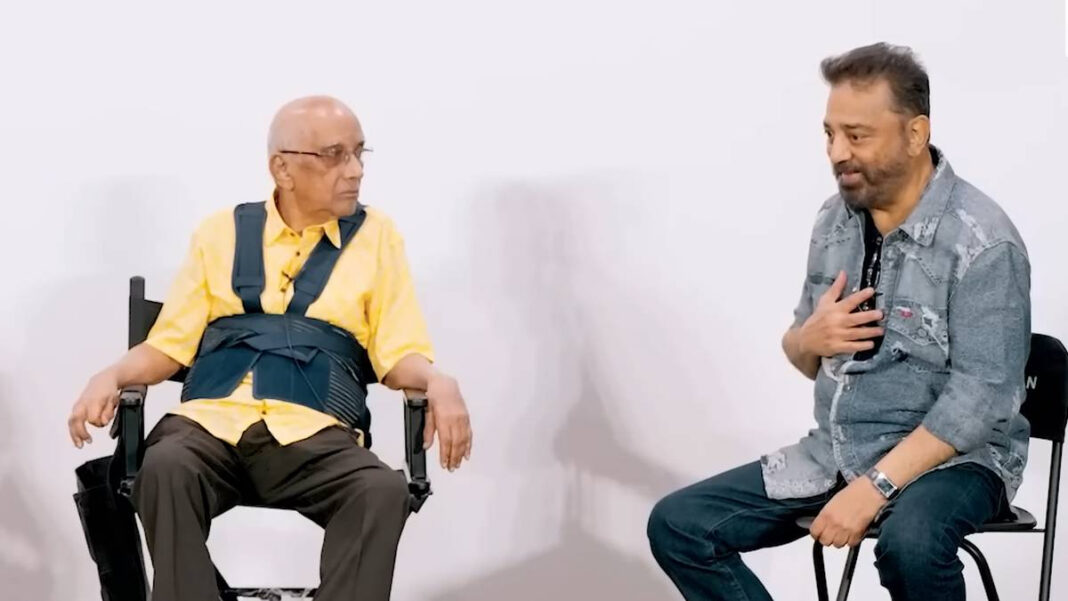
One of Singeetham’s most experimental works is the silent film Pushpaka Vimana (1987), which dared to explore a unique narrative style within mainstream Indian cinema. With a strong connection to Karnataka, as it was produced by Shringar Nagaraj, a Kannadiga, the film mainly filmed at Bengaluru’s Windsor Manor hotel. In discussing his choice to create a silent film, Singeetham proclaimed, “Why should somebody go to the top of Everest and hoist a flag? It’s a challenge, and that’s why people attempt it.” The hotel has since gained cultural significance, with many recalling the film when passing by the landmark. Kamal Haasan, the film’s protagonist, noted the enduring legacy of the hotel in remembering the film during a visit to Bengaluru in 2022.
Contributions to Parallel Cinema
Beyond commercial cinema, Singeetham played a role in elevating the Kannada parallel cinema movement. He served as executive director to Pattabhirama Reddy for the landmark film Samskara (1970). Over the years, Singeetham’s extensive filmography included 12 Kannada movies, each contributing significantly to the development of the industry.
Conclusion
Singeetham Srinivasa Rao’s death marks the closing of a remarkable chapter in the annals of Kannada cinema. His enduring bond with Dr. Rajkumar and the resulting impact on his family and the film industry will be remembered and cherished by audiences and filmmakers alike. Through his innovative spirit, deep camaraderie with the Rajkumar family, and a legacy of beloved films, Singeetham leaves behind an indelible mark on Indian cinema that will resonate for generations.