 "
/>
"
/>

Singeetham Srinivasa Rao and Kamal Haasan: A look back at one of Indian cinema’s iconic duos
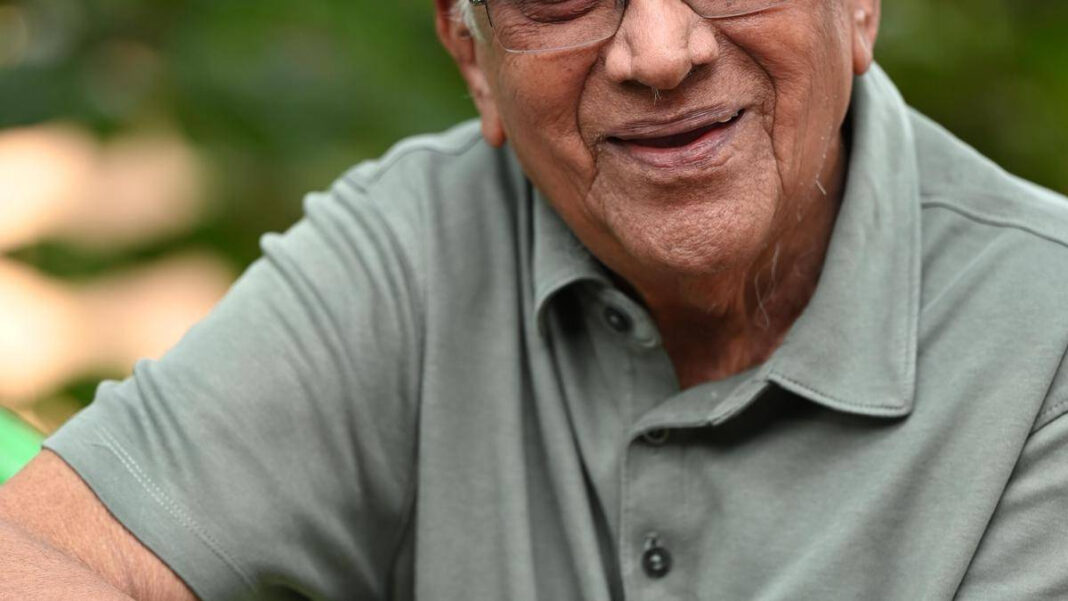
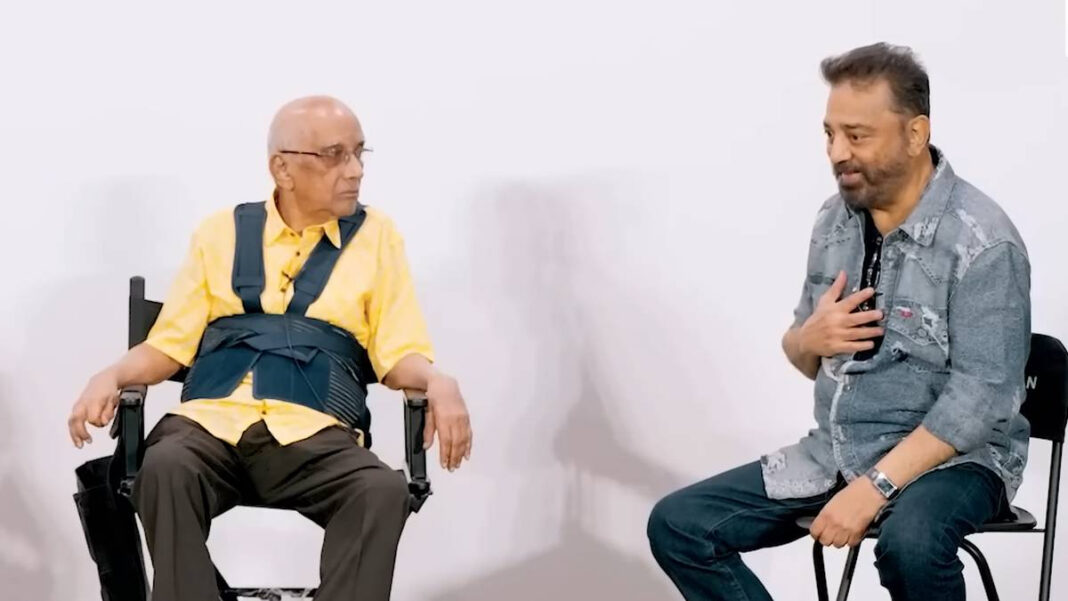
In a career that encompassed six decades, revered filmmaker Singeetham Srinivasa Rao, who sadly passed away last night, leaves behind a rich legacy defined by his contributions to the Telugu, Tamil, Kannada, and Hindi film industries. Among his numerous collaborations, none are more notable than those with legendary actor Kamal Haasan, where their shared passion for unconventional narratives and artistic experimentation produced some of the most beloved films in Indian cinema.
Creative Synergy
Throughout their partnership, Kamal Haasan served as both actor and producer, while Singeetham emerged as the visionary director. The duo collaborated on seven distinct projects, beginning with the 1979 Telugu action-comedy Sommokadidhi Sokokadidhi. This film marked a turning point in Kamal’s career as he took on dual roles—an approach that would eventually influence later films, manifesting in the quadruple roles of Michael Madana Kama Rajan. However, from this collection of seven films, four stand out, significantly amplifying the impact of their collaboration.
Raaja Paarvai
Their partnership deepened in 1981 with Raja Paarvai, a film that gained cult status in Tamil cinema. This project was particularly meaningful as it marked Kamal’s 100th film and his debut as a producer under his home banner, Haasan Brothers, which would later evolve into Raaj Kamal Films International. Notably, this film also marked the start of Kamal’s active creative role, as he penned its story.
The narrative revolves around a blind violinist, played by Kamal, who falls in love with a Christian woman portrayed by Madhavi. It also introduced maestro Ilaiyaraaja to audiences, enriching the film with a captivating score. Moreover, the artistic landscape was enhanced by the debut of acclaimed art director Thota Tharani.
Kamal Haasan and Madhavi in Raaja Paarvai | Photo Credit: The Hindu Archives
Pushpaka Vimana
Their next venture, Pushpaka Vimana, released in 1987, came with its own unique challenges and fascinating backstories. Inspired by a scene he had once observed as an assistant director—which depicted a character expressing fear without dialogue—Singeetham embarked on this ambitious project. The film, which was devoid of any spoken dialogue, pushed creative boundaries in the cinematic landscape of the 1980s.
In an interview, Singeetham elucidated his motivations: “I ask them, ‘Why should a person climb the Himalayas and hoist the national flag there? They can comfortably sit at home and have breakfast. Why take the trouble?’ Because it’s an achievement.”
Centering around identity theft—a recurrent theme in Singeetham’s filmography—Pushpaka Vimana follows an unemployed graduate who assumes the identity of a drunken businessman, only to find himself embroiled in a cascade of troubles. The film was so groundbreaking it won the National Award for Best Popular Film Providing Wholesome Entertainment.
Kamal Haasan in the Tamil film Pesum Padam (“Pushpak” in Hindi) | Photo Credit: The Hindu Photo Archives
Apoorva Sagodharargal
Next came Apoorva Sagodharargal in 1989, which posed its own set of challenges. In this film, Kamal portrayed three roles, including one of a character with dwarfism. This unique casting decision was brought forth by Kamal himself after being initially discouraged by his mentor, the legendary K. Balachander. Overcoming technical barriers, the production team devised special shoes for Kamal and utilized innovative techniques to convincingly depict the character’s stature.
The screenplay, crafted by Kamal alongside Crazy Mohan, tells the gripping story of Appu, a twin separated at birth who embarks on a quest for vengeance after his father’s murder. Additionally, Ilaiyaraaja’s stirring scores solidified the film’s emotional impact, especially the memorable line, “Raaja kaiya vacha, adhu wrong’a ponadhilla.” This film remains a testament to Tamil cinema’s storied history.
A still from Apoorva Sagothargal (1989) | Photo Credit: The Hindu Archives
Michael Madana Kama Rajan
Perhaps the zenith of their collaboration is encapsulated in Michael Madana Kama Rajan, a film that brings to life the quintessential themes of mistaken identities and siblings separated at birth, creating a comedic masterpiece rooted in brilliant storytelling. The screenplay, penned by Kamal with dialogues from Mohan, found inspiration from a Pakistani film centered around quadruplet siblings.
Considered one of the finest Tamil films ever made, its enduring popularity has solidified its status as a classic. In this film, Kamal showcases his remarkable range, leading to a narrative addiction that has resonated with audiences across generations.
Kamal Haasan in the Tamil film Michael Madana Kamarajan | Photo Credit: The Hindu Photo Archives
The Legacy of Singeetham and Kamal
Post Michael Madana Kama Rajan, the duo collaborated on Kathala Kathala and Mumbai Xpress, but it is their initial films that continue to be celebrated for their innovation and artistic merit. As we reflect on Singeetham Srinivasa Rao’s passing, audiences are reminded of the extraordinary partnership that has reshaped Tamil cinema. Across their seven collaborative efforts, they consistently challenged themselves to explore ideas that were often deemed too unconventional. Together, this remarkable filmmaker and daring actor-producer forged a path of cinematic magic that remains unmatched.
A poignant retrospective titled Apoorva Singeetham, fronted by Kamal himself, serves as a fitting farewell to this influential partnership. It highlights the deeply rooted kinship between them, showcasing how Singeetham embraced Kamal’s daring creative spirit, leading to transformative cinema.