
Mad Sandhu killing: Vanishing social media claims, police probe, and Punjab’s queer history
The busy commercial-residential stretch of Loharka Road in Amritsar bears the aftermath of a killing that has sent shock waves through Punjab’s LGBTQA+ community. On Saturday evening, LGBTQA+ influencer and makeup artist Mad Sandhu—officially named Madhusudan—was shot dead by unidentified assailants on a motorcycle, prompting a police investigation and an outpouring of grief, anger and fear from activists and allies across the State.
What happened
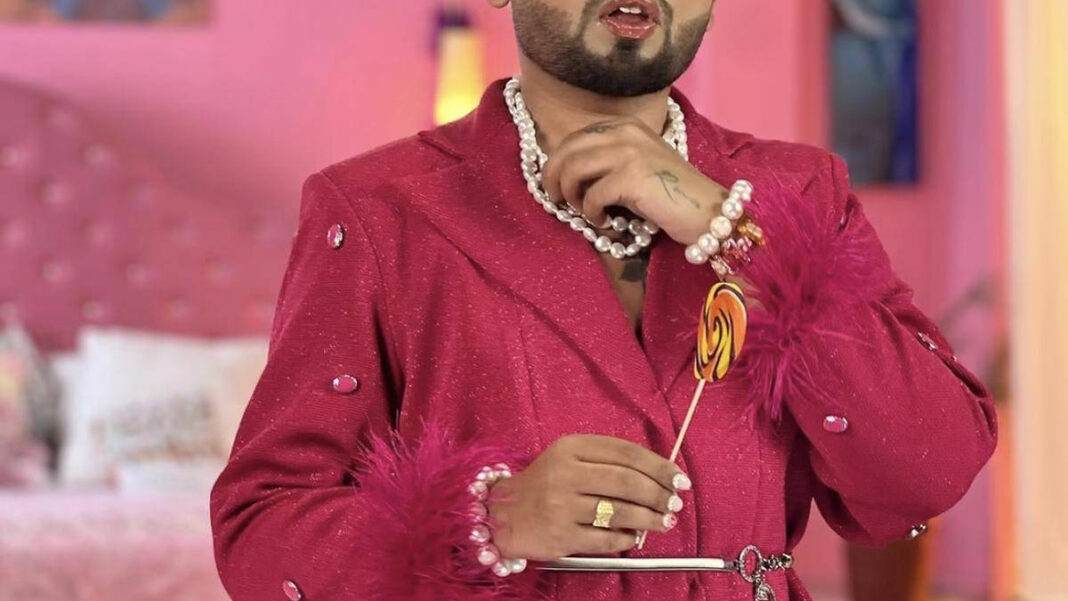
Sandhu was gunned down near a bustling lane on Loharka Road, a crime that witnesses said unfolded swiftly as bike-borne attackers opened fire before escaping. The murder followed months of online trolling and threats targeted at the 26-year-old, who had become one of Punjab’s most visible queer personalities. Sandhu had amassed more than 232,000 followers on Instagram and built a public career as a makeup artist, entrepreneur and entertainer.
Claims online, but posts disappear
A day after the killing, reports circulated that social media accounts had claimed responsibility for Sandhu’s murder, including a handle identified as “Goldy Dhillon.” By Sunday evening, however, the purported posts were no longer visible, fuelling speculation about their origin and authenticity.
Amritsar’s Commissioner of Police, Harmanbir Singh Gill, said officers are evaluating all angles. “We cannot verify the authenticity of these social media posts as they are posted from abroad. We are viewing this case from multiple angles, the investigation is going in the right direction and we will crack it soon,” he said.
Separately, Sikh radical groups have come under scrutiny after an allegedly three-month-old audio-video clip surfaced online, reportedly showing a confrontation between Sandhu and Nihang jathedar Manpreet Singh Khalsa. The provenance and content of the clip are yet to be independently verified.
A public figure who refused to be silenced
Despite the online harassment he faced, Sandhu turned his visibility into a livelihood and a platform. He founded the Mane Lane Unisex Salon, appeared in the Punjabi film Oye Bhola Oye 2, featured in music videos including Ragda, and acted in the drama-comedy-thriller web series Youth Kartoot. His content mixed makeup tutorials, lifestyle videos and candid commentary about gender expression and identity—drawing both a devoted following and relentless trolling.
Community grief and fear
Sandhu’s killing has prompted anguished reactions from queer collectives and feminist student groups in Punjab. “It is probably because this is the first such crime against a person from the LGBTQA+ community in Punjab, even though they have been discriminated against for a long time now,” said Manu, a member of Queering in Chandigarh, an LGBTQA+ collective formed in 2022. He added that community members are horrified and fearful.
Manu said threats from anonymous social media accounts are commonplace for queer people in the region, but insisted that expression will not be stifled. “When it comes to Sikh religion, the people who claim to be true upholders of Sikhism and then threaten or harm the oppressed aren’t the real Sikhs. They just want to suppress anything that doesn’t fit their definition of gender expression. It goes against the basic tenets of ‘Nirbhau Nivair’ and ‘Manas ki jaat sabhai ekai pehchanbo’ of Sikhism,” he said.
Pop culture, language and prejudice
Manu also pointed to Punjabi pop culture’s frequent ridicule of queer people. Citing a recent example, he criticized the use of a derogatory slur—“chakka”—in singer-actor Diljit Dosanjh’s song “Aroma.” “His fans defended that he’s not abusing trans people but talking about ‘lesser men’. But even if you use an abuse traditionally employed against trans/gay people, it’s perpetuating queerphobia,” he said. He noted that while some Punjabi literature engages seriously with queer themes, it remains far from the mainstream; Sukirat Anand’s Jalawatan, one of the earlier Punjabi stories on a lesbian relationship, is among the few often cited within activist circles.
Queer histories in Punjab’s cultural memory
Dhananjay Chauhan, the first transgender person to enroll at Panjab University, linked today’s struggles to a deeper tapestry of South Asian and Punjabi history. “The 16th Century Punjabi Sufi poet Shah Hussain and his young companion Madho Lal shared a profound romantic bond,” she said, referring to the celebrated figure Madho Lal Hussain revered in Lahore. “Also, when Baba Bulle Shah says, ‘mai nach nach yaar manaona pave lok kanjari bole’, he is referring to queer people,” she added. Chauhan also referenced the Jamali Kamali Mosque and Tomb in Delhi, often discussed in folklore and scholarship about same-sex love in South Asian history, to underscore that queerness is neither new nor alien to the region’s cultural landscape.
Legal anxieties after the killing
Chauhan warned that the murder could push many LGBTQA+ individuals back into the closet. “Especially when Section 377 was repealed/replaced when the Bharatiya Nyaya Sanhita (BNS) came into force in 2024,” she said, arguing that the current legal framework does not adequately protect LGBTQA+ people from sexual violence. “BNS does not protect LGBTQA+ people from rape; and this murder can further push them back to the closet,” she added. Her comments reflect a broader concern among activists who say that criminal law reforms must be matched with policies that explicitly safeguard queer and transgender people.
Student activists decry threats, cancelled Pride
Among the groups speaking out is the Punjab Feminist Union of Students (PFUS). Member Harpuneet Kaur, 26, said threats against queer communities in the region are not new, recalling that the Amritsar Pride 2025 march was called off after radical Sikh groups issued strong warnings. “What’s wrong with a makeup artist putting herself/himself out there? Don’t radical Sikhs use social media to further their beliefs? What they do is right, but what others, especially people from LGBTQA+ community do is wrong? Is that not inequality? And isn’t Sikhism all about fighting inequality?” she asked.
Organisers linked with Amritsar Pride did not respond to requests for comment, citing safety concerns. Kaur echoed Manu’s view that LGBTQA+ people are among the most vulnerable in Punjab. “Sikhs are a minority everywhere, other than in Punjab. One has to treat minorities with respect to expect the same, I feel,” she said.
Police inquiry and the road ahead
Police officials have not confirmed a motive for the killing and say they are examining both the removed social media claims and the alleged confrontation video as part of a broader probe. Investigators have also cautioned against drawing conclusions from unverified online material, noting that several posts appear to have originated from outside India.
For now, the case has placed a spotlight on the risks faced by queer public figures in Punjab. It has also reopened conversations about how religion, culture and law shape gender and sexual minorities’ lives—on the street, online and in the stories Punjab tells about itself.
Significance
Sandhu’s death has become a flashpoint linking violence, social media disinformation, and the precariousness of queer visibility. As the investigation progresses, advocates say what happens next will matter beyond one case: it could determine whether LGBTQA+ people feel safer to live openly—or more compelled to retreat into silence.