
The Tamil Nadu Lok Sabha bypoll that triggered India’s first confidence motion
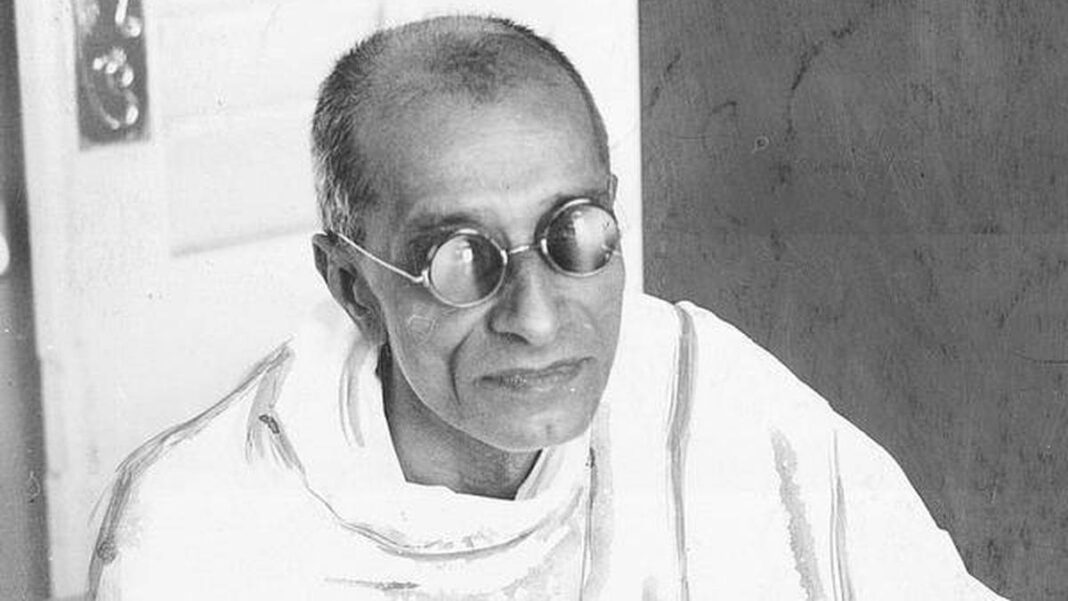
An unexpected outcome in a 1952 Tamil Nadu by-election prompted Chief Minister C. Rajagopalachari (Rajaji) to pioneer a historic first in India’s legislatures: a government-initiated motion of confidence. The trust vote, moved in the Madras Legislative Assembly after Congress lost the Aruppukottai Lok Sabha bypoll that Rajaji had cast as a referendum on his nascent administration, became the earliest recorded instance of such a motion in the country.
A constituency and a resignation
The Aruppukottai Lok Sabha constituency, regarded in the early 1950s as among the largest in India with its expanse running from Rameswaram in the east to Sattur in the north, went to a by-election in June 1952 after U. Muthuramalinga Thevar resigned his seat. Thevar, a prominent State leader of the Forward Bloc (Marxist Group), had simultaneously won a seat in the two-member Mudukulathur Assembly constituency in the 1952 general elections and chose to retain his Assembly berth, creating the Lok Sabha vacancy.
The bypoll came just weeks after simultaneous elections to the Lok Sabha and the Assembly concluded in February 1952. On April 10, Rajaji was sworn in as Chief Minister, leading a Congress government that had secured power despite not holding an outright majority on its own.
Rajaji’s referendum appeal
Almost immediately, the new regime confronted two parliamentary by-elections: Coimbatore, where T.A. Ramalingam Chettiar’s death had created a vacancy, and Aruppukottai. Polling was scheduled for June 14 in Coimbatore and June 23 in Aruppukottai. The key contests pitted N.M. Lingam of the Congress against Parvati Krishnan of the Communist Party of India (CPI) in Coimbatore, and Congress’s Rajathi Kunjithapatham against the Forward Bloc (Marxist Group)’s M.D. Ramasamy in Aruppukottai.
Rajaji framed both contests as a direct vote on his two-month-old Cabinet. Appealing to Coimbatore’s electorate, he declared: “There may be many issues, local and personal. But, the main question is: Does this constituency want the present Ministry to continue or does it desire Communists to take over the affairs of the State?”
Days before polling in Aruppukottai, the Chief Minister made a similar pitch at Kovilpatti railway station: “The test this time is whether you want me or not. If you want me, you must support the candidate set up by the Congress. This election is coming after I have assumed responsibility of administering this State. The by-election will show to what extent people supported this Government of mine.”
The verdict: Coimbatore cheers, Aruppukottai stings
The results split sharply. In Coimbatore, Congress won decisively: N.M. Lingam secured 92,465 votes out of 1,49,664 polled, with a margin of about 41,300 votes over CPI’s Parvati Krishnan, who received nearly 51,140 votes, according to reports published on June 18.
Aruppukottai, however, delivered a jolt. The Forward Bloc (Marxist Group) candidate defeated the Congress nominee by 18,835 votes. The FB(MG) candidate polled 69,126 votes to Rajathi Kunjithapatham’s 50,291, as reported on June 27.
C. Subramaniam, then Finance Minister in Rajaji’s Cabinet and Leader of the House, later recalled in his memoirs “Hand of Destiny (Volume 1)” that the Chief Minister had taken the by-election as a “prestige issue.” Following the defeat, Subramaniam wrote, “we were in a dilemma. Rajaji was taking the stand that he had failed to gain the confidence of the people. But, many people told him that even if Mahatma Gandhi had contested in that region, he would have been defeated—such was the power of the caste factor there. So, it was decided that the Ministry should seek a vote of confidence in the Assembly.”
From setback to a legislative first
On June 30, 1952, the Madras Legislative Assembly took up a motion of confidence moved by Finance Minister Subramaniam. The visitors’ galleries were “fully packed,” according to contemporaneous accounts on July 1. Speaker J. Sivashanmugam Pillai announced it was the first time such a motion had been brought before the legislature. In the absence of specific rules, he said he would follow the practice in England, which did not allow amendments to such motions. The Review of the First Assembly (1952–57) later noted it was the first instance of a confidence motion in any legislature in India.
The trust motion was taken up ahead of the budget discussion. Addressing the House, Rajaji acknowledged the Aruppukottai outcome “has disturbed my mind.” He added: “I made a straight appeal, and whatever may be the reason and the circumstances, the result of the polling there is that the voters of that constituency gave an answer adverse to me.” Though some argued he lacked sufficient grounds to doubt his standing and that “this test was unnecessary,” Rajaji contended that “the nature of the tasks and policies I have initiated and the nature of the tasks I have yet to undertake call for a clear, decisive and firm indication of the confidence of the House.”
Inside the House: Debate and dissent
Opposition leader P. Ramamurti of the CPI delivered what Subramaniam later described as the Opposition’s best speech. Ramamurti questioned the very need for the exercise, arguing he did not believe “a vote of confidence obtained in this House was in any way going to alter the verdict of the people of the Aruppukottai constituency.” At the time, the Opposition was grouped under the United Democratic Front (UDF), comprising the CPI, the Kisan-Mazdoor Praja Party, the Socialists and the Forward Bloc (Marxist Group).
The debate stretched until July 3, with 71 members participating. Summing up, Subramaniam conceded that while Congress was the single largest party, it remained in a minority, underscoring why the government had come to the House seeking support to continue in office.
The numbers: Confidence secured
Voting commenced around 7 p.m. on July 3. Reports on July 4 recorded that the Krishikar Lok Party and the Muslim League voted en bloc with Congress, along with several Independents. The House endorsed confidence in Rajaji’s Council of Ministers by 200 votes to 151—formally adopting the first government-initiated confidence motion in India.
Why it mattered
By treating a by-election as a referendum on his barely two-month-old government—and then translating a setback into a structured House test—Rajaji set a precedent that would shape legislative practice across India. The 1952 Madras Assembly confidence motion established a template for gauging executive legitimacy in the legislature, anchoring a convention that has since become integral to parliamentary democracy in the country.