
Congress-ruled States to adopt ‘action plan’ against RSS agenda in education
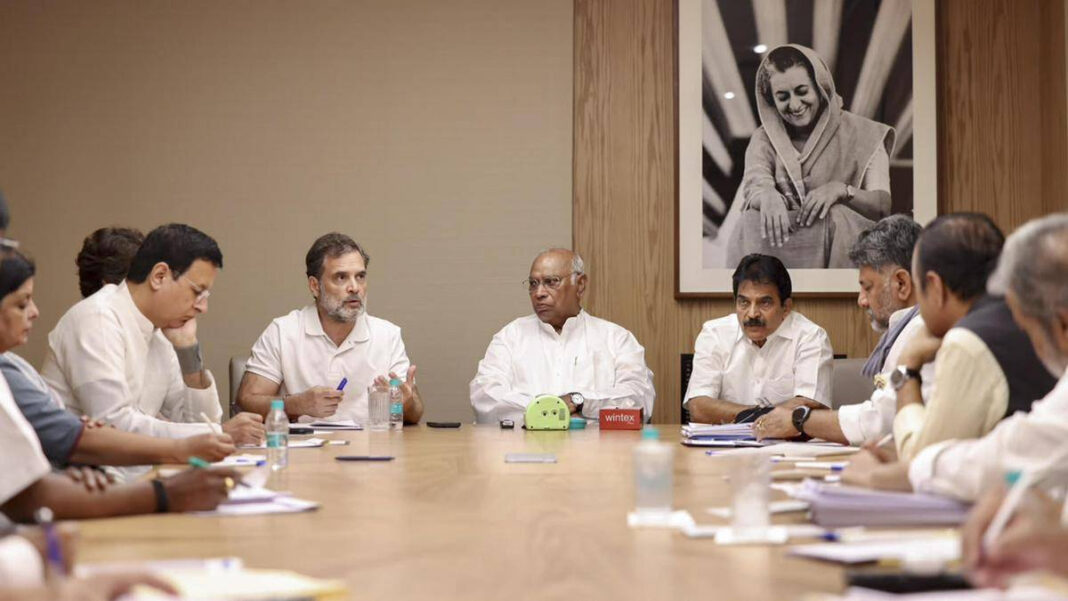
Congress president Mallikarjun Kharge and Leader of the Opposition in the Lok Sabha Rahul Gandhi on Tuesday met Chief Ministers and Education Ministers of Congress-ruled States in New Delhi to coordinate a policy push aimed at countering what the party alleges is the Rashtriya Swayamsevak Sangh’s (RSS) influence over education. The leadership urged States under the party’s control to eschew the Sangh Parivar’s agenda in curricula and administration, and to advance student-centric reforms instead. Within a month, the States are to draft comprehensive action plans following a series of expert-driven consultations.
Meeting underscores coordinated policy push
The closed-door meeting, held on September 29, 2026, brought together top party leaders and government heads to discuss education policy priorities. According to Congress general secretary (organisation) K.C. Venugopal, the discussions focused on pushing back against the RSS’ “divisive agenda” in the education sector and on positioning Congress-ruled States as national models for progressive, student-focused policy.
Alongside Mr. Kharge and Mr. Gandhi, senior leaders, including Priyanka Gandhi, as well as AICC general secretaries and State in-charges, attended the deliberations. The Congress leadership is learnt to have advised the assembled Chief Ministers and Education Ministers not to implement measures aligned with the Sangh Parivar in their school and higher education systems.
Decisions: State seminars, one-month action plans, national conclave
Outlining the outcomes, Mr. Venugopal said each Congress-ruled State will convene education seminars guided by reputed experts and stakeholders to compile inputs for reforms. “Within a month, Chief Ministers will prepare a thorough action plan based on inputs from these seminars, to ensure reforms in education sectors and to become model States for education,” he said.
The party will also hold a national-level seminar with subject experts to finalize the rollout mechanism for the State plans. As part of this process, Mr. Venugopal added, “Chief Ministers will hold presentations on how the RSS’ poisonous agenda is polluting our young minds through the education system, and how the RSS-backed Vice-Chancellors are being appointed to further this dangerous agenda.”
Congress’ stance on NEP and central schemes
The Congress has consistently criticized the National Education Policy (NEP) 2020, arguing that it promotes the centralisation, commercialisation and communalisation of education. Party governments have begun charting alternatives: the Congress government in Karnataka constituted a panel to study the NEP and propose ways to replace it with a State-specific policy.
In Keralam, the implementation of central schemes has been contentious. The State government faced criticism over its engagement with the PM SHRI (Prime Minister’s Schools for Rising India) scheme. Keralam Chief Minister V.D. Satheesan drew flak earlier this year for stating that there was no provision for the State to withdraw from its agreement with the Union government on PM SHRI. He said in June that only the Union government had the authority to terminate the agreement with a month’s notice and that there was no clause to keep implementation in abeyance. “Kerala became a party to it the moment the agreement was signed,” he had said.
What the Congress leadership is seeking
By synchronising State-level consultations with a national seminar, the Congress aims to frame a cohesive education agenda across its State governments. The emphasis, party leaders indicated, is on ensuring curricula and administrative appointments reflect inclusive, scientific and student-first priorities while resisting ideological interventions. The call for Chief Ministers to present documented instances of alleged interference, including through appointments of university heads, points to an effort to compile evidence and build a shared strategy to address it.
Next steps
State education seminars will be convened in the coming weeks, followed by the preparation of detailed action plans by each Chief Minister within a month. The date for the national-level conclave with education experts will be finalized thereafter to determine implementation frameworks across Congress-ruled States.
Significance
The meeting signals the Congress’ intention to make education policy a marquee governance and political issue, contrasting its approach with the Union government’s framework under NEP 2020. If executed as outlined, the initiative could yield divergent State-level education models, potentially setting up sharper national debates on content, autonomy, and the role of ideology in classrooms and universities.