
Petitioner challenging CEC, ECI appointments law moves curative plea in Supreme Court
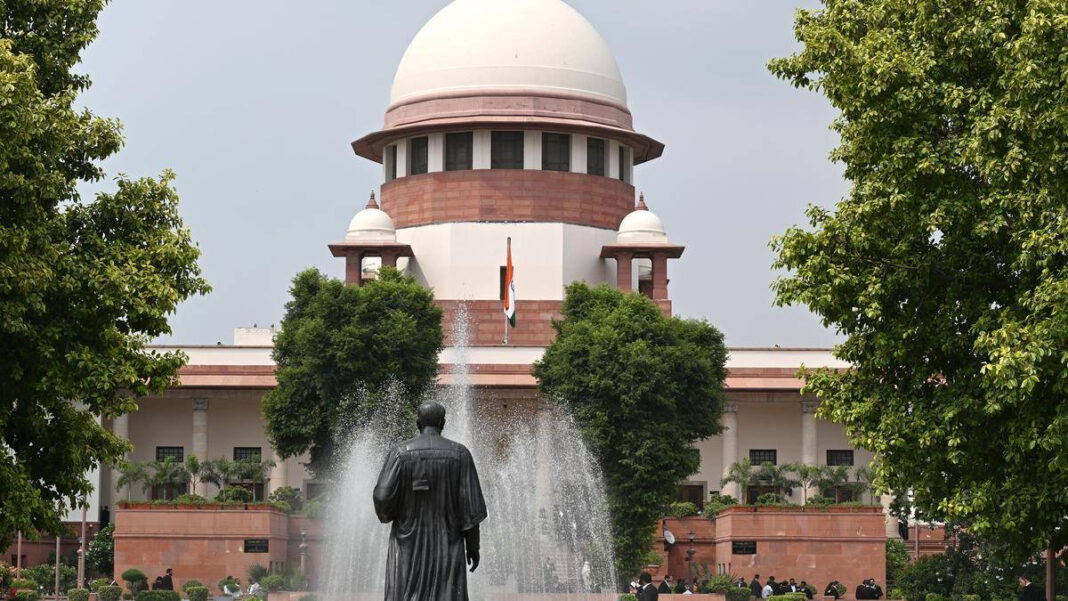
The lead petitioner contesting the legality of the law governing the appointment of the Chief Election Commissioner (CEC) and Election Commissioners (ECs) has moved a curative petition in the Supreme Court, seeking recall of the September 23 split verdict in the case. Filed on Tuesday, September 29, 2026, the plea cites a “reasonable apprehension of bias,” alleging that the son of one of the presiding judges on the Bench, Justice Satish Chandra Sharma, serves as standing counsel for the Election Commission of India (ECI) in the Madhya Pradesh High Court.
Curative plea alleges conflict of interest
The curative petition, submitted by petitioner Jaya Thakur and represented by advocate Varun Thakur, argues that Justice Sharma’s presence on the Division Bench hearing the matter compromised the proceedings due to an appearance of bias arising from his son’s professional association with the ECI.
“The curative petition is filed on the ground of ‘reasonable apprehension of bias and propriety’ on the part of Justice Satish Chandra Sharma to hear the writ petition as his Lordship’s son Mr. Siddharth Sharma is standing counsel of Election Commission of India before Madhya Pradesh High Court and the present set of proceedings directly and substantially challenged the appointment process of Chief Election Commissioner and Election Commissioner,” the petition states.
According to Ms. Thakur, the information about the judge’s son emerged after the judgment and through media reports, following which she verified the details on the Madhya Pradesh High Court’s website. The plea asserts that the September 23 judgment is “vitiated due to presence of Justice Satish Chandra Sharma on the Bench.”
Split verdict and referral to Chief Justice
The case resulted in a split verdict on September 23. Justice Dipankar Datta, who led the two-judge Division Bench, declined to refer the matter to a five-judge Constitution Bench. Justice Satish Chandra Sharma, in contrast, held that the petitions should be heard by a Constitution Bench. In view of the divergence, the Bench ordered that the case be placed before the Chief Justice of India (CJI) to consider constituting a five-judge Bench.
The split verdict effectively paused further hearings on the merits of the challenge to the appointments law until a larger Bench is formed or the Supreme Court issues further directions.
Challenge to the 2023 appointments law
At the heart of the case is the Chief Election Commissioner and Election Commissioners (Appointment, Conditions of Service and Term of Office) Act, 2023. The legislation altered the composition of the committee responsible for selecting the CEC and ECs by replacing the Chief Justice of India with a Union Minister on a three-member selection panel. The change has been contested by the petitioners as giving the Union government a dominant role in the appointment process of the country’s top election officials.
Bypassing the review stage
In a procedural departure, Ms. Thakur has directly filed a curative petition without first seeking a review of the split verdict. Typically, a curative petition—the last judicial remedy available in the Supreme Court—follows the dismissal of a review petition.
In her application, Ms. Thakur sought exemption from filing a review petition, citing Order XLVII Rule 3 of the Supreme Court Rules, 2013, which provides that “an application for review shall as far as practicable be circulated to the same Judge or Bench of Judges that delivered the judgment or order sought to be reviewed.”
“No useful purpose would be served for filing the review petition, as the same would be listed before a Bench of which Justice Satish Chandra Sharma would be a member, and the allegation of reasonable apprehension of bias is made against the Judge,” the petition contends.
Implications for the case
The curative plea seeks to have the split verdict recalled on grounds of propriety and to ensure that the challenge to the 2023 law is heard by a Bench free of any perceived conflict of interest. With the matter already referred to the CJI for consideration of a Constitution Bench, the curative moves add a new layer of procedural scrutiny to the ongoing litigation.
What lies ahead
The Supreme Court will now determine the course of action on the curative petition and the pending reference for a five-judge Bench. Until then, the challenge to the 2023 appointments law remains in abeyance, with the outcome likely to have significant implications for the structure and perceived independence of the process to select the country’s top election officials.