 "
/>

‘Wild Horde’
500,000 Demonstrators
Like We Had a War: France Counts the Cost of Violent Protests
In the heart of France, a nation known for its cultural heritage and commitment to revolutionary ideals, the streets have erupted into chaos reminiscent of war-torn landscapes. The recent wave of violent protests, sparked by a confluence of socio-economic tensions, government policies, and longstanding grievances, has left an indelible mark on the nation. As France attempts to tally the costs of this turmoil, the aftermath reveals a society at a crossroads, grappling with the implications of civil unrest and a demand for systemic change.
The Spark of Unrest
The violent protests, ignited by rising living costs, wage stagnation, and a perceived lack of governmental accountability, soon morphed into broader expressions of disillusionment and rage against the state. What began as peaceful demonstrations quickly escalated, leading to confrontations between protesters and law enforcement, widespread vandalism, and the destruction of public property. The government’s efforts to quell the unrest often exacerbated tensions, resulting in a cycle of protest and police response that echoed through the streets of Paris and beyond.
Assessing the Damage
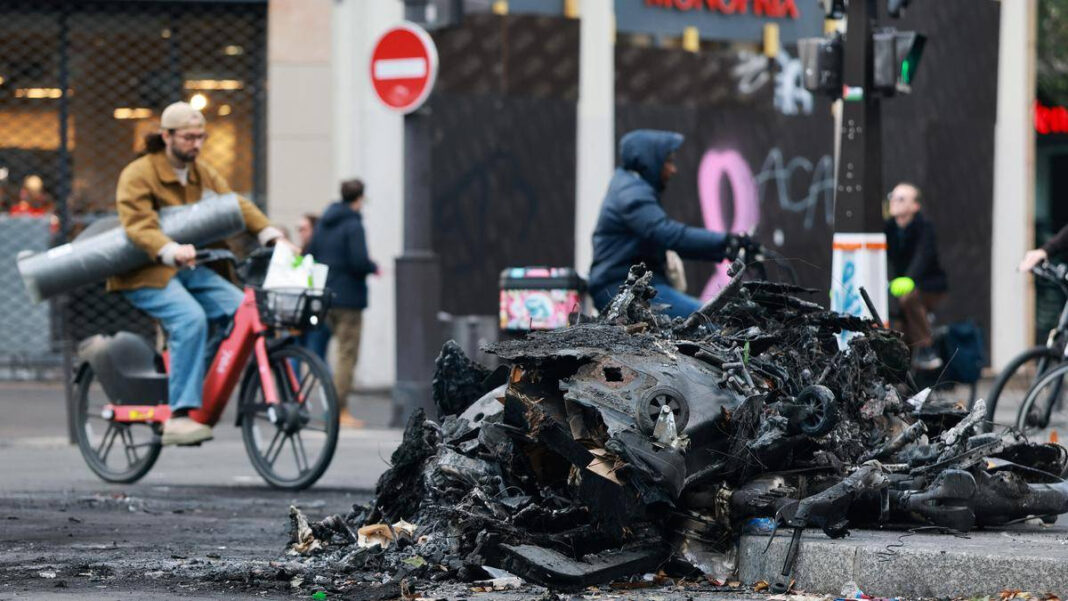
As reporters and analysts scour the streets, the imagery recalls the aftermath of a battlefield. Broken glass blankets the pavements, charred remnants of barricades smolder in the morning light, and storefronts lie devastated after looting sprees. The cost of these protests, both financially and socially, is staggering. Local businesses report losses amounting to millions of euros, while the economic toll on the national economy is still being assessed. Insurance claims flood in, but for many small businesses, recovery may be a long and arduous process.
Beyond the tangible destruction, the protests have taken a toll on law enforcement, who have faced immense scrutiny for their handling of the situation. Police officers, under pressure to maintain order, often found themselves outnumbered and outgunned by protestors, leading to injuries on both sides. The shots of rubber bullets and the smell of tear gas have stirred fears of a societal breakdown—a painful reminder of historical civil strife.
The Psychological Impact
Equally significant is the psychological impact on the populace. Cities once vibrant with life now carry the weight of fear and anxiety. Residents in the most affected areas speak candidly about their feelings of insecurity and concern for the future. The emotional scars inflicted by the violence, loss of livelihoods, and disruption of daily life will resonate long after the fires are extinguished.
Social cohesion, a hallmark of French society, appears strained. Many citizens express sympathy for the demonstrators’ underlying grievances, acknowledging the economic hardships faced by the working class. Yet, there is a growing frustration with the methods employed—where once there was a shared vision for progress, now there is division. In homes and cafés across the nation, discussions turn prickly as friends and families debate the right to protest versus the right to safety, order, and respect for public property.
A Call for Reflection and Change
The protests have reignited conversations surrounding social justice, economic reform, and the responsibilities of the state. Activists argue that the government must address the systemic inequalities that have propelled many into the streets, calling for more comprehensive socio-economic measures rather than temporary fixes. Debates over the need for living wages, affordable housing, and transparent governance are now at the forefront of the national dialogue.
In the wake of destruction, there exists a call to action—a plea for reconceptualizing the relationship between citizens and their government. As the country moves forward, there will be a need for constructive dialogue, community rebuilding, and a commitment to addressing the root causes of dissent.
Conclusion
As France counts the costs of its recent upheaval—both material and spiritual—it stands at a pivotal moment in its history. The road ahead is fraught with challenges, but amidst the wreckage lies an opportunity for growth and unity. The lessons gleaned from this unrest may shape the trajectory of French society for years to come, igniting a renewed commitment to justice and equity. Like a post-war nation, France faces the arduous task of rebuilding not only its physical structures but also its social fabric, striving for a better future for all of its citizens.