
TPCC alleges pre-printed applications for bulk deletions; CEO rules out deletion without verification
Hyderabad | October 1, 2026: The Telangana Pradesh Congress Committee (TPCC) has complained to Chief Electoral Officer (CEO) C. Sudharshan Reddy about alleged pre-printed Form-7 applications being used to seek bulk deletions of voter names in the Musheerabad constituency, intensifying concerns over targeted removals during the ongoing Special Intensive Revision (SIR) of electoral rolls.
Allegations of targeted deletions
According to the TPCC, an application submitted in Musheerabad by a booth-level agent (BLA) of the Bharatiya Janata Party (BJP) sought the deletion of a Congress party BLA and more than 30 members of his family from the electoral rolls. The party said the names and addresses of all the family members were pre-printed on the forms, while only the applicant’s name was handwritten, prompting suspicions of an orchestrated effort to target political opponents.
The TPCC, in its representation to the CEO, raised alarm that such pre-printed forms may be prepared and circulated on a wider scale against Congress leaders and supporters. The party also expressed apprehension that BLAs could have accessed such material through party channels and urged a thorough investigation and action against those responsible.
The complaint comes amid broader concerns about the misuse of the Claims and Objections phase of the SIR. Similar allegations have reportedly been raised in Karnataka, where applications for bulk deletions during the same phase have drawn scrutiny.
CEO’s assurance: No deletion without due process
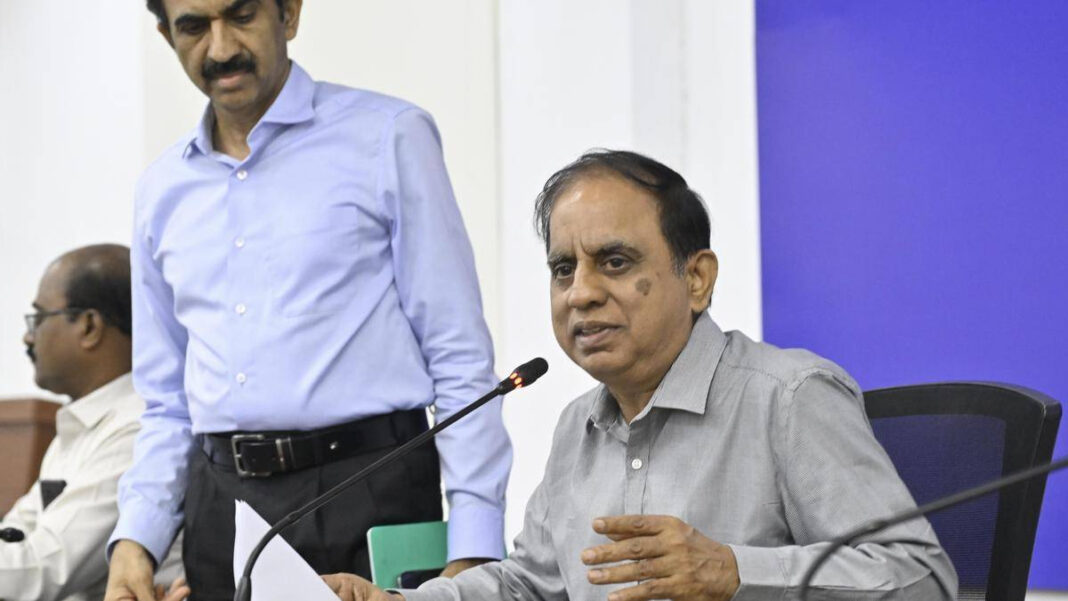
Addressing the media in Hyderabad on Thursday, CEO C. Sudharshan Reddy said any bulk applications for deletion of electors, regardless of the submitter, would face rigorous scrutiny before any name is removed from the rolls. He underlined that the mere filing of Form-7 does not result in deletion and that each case requires proper authentication and verification.
Mr. Reddy also referred to guidelines from the Election Commission of India (ECI), which allow any registered voter within a constituency to submit any number of forms. However, he noted that if a single individual files more than five objections, it automatically triggers a mandatory review by the Electoral Registration Officer (ERO) to ensure the integrity of the process.
Safeguards and notification procedures
To bolster transparency and give affected electors an opportunity to respond, the CEO outlined several procedural safeguards:
– If an elector’s mobile number is linked to their Elector Photo Identity Card (EPIC), an SMS alert will be sent notifying them that a deletion request has been filed.
– Abstracts of Form-7 applications will be displayed on the ERO’s notice board for seven days, allowing for public inspection.
– Hearing notices will be served to both the objector and the elector whose name is proposed for deletion. Notices may be delivered in person, sent via registered post, or affixed at the elector’s residence if direct service is not possible.
Verification in death-related deletions
On applications seeking deletion on the grounds of death, Mr. Reddy said that death certificates from a competent authority—obtained by the Booth Level Officer (BLO) or submitted by a family member—will be accepted as proof. Additionally, lists of deceased electors obtained from the Registrar of Births and Deaths database are considered authentic evidence.
Where death cannot be established through such records, the BLO’s field verification becomes decisive. The CEO emphasised that every death-related Form-7 application requires a BLO report confirming the facts before any deletion is processed.
Call for investigation amid ongoing SIR
The TPCC has sought a comprehensive probe into the alleged use of pre-printed deletion forms and punitive action against those found responsible. The CEO’s detailed explanation of safeguards and verification steps aims to address public anxiety over potential misuse as the Special Intensive Revision proceeds.
With heightened political sensitivities and allegations extending beyond Telangana to other States undergoing the SIR, electoral authorities have stressed procedural checks designed to prevent arbitrary or mala fide deletions from the rolls.
The SIR’s Claims and Objections window remains a critical phase, during which voters and parties are expected to remain vigilant and engage with the process to ensure accuracy and fairness in the electoral rolls.