
Supreme Court asks Centre to consider exempting Class 6 students from CBSE three-language policy this year
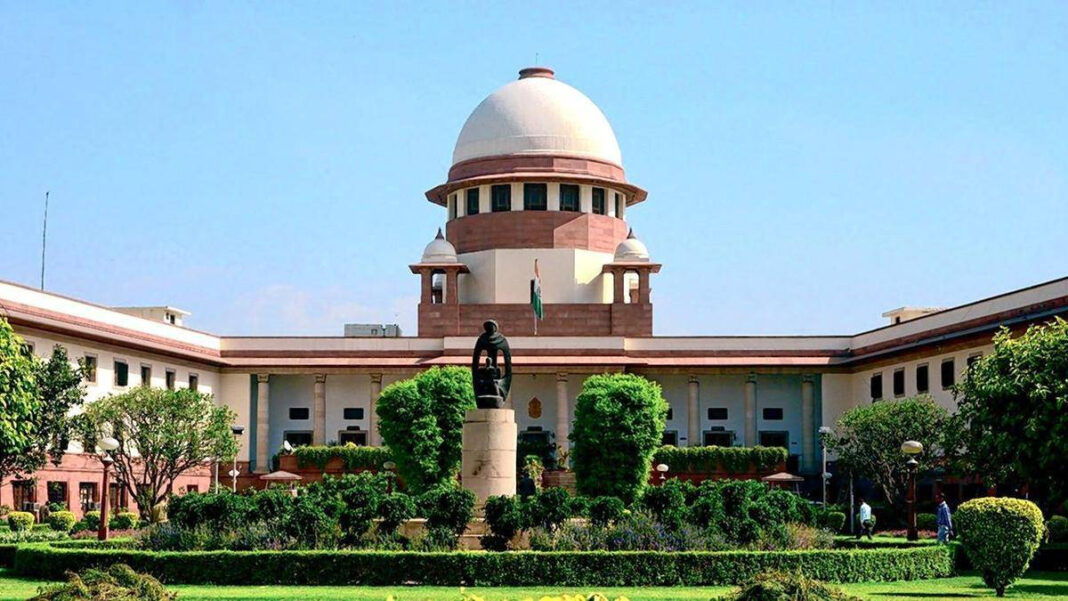
The Supreme Court on Monday directed the Central Board of Secondary Education (CBSE) to extend to Class 6 students the same relaxation that has been made available to Class 7 students with respect to evaluation under the three-language formula. The order came as the court heard petitions challenging the policy, with the Bench emphasising that students’ comfort should remain central to any transition.
What the Court Ordered
A Bench led by Chief Justice of India Surya Kant, and comprising Justices Joymalya Bagchi and V. Mohana, said the current Class 6 cohort should receive the same dispensation granted to Class 7, 8 and 9 students. Under this transitional relaxation, the third language will not feature as a subject in the CBSE Board examination when these cohorts reach Class 10. Instead, it will be assessed through internal, school-based evaluation without any pass or fail consequence tied to Board results.
The order followed submissions by Solicitor General Tushar Mehta, representing the Union government and the CBSE, assisted by Additional Solicitor General Aishwarya Bhati. Mr. Mehta informed the Bench that the Centre would attempt to persuade the court to allow implementation for Class 6 itself, as part of the ongoing rollout of the three-language framework.
Background to the Relaxation
In earlier hearings, the Supreme Court had asked the government’s law officers to obtain instructions on whether the current batch of Class 6 students could be exempted from the scheme this academic year. The CBSE has already extended a transitional relaxation to students in Classes 7, 8 and 9: when these students appear for the Class 10 Board examination, the third language will be assessed internally by schools and will not affect Board outcomes.
Government’s Position
Arguing for continuity in implementation, Mr. Mehta said the impact of the three-language formula would be minimal across the CBSE network. He told the court that out of 28,819 schools, only about 1.2% had yet to align themselves with the scheme’s requirements. He added that children would adapt to the changes introduced under the policy.
Bench Emphasises Students’ Comfort
Justice Bagchi underscored that the issue was not about children’s ability to adapt, but about ensuring their comfort during the transition. “It is about their comfort,” he remarked, addressing concerns raised by the petitioners. He further assured that if any school attempted to hold back a student on the basis of internal assessment related to the third language, the court would step in. “Yours is a reasonable apprehension. If any school held back one student, you come to us,” he said to the petitioners’ counsel.
Petitioners’ Concerns
Lawyers appearing for the petitioners, including parents, questioned the practicality and timing of the policy shift. They highlighted the added study pressure on students, the lack of adequate infrastructure in many schools, and restricted language options that could limit meaningful choice. One of the concerns raised was that in English-medium schools, English risked being treated as a “foreign” language under the scheme’s classification.
Petitioners also flagged access issues, noting that some textbooks were being made available only in virtual formats, which they argued left children in rural areas at a disadvantage when printed materials were not easily accessible. In response to these concerns, Justice Mohana cited the experience from the Covid-19 years, when students nationwide used mobile phones to attend online classes, suggesting that technology-enabled learning had already become a part of the educational landscape.
CBSE Asked to Engage with Stakeholders
The Bench directed the CBSE to reach out to aggrieved parents and schools to identify and address practical difficulties in implementing the policy and the associated evaluation changes. The court indicated that it would closely monitor how the internal assessment model is carried out, reiterating that no student should face adverse academic consequences due to the transitional arrangements.
Next Steps
With the Supreme Court calling for Class 6 students to receive the same interim relief as their seniors, the CBSE is expected to operationalise the relaxation for the current academic year. The government, as conveyed by the Solicitor General, will also seek to align the court’s directions with the ongoing policy rollout. Further directions may follow as the Bench continues hearing the petitions and reviews feedback from parents, schools and the Board.
Significance
The Supreme Court’s intervention aims to cushion students from immediate examination pressures as schools adjust to the three-language framework. By extending school-based internal evaluation to the third language without linking it to Board outcomes, the court has prioritised a smoother, less disruptive transition for the youngest cohort affected by the policy, while reserving its oversight to ensure no child is penalised in the process.