
Literary personalities visit Prof. Haimendorf’s memorial museum at Marlavai in Kumram Bheem Asifabad district
A group of literary figures, including noted writer Allam Rajaiah, visited the memorial museum dedicated to Austrian anthropologist Christoph von Furer-Haimendorf and his wife, Elizabeth, at Marlavai, an Adivasi village in Kumram Bheem Asifabad district, on Sunday.
Tribute at the memorial
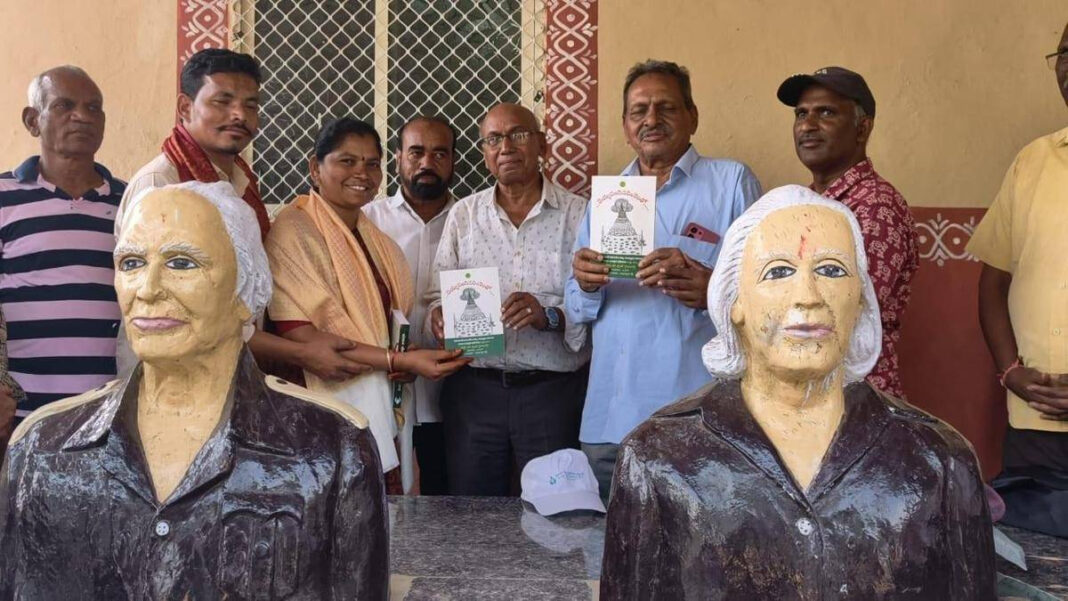
According to a press release, the visiting team paid floral tributes and garlanded the statues of Prof. Haimendorf and Elizabeth. The Austrian couple lived in Marlavai during the 1940s as part of extensive field studies and research among Adivasi communities in the region.
Honouring scholarship and struggle
Speakers at the event underlined how Prof. Haimendorf’s research and subsequent reports deepened the understanding of the Raj Gond and other Adivasi communities. They noted that his work helped inform and influence policy conversations on Adivasi rights, education and development.
The programme also recalled the legacy of Adivasi leader Kumram Bheem. Participants emphasized that his fighting spirit and sacrifice for Adivasi rights over “Jal, Jangal, Zameen” (water, forests and land) remain an enduring part of the history of tribal rights movements.
Presentation to local leadership
Marking the occasion, Mr. Rajaiah presented a copy of his novel on Kumram Bheem to Marlavai sarpanch Kanaka Pratibha. The gesture drew attention to the continued cultural and literary engagement with Adivasi histories and struggles in the region.
Community engagement at Marlavai
Villagers briefed the visiting team on the history of Marlavai, the cultural heritage of local Adivasi communities and the legacy of Prof. Haimendorf and Elizabeth. The interactions highlighted the village’s role as a site of anthropological study and as a living repository of Adivasi traditions and narratives.
Significance of the visit
The visit served as a reminder of the scholarly contributions that have shaped wider understanding of Adivasi social life in the region, while also acknowledging the ongoing relevance of Adivasi rights movements. By linking academic work with grassroots memory and local leadership, the programme underscored Marlavai’s place in both research history and contemporary cultural discourse.