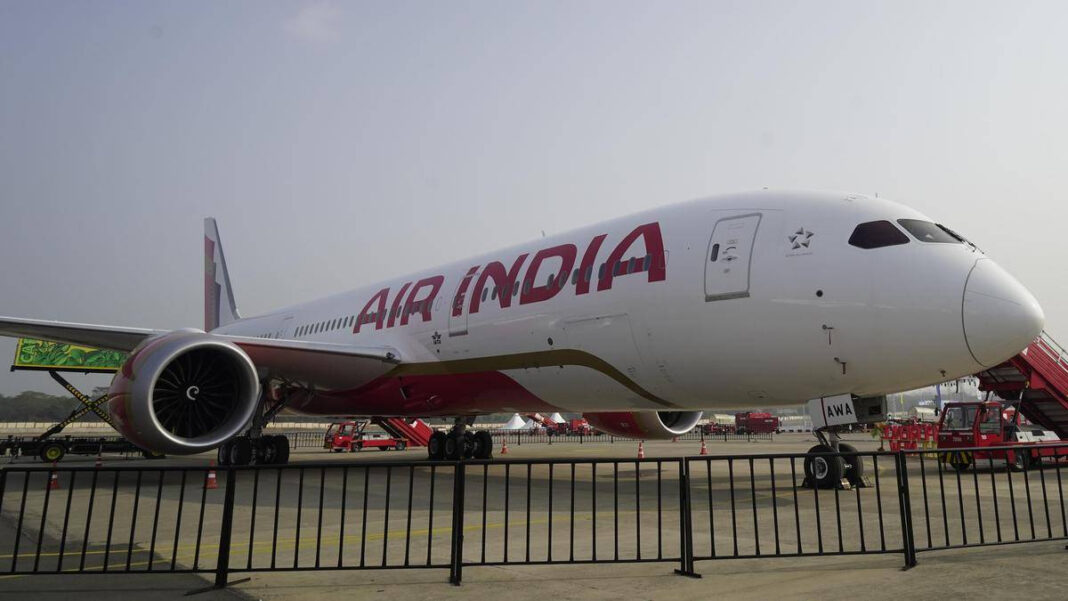

Delhi-bound Air India flight issues ‘squawk’ hijack alert, diverted to Jaipur
An Air India flight bound for Delhi was diverted to Jaipur on Wednesday, October 14, 2026, after a hijack alert was reportedly transmitted mid-air, prompting an immediate security response. The Directorate General of Civil Aviation (DGCA) has opened an investigation into the incident.
Incident and diversion
According to official sources, a hijack alert — corresponding to transponder squawk code 7500 — was detected while the aircraft was flying through the Mumbai Flight Information Region (FIR). Ahmedabad Air Traffic Control (ATC) reportedly picked up the alert and initiated standard security protocols.
The aircraft, carrying 293 passengers and 13 crew members, landed safely at Jaipur International Airport at 9:35 a.m. It was then towed to an isolation bay, where thorough security checks were conducted.
What the hijack code signifies
Under international aviation procedures, setting an aircraft’s transponder to squawk code 7500 signals unlawful interference, including a potential hijacking. Such alerts trigger an immediate and coordinated response by air traffic controllers, airport authorities and security agencies to ensure the safety of passengers and crew.
Conflicting accounts on how the alert was triggered
There were differing accounts on whether the hijack code was deliberately entered. Airline sources disputed that the pilots intentionally set 7500, while ATC sources contested this version. Investigators are expected to review ATC recordings and other available data to determine how the alert was generated.
Air India’s statement and passenger handling
In a statement, an Air India spokesperson said, “Air India flight AI2030 operating from Frankfurt to Delhi on 14 October was diverted to Jaipur following a perceived security concern.”
The airline added that the relevant security agencies carried out all necessary checks and subsequently cleared the aircraft and crew. All passengers were disembarked and subjected to security screening. After clearance, they were flown to Delhi on the same aircraft with the same crew, the spokesperson said.
Investigation underway
The DGCA is probing the sequence of events that led to the transmission of the hijack alert and the subsequent diversion. As part of the investigation, authorities are expected to examine cockpit procedures, communication logs and ATC recordings to establish the circumstances and verify compliance with safety protocols.
Conclusion
The diversion to Jaipur and the deployment of security measures followed established international protocols for handling a hijack alert. With the aircraft, passengers and crew cleared after comprehensive checks, the focus now shifts to the DGCA’s investigation to determine what triggered the squawk code and whether any corrective actions are warranted.