 "
/>
"
/>

Durga Puja 2026: Lessons from the Pandal
Three years ago, I marked my calendar for what has become an annual artistic pilgrimage—pandal hopping in Kolkata during Durga Puja. With each passing year, the city never ceases to amaze with the sheer creativity and number of massive installations that emerge throughout its bustling streets. In my first year, I was struck by the thought that Kolkata could rival the Venice Biennale during these five days each October. The following year introduced me to the concept of pandals as platforms for social and political activism. This year, however, I was moved by a different lesson: the installations embody the spirit of collaboration among artists and artisans.
Background and Overview
The construction of each pandal can involve anywhere from 50 to several hundred people, often taking an entire year of planning and execution. Each block of artisans collaborates closely under the main artist, who conceptualizes the themes, which are often topical and message-driven. This collaboration extends across many crafts—from painting and sculpting to light and sound installations. What unfolds over these days is nothing short of a spectacular showcase of talent that could easily overshadow major international art biennales.
Key Developments in 2026
This year, the festive atmosphere was visible even from the sky, with the city aglow as my flight prepared to land. Navigating through Kolkata’s vibrant streets in eager anticipation, the artists’ hard work became evident as I previewed a selection of ten pandals.
One standout creation is the Colliery at S.B. Park Sarbojanin, designed by artist Raju Sarkar. This pandal, inspired by the Raniganj Coalfield, is crafted to resemble a subterranean mine, successfully capturing the oppressive atmosphere of mining life. The poignant sculptures and photographs within, enhanced by dramatic lighting and soundscapes, evoke a deep emotional response, leaving an unforgettable impact.
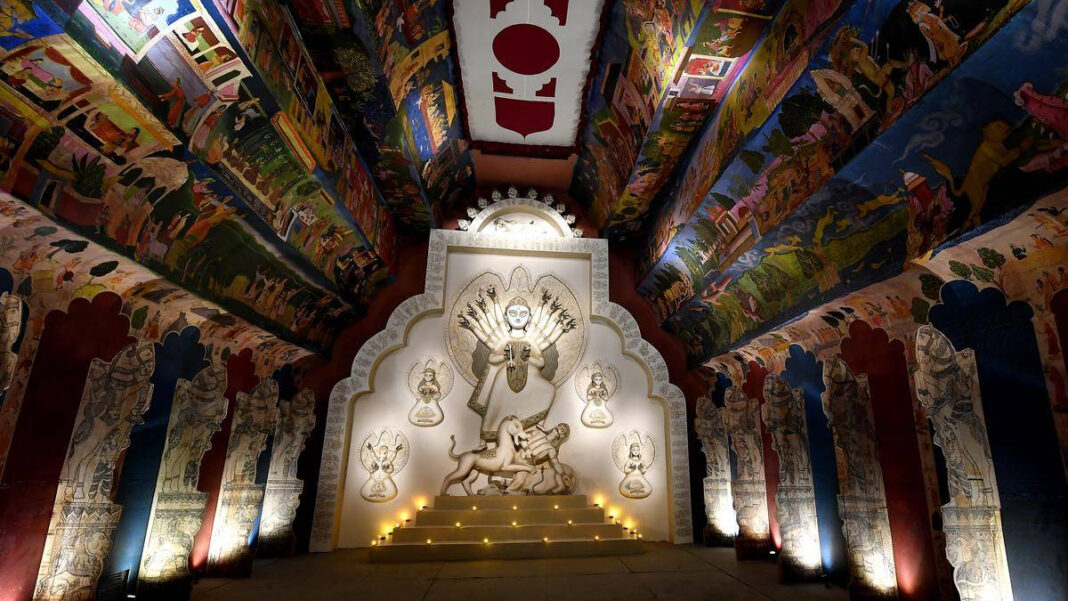
Notably, artist Anirban Das has made his mark with four noteworthy pandals across the city, each rich in compelling messages. The Ramayana pavilion at Alipore Sarbojanin is particularly grand, featuring a series of painted and metal-cutout panels that offer a unique visual blend of folk-scroll and wood-cut styles. Vibrant performances of Chhau dance add another layer, illustrating the tale of the sleeping Kumbhakarna while critiquing contemporary political apathy among the citizenry.
Another of Das’s creations located at Naktala Udayan Sangha plays with the aesthetic of black and white, drawing inspiration from the Bengali Almanac. This pavilion features a roof structure reminiscent of the sacred Mount Meru, tying together elements of astrology and mythology with a gripping performance that symbolizes how fate intertwines with the cosmos.
At Telipukur Yuba Sangha, renowned artist Bhabatosh Sutar’s installation conveys pressing issues related to water politics and ecology, symbolizing the vanishing ponds that once nourished the land. The combination of mixed-media film projected on the ceiling, monumental wall drawings, and carefully curated sound installations creates an immersive environment that deeply engages the visitors.
Context of Collaboration in 2026
This year’s pandals invite a tactile experience; photographs can hardly do justice to the magnitude of the installations, some as expansive as two football fields. There is a notable emphasis on technology, as seen through projections and intricate soundscapes, along with the traditional performances that accompany the pavilions. Presenting each pavilion is akin to staging a major museum exhibition, meticulously planned with interdisciplinary approaches and compelling narratives.
As I transition from managing a gallery to curating the visual aspect of the upcoming India Biennale in New Delhi, set to debut on December 4, the collaborative spirit displayed by these artists offers profound insights into the importance of teamwork and generosity in art.
Conclusion
The Durga Puja of 2026 serves not just as a festival of worship, but as a testament to the boundless creativity and communal effort that underpins the vibrant culture of Kolkata. The artistry of the pandals encapsulates themes of relevance, encouraging dialogue on social issues while celebrating the very essence of collaboration among artists. Each installation stands as a powerful reflection of both artistic expression and community resilience.