
500 detained in Delhi on Day 3 of protests seeking CEC’s exit; Thackerays lead Mumbai march
Demonstrations demanding the removal of Chief Election Commissioner (CEC) Gyanesh Kumar and suspension of the special intensive revision (SIR) of electoral rolls entered a third consecutive day on Sunday, October 4, 2026, with protests swelling in New Delhi and Mumbai. While Delhi Police halted attempts to reach Jantar Mantar and detained large numbers of protesters, the streets of south Mumbai saw a high-profile mobilisation led by Shiv Sena (UBT) chief Uddhav Thackeray and Maharashtra Navnirman Sena (MNS) chief Raj Thackeray.
Background
The agitation began on October 2, Gandhi Jayanti, drawing thousands of participants that included leaders of Opposition parties, civil society groups, and youth and student organisations. Protesters have called for CEC Gyanesh Kumar’s removal and for the ongoing SIR of electoral rolls to be halted, alleging irregularities in the revision process and voter disenfranchisement.
Clashes and detentions in Delhi
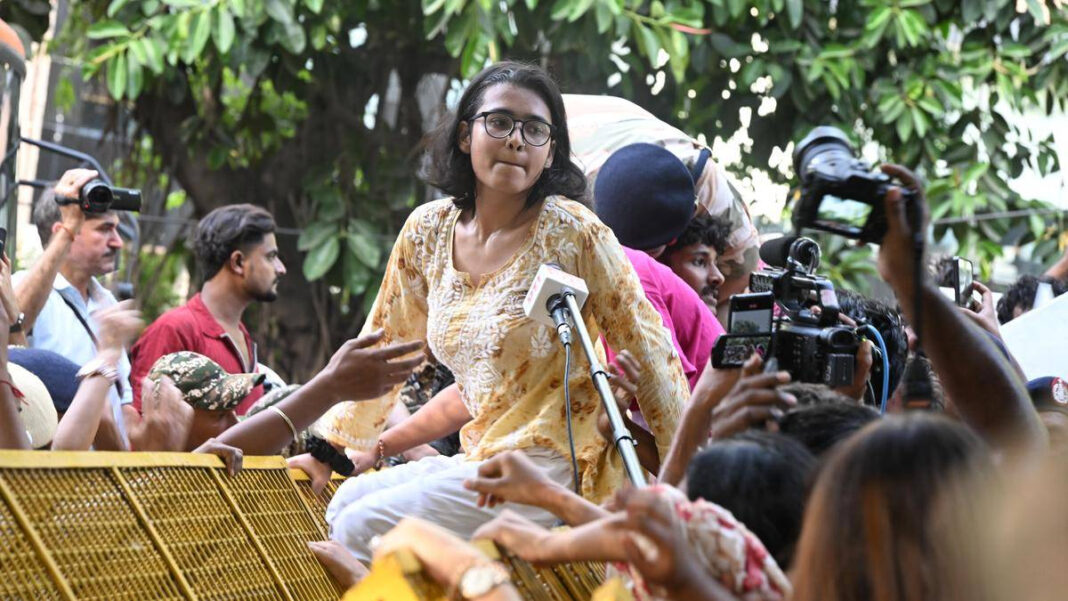
In the national capital, protesters seeking to reach Jantar Mantar encountered heavy police barricades. The march was stopped on Ashoka Road, where officers detained large numbers of demonstrators. Nearly 500 people were rounded up, though a Delhi Police official put the recorded detentions at 110. Those detained in central Delhi were transported in an estimated 10 to 15 buses.
Among those picked up was a woman journalist who had earlier alleged sexual harassment and manhandling by a policeman while covering Saturday’s protest. Police officials also said that around 12 to 15 personnel sustained injuries during Sunday’s confrontations.
Videos from the scene circulated widely on social media, including one clip that appeared to show detainees breaking the rear window of a bus in which they were being transported and jumping out.
The All India Students’ Association (AISA) alleged that its national president, Neha Bora, was taken into custody by police in a private car from Ashoka Road around 5 p.m. and that officers involved were not wearing name tags. AISA said her whereabouts were initially unclear. She was later released from the Narela Industrial Area police station.
Speaking after her release, Bora said, “They think we are dogs, cockroaches or insects that they can pick us up, throw us into vehicles, take us 50 kilometres away, beat us, and push us around. But today, we showed that we are citizens of this country.” She added, “We have the right to question those in power and ask how the Election Commission and the ruling party are dealing with our votes. If we are repeatedly detained for protesting at a designated protest site, then returning to that place and reclaiming our right to protest is also our right.”
The protests in Delhi also drew participation from prominent cultural figures. Eighty-three-year-old screenwriter and director Saeed Akhtar Mirza, attending in a wheelchair, said, “These children have faced so much. History is being created, and I want to be a part of it,” adding, “This regime is corrupt, communal and criminal. It should go.”
Thackerays spearhead Mumbai march
In Mumbai, a large procession dubbed the ‘Virat Garjana Morcha’ set off from Metro Cinema and moved towards the Brihanmumbai Municipal Corporation headquarters. Led by Uddhav Thackeray and Raj Thackeray, the march drew participation from leaders of the Congress and the Nationalist Congress Party–Sharadchandra Pawar (NCP-SP). Organisers said nearly 6,000 people took part.
Uddhav Thackeray accused the Bharatiya Janata Party of using the Election Commission to manipulate the electorate, characterising the CEC as a “weapon” in the ruling party’s hands. He alleged that “around 13 crore names” had been struck off draft rolls across the country, calling it disenfranchisement. “You can control institutions, but streets belong to us,” he told the crowd.
Raj Thackeray demanded the CEC’s removal and the replacement of electronic voting machines (EVMs) with paper ballots. Calling the SIR “illegal,” he questioned what he described as an unusual “rise” in the number of voters between the 2024 Lok Sabha election and the Maharashtra Assembly poll later that year. He also pressed the Election Commission to disclose how many people omitted from draft rolls had been identified as immigrants from Bangladesh. “Are the 2 crore people from Bangladesh? Give details. We will find them and throw them out of the country,” he said.
Raj Thackeray further claimed he had raised concerns about “vote theft” as early as 2017–18 and had urged Opposition leaders to boycott elections to expose the alleged irregularities. “At that time, I met several leaders, including [Congress leader] Sonia Gandhi and [Trinamool Congress president and then West Bengal Chief Minister] Mamata Banerjee, and told them to boycott elections. Otherwise, the truth will not come out,” he said.
Statements and reactions
The day’s protests amplified a range of grievances voiced since the movement began on October 2. Opposition leaders and activists have framed the SIR process as lacking safeguards and transparency, while supporters of the demonstrations argue that detentions at designated protest sites impede constitutionally protected dissent.
Participants in Mumbai and Delhi reiterated calls for accountability from the Election Commission, with speakers tying the alleged voter roll omissions to broader concerns about the integrity of electoral institutions. The Election Commission’s response to these specific allegations was not immediately available.
What’s next
As of Sunday evening, demonstrators in Delhi faced continued restrictions near central protest zones, even as detainees—including AISA’s Neha Bora—were released from outlying police stations. In Mumbai, Opposition parties signalled that further actions could follow if their demands regarding the CEC’s removal and the SIR process remain unaddressed.
The protests, now in their third day, have underscored sharpening tensions over electoral reforms and institutional independence, with opponents of the SIR vowing to persist until their concerns about voter disenfranchisement and election oversight are taken up.