
19,000 West Bengal voters to miss bypolls as appeals remain pending in tribunals
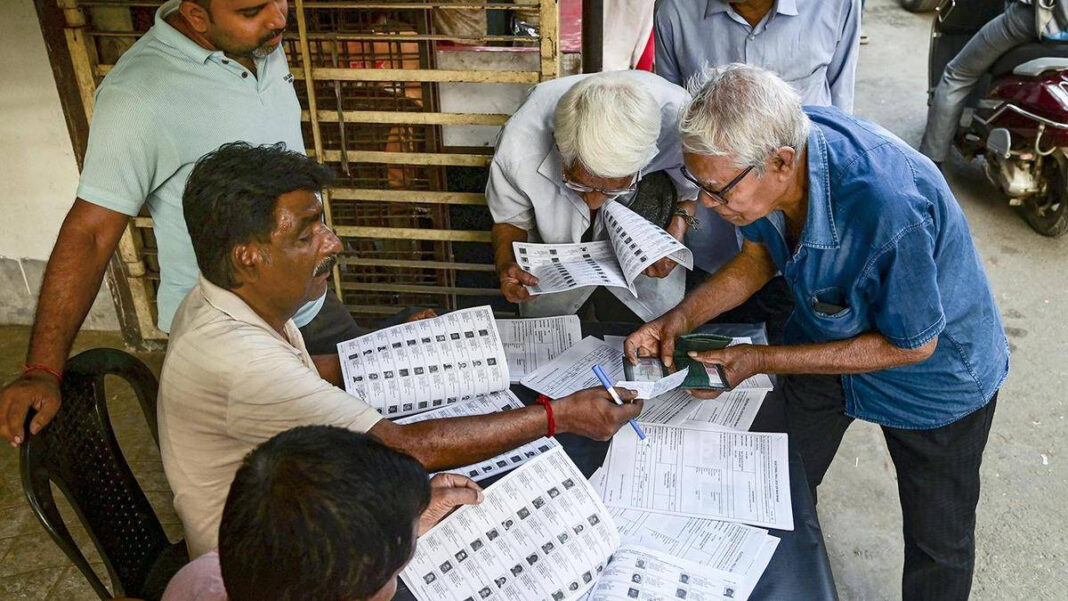
Nearly 19,000 voters in West Bengal’s Nandigram and Rejinagar Assembly constituencies will be unable to cast their ballots in Tuesday’s (October 6, 2026) byelections because their appeals against exclusion from the electoral rolls are still pending before Appellate Tribunals. They are among 38.31 lakh voters statewide whose cases remain in limbo due to the slow pace of adjudication, a problem the Calcutta High Court warned in July could take 21 years to resolve at the current rate.
Backlog keeps thousands off the rolls in Nandigram and Rejinagar
In Rejinagar, 12,452 appeals were filed; so far, just four voters have been added back to the rolls. In Nandigram, out of 6,443 appeals, only 89 have been included. In both constituencies, no voters have been excluded by the tribunals yet, but the pendency means those awaiting decisions will miss the bypolls.
Across West Bengal, the tribunals have cleared only 1.26 lakh of the 38.31 lakh pending appeals to date—approximately 3% of the total—leaving the overwhelming majority unresolved.
Tribunals hamstrung by vacancies; expansion plan stalled
Of the 19 Appellate Tribunals set up by the Election Commission of India (ECI) in March, only 16 remain functional. Three retired judges—Justice T.S. Sivagnanam, Justice Ranjit Bag and Justice Indrajit Chatterjee—have resigned, citing various functional issues. Their positions remain vacant.
An ECI proposal to expand the number of tribunals from 19 to 42 has also not progressed. The Supreme Court was scheduled to hear the matter on Monday (October 5), but it was not listed.
Re-enrolment drive not applicable to appellants
The poll body’s recently announced special “door-to-door” drive to re-enrol voters left out during the Special Intensive Revision (SIR) via Form 6 will not apply to those whose cases are pending before the Appellate Tribunals. As a result, appellants awaiting decisions cannot benefit from this route to regain voting rights.
How the appellate mechanism was created
The Appellate Tribunals were established under the Supreme Court’s supervision of the SIR, after concerns about large-scale exclusions emerged. At the top court’s direction, judicial officers—drawn from a list forwarded by the Calcutta High Court—were tasked with reviewing roughly 60 lakh “doubtful and pending” electoral cases.
On March 10, the Supreme Court ordered the creation of a separate appellate body to allow people to challenge those officers’ decisions. The ECI constituted the Appellate Tribunals for West Bengal on March 21, and they began functioning around April 13. On April 16, the Supreme Court further directed that voters whose appeals succeed be added to the rolls through a supplementary list. The order came days before the Assembly elections began on April 23; by then, reportedly only 136 names had been cleared.
What the numbers show
Of the approximately 60 lakh “doubtful” cases reviewed by about 700 judicial officers during the SIR, 32,77,360 voters were cleared and restored to the electoral rolls. The remaining 27.23 lakh were rejected, of whom around 22 lakh filed appeals before the tribunals.
Parallel to these individual appeals, 16,10,311 bulk appeals were filed in the tribunals challenging the inclusion of those restored by the judicial officers. Taken together, these streams of litigation brought the total number of cases pending in the tribunals to a little over 38 lakh.
Clock ticking as bypolls open
With voting set to begin on Tuesday, the unresolved appeals leave thousands unable to participate in the Nandigram and Rejinagar bypolls. The Calcutta High Court’s July observation—that the current rate of disposal would stretch the process to two decades—underscores the urgency of operational fixes, including filling tribunal vacancies and expanding capacity. The ECI’s proposal to increase tribunals and the Supreme Court’s oversight remain key to determining when the backlog will begin to ease.