

SLBC tunnel work advances beyond problematic stretch, set to gain pace
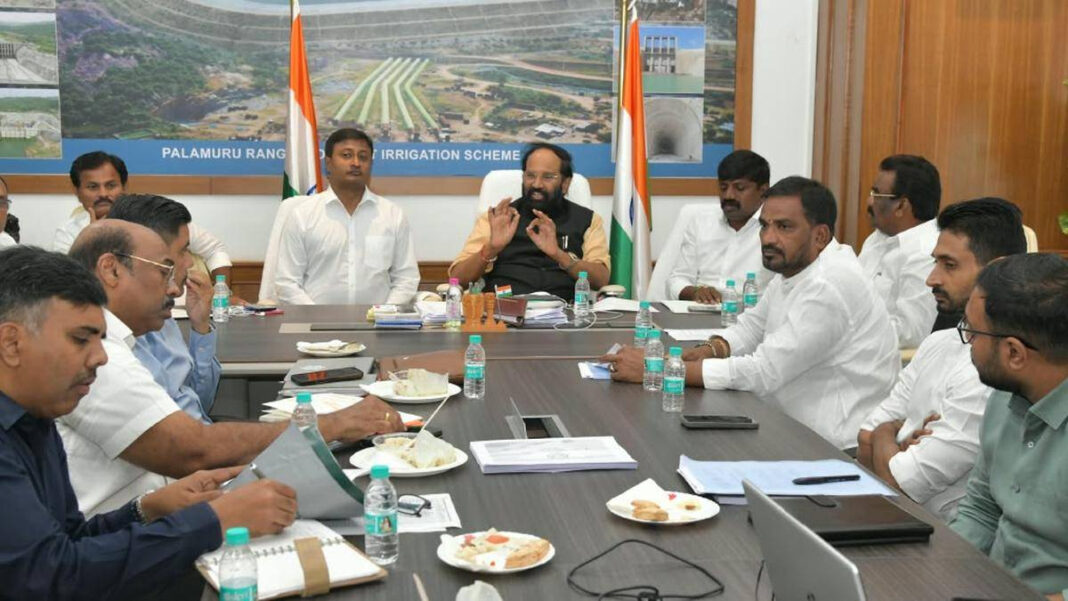
The excavation of the Srisailam Left Bank Canal (SLBC) tunnel has cleared a critical geological hurdle—the collapse-prone stretch where a cave-in last year claimed eight lives—enabling the deployment of additional equipment and improving operational efficiency under reinforced safety protocols. Irrigation Minister N. Uttam Kumar Reddy, who reviewed the project in Hyderabad on Sunday with engineers, executing agencies and elected representatives from beneficiary areas, said the breakthrough is expected to accelerate progress toward the government’s target of completing the project by June 2028.
Background and project scope
The SLBC tunnel, a key component designed to carry water through the left bank of the Srisailam project, spans 43.968 km. According to officials, the main tunnel is now nearly 79% complete, with about 9.1 km of excavation still to be finished. Work was restarted in February this year after the project team implemented revised safety and engineering strategies in response to last year’s fatal incident.
Progress after crossing the critical zone
Reddy commended the project teams for safely negotiating the precarious shear zone that caused the February cave-in last year. He said that more than 700 metres of excavation had been achieved since the restart in February, and that additional drilling equipment and a German locomotive were being deployed to speed up hauling and face operations.
Project managers reported that approximately 700 metres of advance had been recorded over the past five to six months—around 450 metres from the outlet side at Devarakonda and 250 metres from the inlet side at Srisailam. Officials emphasized that the gains included careful passage through the shear zone, where the combination of weak ground and instability had posed persistent risks.
Safety, monitoring and workfront management
The Minister directed officials and the contractor to sustain the momentum while maintaining close safety oversight, particularly for crews operating more than 20 km inside the tunnel from the Devarakonda side. He called for a closely monitored work programme to meet the June 2028 water-delivery target, with tighter excavation cycles and continuous risk assessment as the excavation proceeds in mixed and difficult ground conditions.
Engineering approach and ground support
Col. Parikshit Mehra, an Indian Army tunnel expert leading operations, explained that excavation from the inlet side had been deliberately slowed in the initial months following the restart because of weak ground, rock bursts and the imperative to prevent another accident. He said a diversion around the location where a tunnel-boring machine had become stuck led the advancing face through particularly poor geological conditions.
To stabilize this stretch ahead of excavation, the team installed 140-mm seamless pipes to create an umbrella canopy, which provided protective support in advance of the face. Mehra added that a combination of reinforced ribs, staged excavation, probe drilling and other support measures had been used to control risks and maintain face stability as the heading progressed.
Logistical bottlenecks and muck removal
Reddy noted that muck hauling over distances of up to 21 km remains a major constraint. When removal falls behind, excavated material accumulates inside the tunnel, forcing work at the face to pause until the backlog is cleared. He said the government and contractors were working to streamline removal cycles and align hauling with excavation advances to prevent stoppages.
Parallel works and completion timeline
Sprayed concrete lining is being carried out alongside excavation in Tunnel 1, with officials indicating that breakthrough could be achieved by May–June 2028. The Minister also said that lining work on the 7.1 km Tunnel 2 has resumed after a prolonged interruption, aiming to synchronize finishing activities with the advancing headings.
Outlook
Clearing the shear zone marks a decisive step for the SLBC tunnel, which has been challenged by geotechnical instability and logistical hurdles since last year’s accident. With nearly four-fifths of the main tunnel complete and additional equipment mobilized, the project team is focusing on maintaining safety, improving muck management and tightening excavation cycles to keep the project on track for the June 2028 target.