 "
/>
"
/>

Singeetham Srinivasa Rao’s ‘Michael Madana Kama Rajan’, a Timeless Classic from a Master Filmmaker
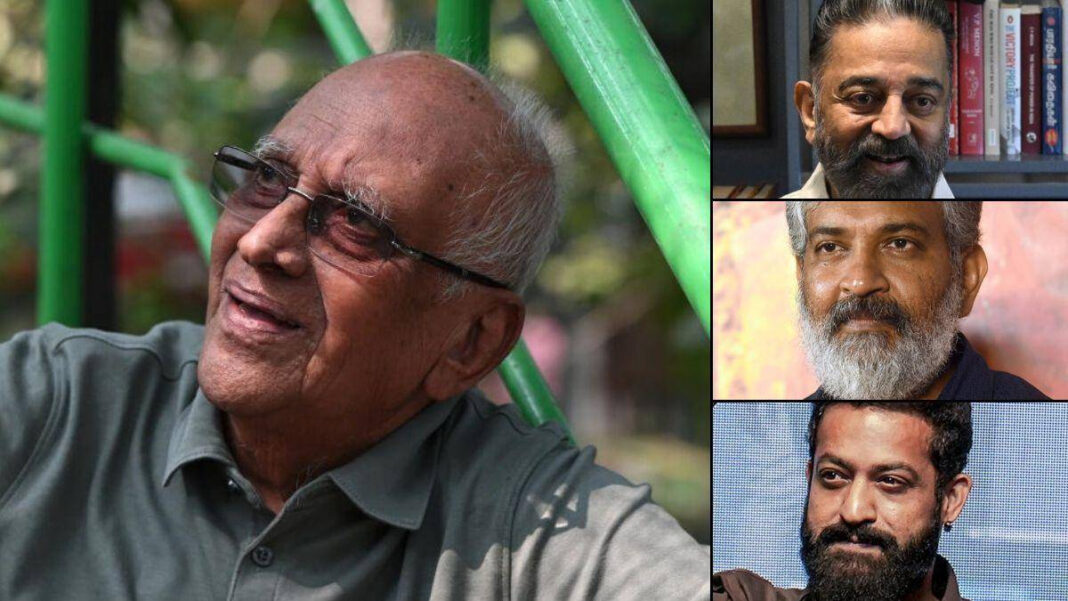
A middle-aged man rises from coils of celluloid, while Ilaiyaraaja’s melodious voice fills the air singing ‘Kadha Kelu’, inviting the audience to indulge in “a delightful, entertaining story.” This man, the eternally youthful Singeetham Srinivasa Rao, engages a group of children, allowing them to peek into his bioscope and watch the genre-defining narrative come alive. This is a glimpse into the world of Michael Madana Kama Rajan, the iconic 1990 film crafted by a master filmmaker whose legacy we mourn today.
Background on a Cinematic Legend
This morning, upon hearing of Singeetham’s passing, I pondered how history would assess the legacy of someone with such a celebrated body of work. His contributions to Tamil cinema alone include films like Raaja Parvai, Apoorva Sagodharargal, Magalir Mattum, Kaathala Kaathala, and Little John. Notably, the dialogue-free masterpiece Pushpaka Vimana has left its mark across Indian cinema in multiple languages. Yet, among his creations, Michael Madana Kama Rajan (MMKR) stands out for its unbridled entertainment value, rewatchability, cultural resonance, and the multitude of filmmakers it has inspired over the years.
Critical Acclaim and Impact
Indeed, MMKR is frequently cited as one of the most significant Tamil films in history by cinephiles and creators alike. Recently, actor Fahadh Faasil remarked in an interview that a classic film like MMKR could not be remade, echoing the sentiments of many who recognize its unique charm. The actor expressed admiration for the film’s inventive narrative structure and its memorable use of music, particularly the song ‘Kadha Kelu’ serving as a narrative device.
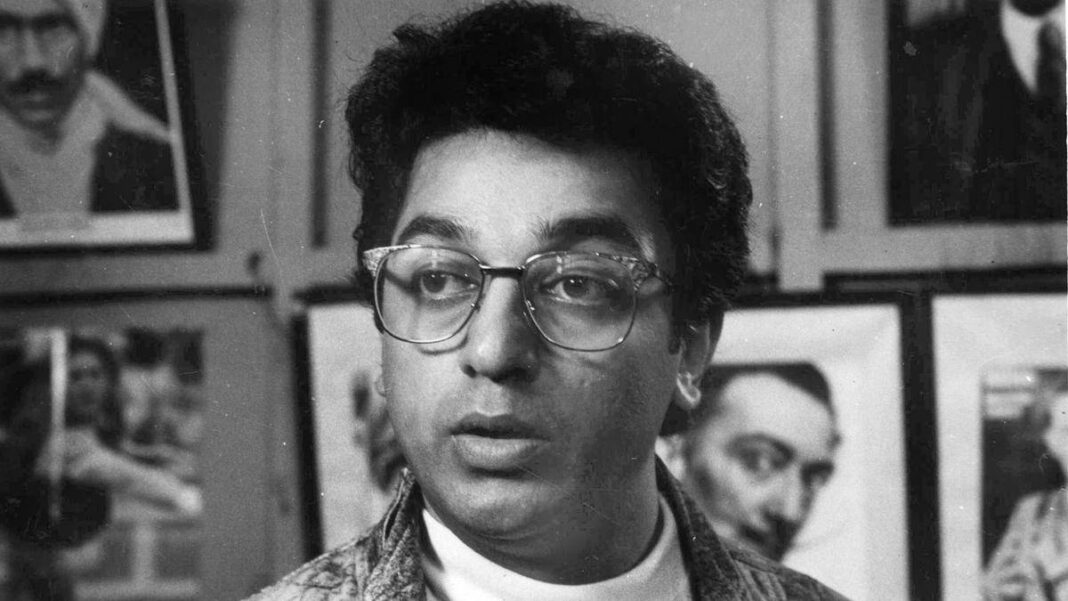
The genesis of MMKR traces back to the late acclaimed writer-producer Panchu Arunachalam, who encountered a Pakistani film penned by Kader Kashmiri, centering around quadruplet siblings separated at birth. After securing the rights for a Tamil adaptation and enlisting Singeetham to direct, the screenplay was entrusted to Kamal Haasan, who also took on the challenge of portraying all four brothers. True to Kamal’s creative ingenuity, he breathed new life into Kashmiri’s story with assistance from Singeetham and his frequent collaborator, Crazy Mohan, who wrote the film’s engaging dialogues.
A Masala Story for the Ages
The premise of MMKR is both entertaining and intricate: a wealthy industrialist fathering quadruplets finds his brood targeted by his malevolent brother who seeks to eliminate competition for inheritance. However, a change of heart from the goon leader leads to the siblings being separated and adopted into varied surroundings—Michael becomes a street-smart conman, Raju a light-hearted jokester from a working-class background, Kameshwaran inherits an eccentric culture, while Madanagopal holds a more composed demeanor. More than two decades later, their paths intersect in a series of chaos and comedic uproar, a hallmark of masala cinema that continues to captivate audiences even today.
What sets MMKR apart is the distinctiveness of Kamal’s portrayal of each brother, each imbued with their own cultural conditioning and social baggage. Michael’s street-savvy nature contrasts sharply with Kameshwaran’s quirky charm and Madan’s sophistication, enriching the narrative with diverse perspectives and humor. The screenplay’s finesse allows various characters to interact at key moments, creating a tapestry of intersecting lives that adds depth to the storyline.
Masterclass in Voice Acting
The film’s legacy also hinges on Kamal Haasan’s extraordinary ability to embody the four characters with unprecedented depth. His vocal performance is remarkably nuanced, and as highlighted by actor Manikandan, it plays a pivotal role in defining each brother’s identity. One notable scene captures Raju transforming into Madan, where mere seconds showcase the versatility of Kamal’s voice and inflection. The stark contrast between Raju’s Madras slang and Madan’s British-accented Tamil becomes crucial in distinguishing their identities, especially as the climax unfolds.
A Filmmaking Marvel
The technical achievements of MMKR are a testament to the film’s groundbreaking vision. Cinematographer BC Gowrishankar faced the monumental task of bringing all four versions of Kamal to life within the same frame seamlessly. During pre-production, one of the first questions Kamal posed to Gowrishankar was whether they could achieve this without any glitches. When assured of the feasibility, the collaboration flourished.
The film’s climactic sequence, set against a collapsing hillside house, embodies an ambitious vision inspired by Charlie Chaplin’s The Gold Rush. The hydraulic set and intricate engineering behind the scenes allowed for the dynamic action of the narrative while art director Peketi Ranga elevated the visual storytelling with iconic sets that enhanced the film’s charm.
Moreover, the collaboration between Singeetham and the maestro Ilaiyaraaja resulted in an unforgettable soundtrack that complements the film’s narrative beautifully. As directors who have worked with Ilaiyaraaja proclaim, the composer’s artistry is unparalleled; it is the director’s role to harness that genius to enhance their cinematic vision.
A Lasting Legacy
The narratives surrounding the making of Michael Madana Kama Rajan have taken on a legendary status, a fitting tribute to the illustrious career of Singeetham Srinivasa Rao. His innate ability to transmute the chaos of human experiences into art that resonates with audiences is both inspiring and humbling. While the film is renowned for Kamal’s remarkable performances, Crazy Mohan’s wit, and Ilaiyaraaja’s melody, it is ultimately the visionary direction from Singeetham that interweaves these elements into a cohesive masterpiece.
As we reflect on his passing, the magic of Michael Madana Kama Rajan endures, inviting new generations of film lovers to discover the artistry of Singeetham Srinivasa Rao. His films serve as a testament to a legacy where storytelling transcends time, and his contributions will continue to inspire creators and audiences alike.