
‘Drishyam: The Conclusion’ Movie Review: Ajay Devgn and Jaideep Ahlawat Shine in a Gripping Finale
For over a decade, Vijay Salgaonkar has used a mix of cinematic logic and the collective memory of October 2nd to construct a seemingly impenetrable shield for his family against the law. However, as the narrative unfolds in Drishyam: The Conclusion, directed by Abhishek Pathak, viewers are confronted with the sobering truth that every perfect alibi has its limits. This film signifies a pivotal shift, as it detaches itself from its Malayalam origins and establishes a distinctive footprint in the vibrant landscape of Hindi cinema.
Overview of the Franchise
The Drishyam series distinguishes itself from conventional police procedurals through its exploration of manufactured hyperreality, illustrating that a story does not need to be factually accurate; it simply must resonate as believable. This narrative strategy taps into a fundamental aspect of human psychology: people tend to accept what makes logical sense to them. Over the course of the franchise, Vijay has morphed from an everyman into a legendary figure, and this evolution informs the narrative enrichment of the current installment.
Film Details
Title: Drishyam: The Conclusion (Hindi)
Director: Abhishek Pathak
Duration: 150 minutes
Cast: Ajay Devgn, Jaideep Ahlawat, Prakash Raj, Tabu, Rajat Kapoor, Shirya Saran, Ishita Dutta
Synopsis: As the police revisit a decade-old case in light of new evidence, Vijay Salgaonkar finds himself pushed to the brink in his battle against a hostile legal system.
Key Developments in the Storyline
The film’s screenplay, crafted by Aamil Keetan Khan, expertly heightens the tension surrounding the Salgaonkar family by introducing unassailable physical evidence that resurrects the case against them. The palpable sense of impending doom fosters an environment where the stakes feel intensely high. Pathak and Khan successfully breathe new life into the franchise by crafting scenarios where Vijay’s counteractions appear less like mere fortunate escapes and more akin to a strategic masterclass in evading law enforcement.
In contrast to the emotionally driven narrative of the original Malayalam version, which emphasizes the moral erosion tied to preserving dark secrets, Drishyam: The Conclusion shifts the conflict outward, portraying an aggressive confrontation against the state apparatus. This stylistic choice results in diminished family interactions, relegating screen time for Vijay’s wife and daughters, played by Shirya Saran and Ishita Dutta, respectively.
Cinematic Elements and Performance
One of the standout features of this film is its powerful ensemble cast. Veteran actors like Jaideep Ahlawat, Prakash Raj, Tabu, and Rajat Kapoor amplify the drama with their compelling performances, effectively captivating the audience’s attention and deflecting scrutiny away from any narrative inconsistencies. The palpable intensity of their portrayals lends the film an aura of authenticity, making it easy for viewers to become engrossed in the unfolding drama.
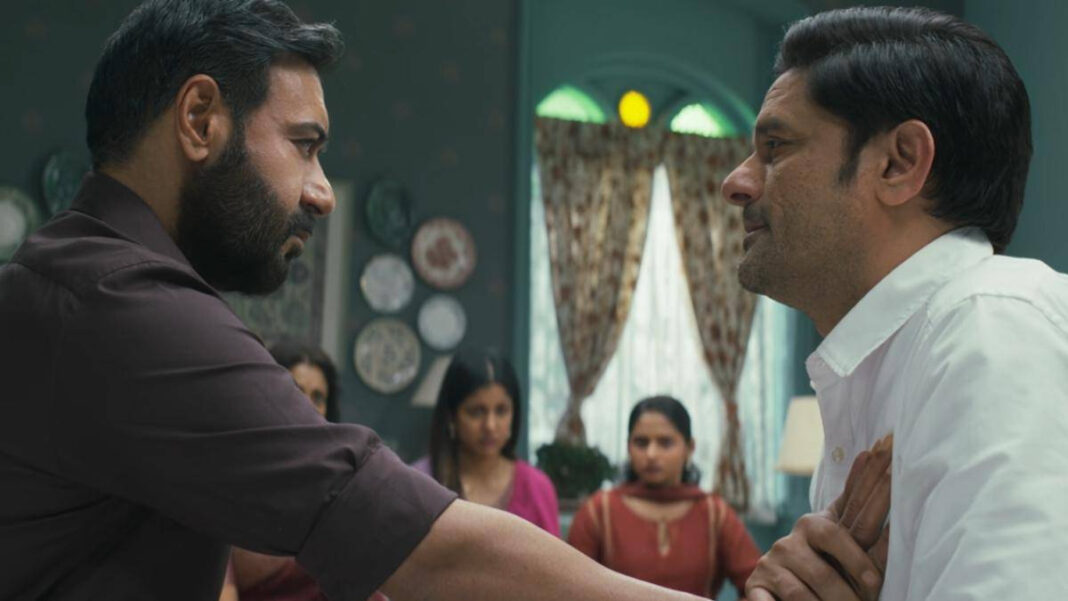
Jaideep Ahlawat steps into the role of Crime Branch officer Rajveer Singh Tomar, leveraging his fierce charisma and commanding presence to create a formidable counterpart to Ajay Devgn’s nuanced and calculated performance. Their on-screen dynamic creates an electrifying tension that propels the plot forward. Moreover, Prakash Raj reprises his role as Advocate Shetty, bringing a familiar yet compelling energy, reminiscent of his performance as Jaykant Shikre in Singham.
Narrative Developments and Character Depth
Adding depth to the narrative is Kamlesh Sawant’s character, Gaitonde, who evolves from being a stereotypical thug of the first film into a self-aware, humorous figure, directly engaging the audience and illustrating how the legend of October 2 has transformed into a catchphrase for the anti-hero.
Conclusion
As Drishyam: The Conclusion captivates audiences in theaters, it not only serves as a powerful continuation of a beloved saga but also calculates the complexity of the human psyche against a backdrop of relentless systemic struggle. The film encapsulates how the myths of justice and morality are often intertwined, reflecting the ongoing theme of an ordinary man’s extraordinary fight against an unforgiving system.