 "
/>
"
/>

The Last Act of Dignity: Sumira Roy on National Award-Winning Documentary Bhangaar
In a poignant exploration of mortality and personal choice, Sumira Roy’s documentary film Bhangaar (Obsolete) has emerged as a significant cultural commentary, coinciding with the observance of the International Day of Older Persons and Gandhi Jayanti. The documentary, which recently clinched the National Film Award for Best Non-Feature Film, raises critical questions about the dignity of the elderly at the end of life and their rights concerning euthanasia.
Background on the Documentary
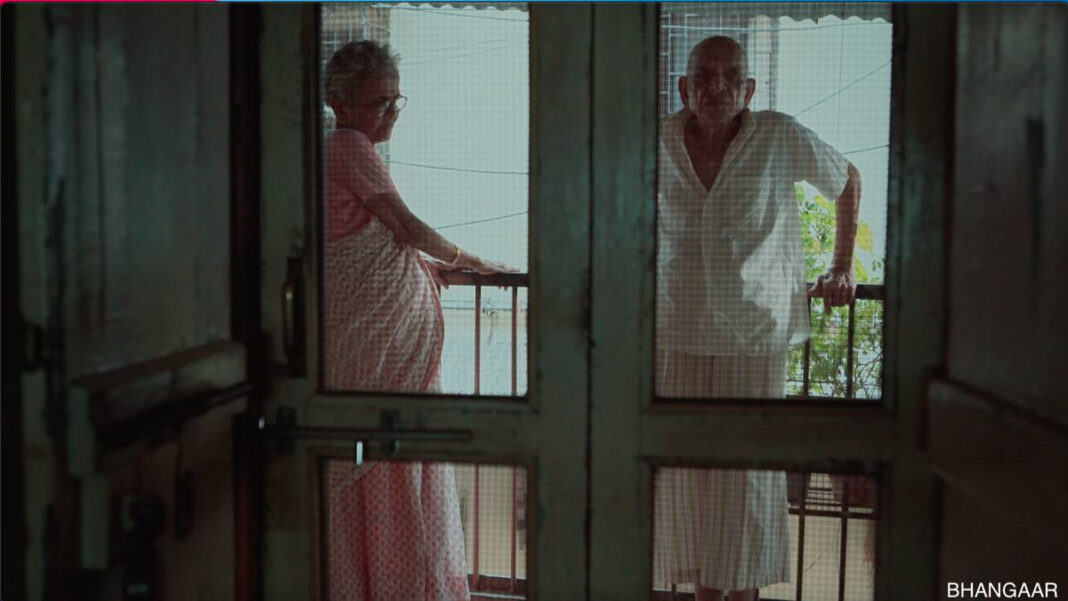
Set to be released soon, Bhangaar focuses on the intimate stories of Narayan and Iravati Lavate, an octogenarian couple from Maharashtra who sought active euthanasia in 2018. Iravati, who battled cancer and passed away in 2023, and Narayan, now residing in an old-age home, exemplify the struggles faced by the elderly in a society where they often have limited autonomy and choice regarding their final days. Following the announcement of the National Award, Roy attempted to share this momentous occasion with Narayan but found that his advanced age and health issues rendered him unable to grasp the significance of the award.
Key Developments in the Film’s Journey
While other documentaries, such as Nilesh Maniyar and Shonali Bose’s upcoming film A Fly on the Wall, also tackle similar themes by portraying the experience of individuals choosing euthanasia in Switzerland, Roy’s work starkly contrasts the disparities between privilege and accessibility in matters of life and death.
Monisha Advani, producer of Bhangaar and partner at Emmay Entertainment, shared the personal resonance of the film for her. She noted, “My late mother was a Maharashtrian, and the frugality mirrored in the lives of my maternal grandparents is evident in the Lavates’ story. Sumira’s sensitive direction allowed me to pay tribute to my family’s values.”
Insights from Sumira Roy
In a recent interview, Roy detailed her transition from an advertising background to filmmaking. She expressed that her lifelong passion for cinema, particularly documentary films, guided her decision to step into this realm despite familial apprehensions regarding the film industry. Her experiences in advertising taught her valuable lessons in storytelling, human behaviour, and the importance of listening—skills that have proven advantageous in her documentary work.
Censorship Challenges
When it came to the film’s title, Roy encountered resistance from the Central Board of Film Certification. The board initially rejected the term “bhangaar” as insulting; however, after clarifying its significance to Narayan—who uses the term in his everyday life—they permitted its use with the condition of adding a disclaimer regarding its interpretation by the character.
Thematic Continuity and Philosophical Depth
Roy’s previous documentaries, such as Last Days and Last Shot, reveal a thematic continuity that delves deep into existential questions about life and death. She acknowledged her attraction to the philosophical concepts of moksha and nirvana, which previously motivated her exploration of individual experiences surrounding death and spirituality. Her film captures sentiments echoed by Narayan, who believes, “The day you’re born is the beginning of death.”
Inspiration from Iravati and Narayan’s Story
Roy’s connection to the Lavates was deeply personal, stemming from her late mother’s wistful wish to “die with dignity.” After her mother’s death, Roy found herself plagued by regret for not having broached the subject with her while she was alive. Upon discovering the Lavates’ story in the media, she felt compelled to meet them and gain closure for her unresolved feelings. The couple’s vibrant personalities, rich with knowledge of literature and law, provided an enlightening experience for Roy, who filmed them for four years, observing their lives without intruding on their daily routines.
Research Findings on Ageing and Caregiving
Roy conducted extensive research on the realities of ageing in India. She noted a significant disparity in the availability of palliative care, emphasizing that such resources are often accessible only to the affluent. In a country where the elderly population is growing at a rapid rate, Roy highlighted a pressing need for societal support structures that prioritize the rights and dignity of older adults.
Discussions on Self-Determination
As the discussion of self-rule and autonomy gains momentum in contemporary conversations, Roy pointed out the complex dynamics at play when elderly individuals express a desire for the right to choose death. She remarked that conversations with the elderly in families often revolve around medication and health management rather than their feelings or wishes, leading to an overwhelming sense of loss of identity and autonomy among older adults.
Wider Impact of the Lavates’ Petition
The Lavates’ struggle has not only sparked conversation but has also influenced legal landscapes in India. With the Supreme Court’s recent decisions on euthanasia, Roy insists that Narayan and Iravati have paved the way for others in similar circumstances, noting an increase in petitions related to these sensitive issues.
Conclusion
Bhangaar, which recently screened in Delhi and will continue its screenings in various locations, serves as both a tribute to the Lavate couple and a critical examination of how society values and treats its elderly population. As Roy’s film continues to resonate, it invites audiences to reflect on the themes of dignity, autonomy, and the profound complexities of life and death.
Bhangaar will screen at Museo Camera in Gurugram on October 4 at 4:30 PM. For more details, visit The Sampadak Express.