
At the Chettinad Heritage and Cultural Festival, a Revival Takes Root
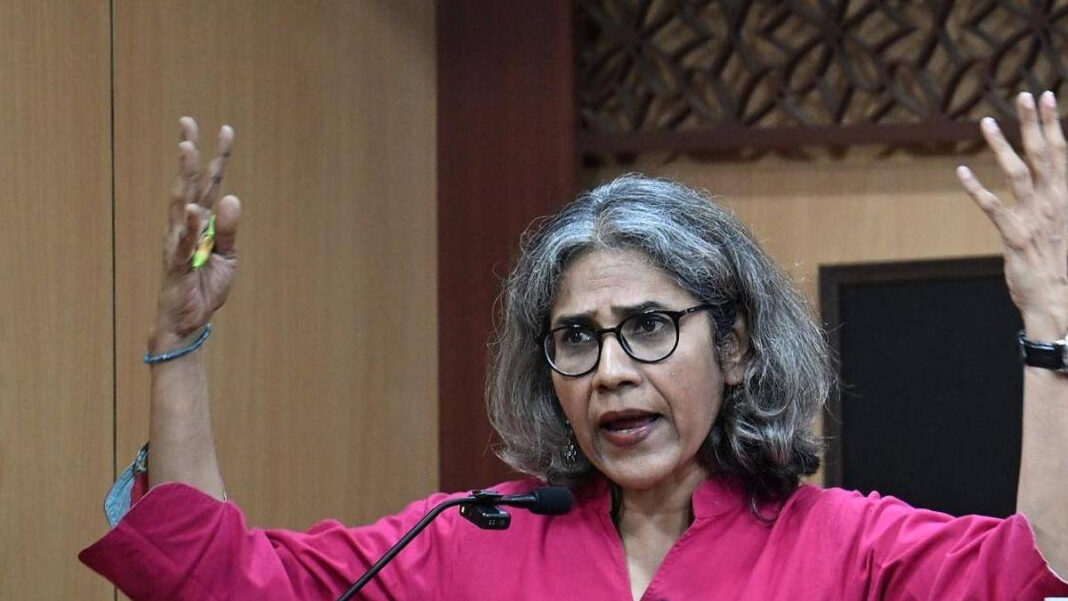
On the eve of the Chettinad Heritage and Cultural Festival, the bougainvillea-lined courtyard of The Bangala in Karaikudi hums like a family wedding: fleets of cars arrive, phones ring in quick succession, and silk saris rustle through hallways. At the centre of the bustle is 92-year-old Meenakshi Meyyappan, whose room at the boutique hotel she founded has been turned into a makeshift control room. For months she has been up at dawn, personally shaping the programme, inviting speakers, curating menus and managing room allotments. In the five years since it began, the festival has become a catalyst, drawing attention and visitors to Chettinad’s singular landscape of arid plains punctuated by extravagant mansions.
A Region at a Crossroads
Chettinad, comprising 75 villages spread across roughly 600 square miles in Tamil Nadu, is home to the Nattukottai Chettiar community—traders who once spanned South-East Asia and channelled their wealth into palatial homes from the 18th to mid-20th centuries. Many of these mansions, often sprawling over 40,000 square feet, have fallen into disrepair or been razed in recent decades.
At the community’s zenith there were about 15,000 mansions; no one is sure how many remain. “Most of these homes only come alive during weddings and functions,” says M. Meyyappan Jr., son of Meenakshi Meyyappan and co-compiler of A Chettiar Album with the late historian S. Muthiah. “Many stand empty today, and the knowledge and skills required to maintain them are disappearing with every generation. Effectively Chettinad is shrinking.”
Tourism, Social Media and New Investment
The festival has accelerated change. As visitors arrive for holidays and destination weddings—drawn in part by social media—Chettinad’s imposing homes and courtyards are appearing in countless reels. In Athangudi Palace, it is almost impossible to stroll without encountering a content creator mid-shot.
That attention is beginning to translate into investment. In 2018, The Park Hotels opened The Vaadhyar’s House restaurant after restoring a 150-year-old dilapidated mansion. In 2024, the hospitality group launched The Lotus Palace opposite it, reviving a 230-year-old structure with a Kanadukathan-meets-Gatsby aesthetic—filter coffee, emerald chandeliers and a plush scarlet lounge. Locals say Taj Hotels has also been scouting for a mansion to restore.
Community-Led Preservation Efforts
The community itself is responding. Jewellery designer Meenu Subbiah opened Pettagam last year, billed as India’s first private museum dedicated to Chettinad jewellery. Around the same time, revivalist and prominent Chettiar voice Visalakshi Ramaswamy unveiled The Museum of Chettinad in her 125-year-old family home in Kanadukathan. The museum shop features the cheerful palm-leaf kottans that her M. Rm. Rm. Cultural Foundation helped popularise through its long-running work documenting, preserving and reviving the region’s crafts, textiles and architecture.
Inside the museum, visitors encounter embellished Ravi Varma prints, Burmese lacquerware and Chettinad silk saris with their signature contrasting borders. Ramaswamy is frank about the urgency of memory: “We have lost so much information. I’m 80 years old and I don’t know that much. I keep thinking I should ask some old person… and then I realise that is me,” she says. “I have the house. I have the rooms. So I decided to do it here… If you know what you did in the past, you see today with better clarity.”
Ideas, Debates and Immersive Heritage
The festival’s programme ranges across culture, history and politics. A spirited conversation between politician Shashi Tharoor and author-historian Manu Pillai examined the “Idea of India: Power, Polarization and the Republic,” drawing a full house. An evocative textile display by Ally Matthen’s Registry of Sarees—developed with textile revivalist Ashdeen Lilaowala and researcher Peter Lee—showcased the richness of South Asian weaving traditions and their living practices. Historian Malvika Singh, an advocate of Indian handicrafts and founding member of Rehwa, delivered an impassioned call to action urging attendees to buy directly from weavers.
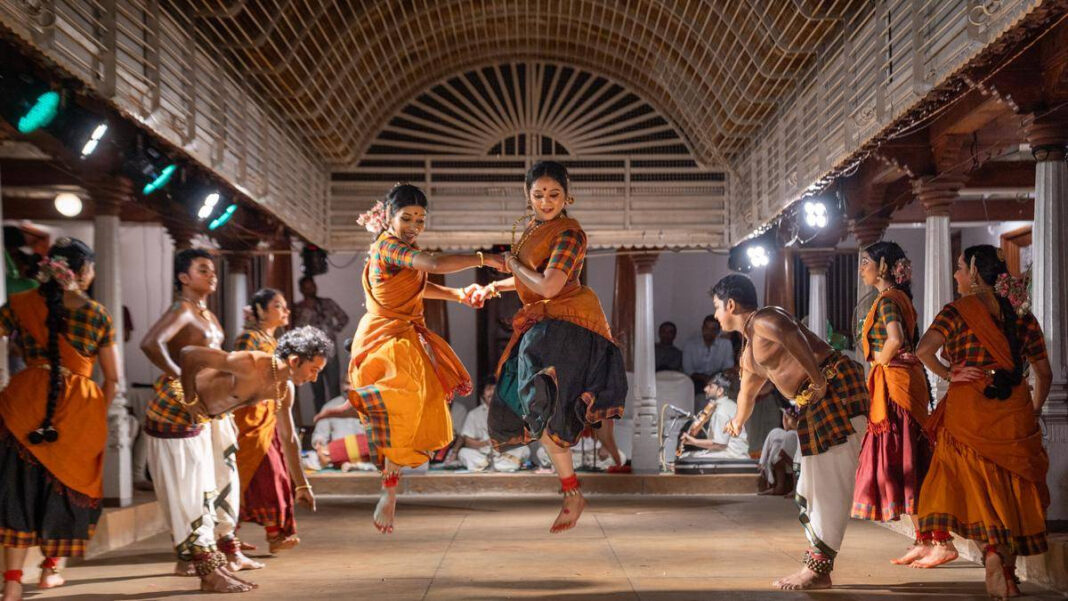
Guided visits amplified the region’s layered history. Author-historian Pradeep Chakravarthy led tours of the Soundara Nayaki Kailasanatha and Kandadevi temples, while explorations of the Zamindar House in Devakottai and the Chettinad Palace underscored the complexity of building techniques and artisanal labour that have vanished across generations.
Recovering Lost Techniques
Architect Benny Kuriakose, who has long collaborated with Ramaswamy on preserving Chettinad’s architectural heritage, points to practical revivals that have taken root. Their research into Athangudi tiles began decades ago, when only three or four establishments remained. “Now there are 300 factories across Chettinad,” he says, a testament to revived demand and renewed pride.
Another rediscovered skill involves lime plastering finished with an egg wash, a technique that had almost slipped from living memory. Kuriakose recalls tracking down a mason who remembered how it was done in the 1960s. “If we had not found that mason, it would have been over,” he says. Such knowledge, he adds, can shape buildings that are more comfortable and climate-resilient. “Five hundred years ago we were skilled in craftsmanship. We have lost so much,” Kuriakose reflects. “I get fulfilment from doing this. Our cities today have architecture that is not people-friendly, or climate-friendly. It is important we bring back durable, sustainable craftsmanship.”
Craft Traditions, Modern Markets
On the festival’s final evening, over The Bangala’s famed fried quail and lacey appams, designer Ashdeen Lilaowala—credited with reviving the Parsi Gara sari—spoke about adapting heritage to contemporary markets. “We do western wear, or we do a clutch. If we want to employ more and more artisans, we need to expand,” he said. The approach, he noted, is already widening opportunities. “By doing this we have managed to get the second generation working. Sons and daughters-in-law are learning the craft.”
The Organiser Who Never Stops
The morning after the festival closes, the pace barely slows at The Bangala. In Meyyappan’s courtyard, freshly scrubbed cooking vessels dry in the sun, visitors come and go, and the phone never quite stops ringing. “Someone always wants something done,” she says with composed understatement. “I don’t mind. Organising is one of my core strengths.”
What began as a seasonal initiative has evolved into a year-round driver of local activity. “The festival was originally set up to boost off-season tourism, but has become a catalyst for the whole year,” Meyyappan notes. “There are lots more weddings now,” she adds, with a smile and a coda for the celebrity watchers: “And Mammootty stayed with us at The Bangala for three months.”
Beyond Four Days: A Living Revival
While the latest edition has wrapped, the work it champions continues. Old recipes are being rediscovered and taught; tile-makers, jewellers and weavers are mastering traditional techniques and finding new audiences—and fresh pride. The Chettinad Heritage and Cultural Festival has become more than a four-day showcase of a storied community. It is a living proof of concept: that preservation and renewal can begin with a handful of determined people—starting with a 92-year-old aachi who is already on the phone planning the next edition, while deciding lunch for her guests, including Mammootty.