
Senior journalist seeks to intervene in legislative privilege versus free speech case
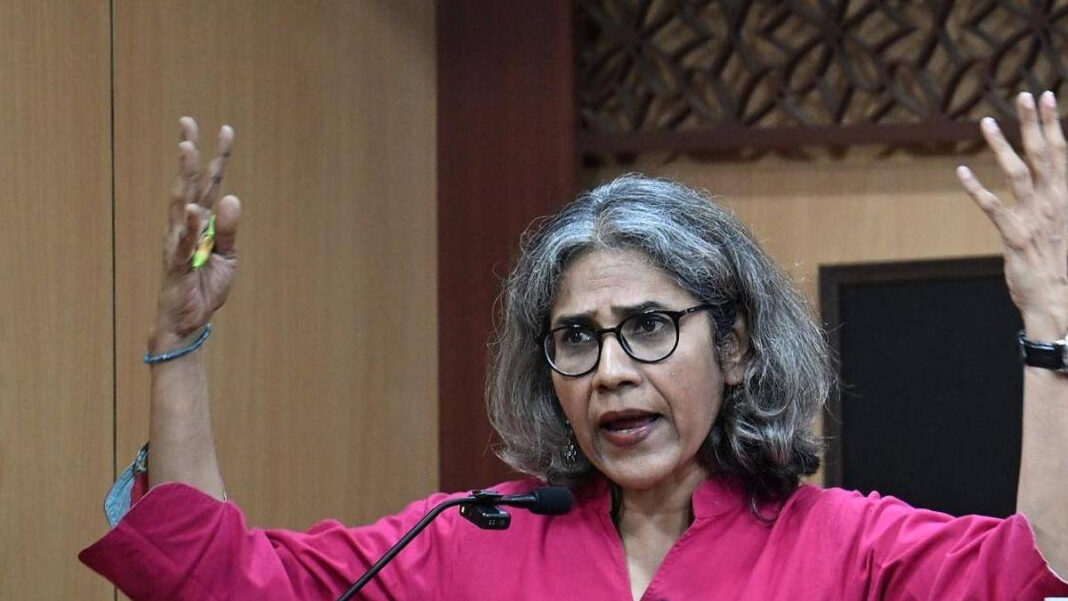
Senior journalist Seema Chishti has moved the Supreme Court seeking to intervene in a long-pending case that will test the limits of legislative privilege and address whether a House of Legislature can deploy its powers to override citizens’ fundamental right to freedom of speech and expression.
The case at the heart of the intervention
The dispute dates back to 2003, when The Hindu published an editorial critical of the then Tamil Nadu Chief Minister, Jayalalithaa. In response, the Tamil Nadu Assembly Speaker tabled and passed a resolution alleging that the newspaper had “distorted the proceedings of the Assembly, commented contrary to the events in the Assembly.” The resolution further asserted that the remarks made in the editorial “amount to a breach of privilege of the entire House” under Article 194 of the Constitution, a provision that guarantees freedom of speech within the House and certain immunities to Members of State legislatures. The Assembly went so far as to pass a resolution calling for the arrest of editorial staff of The Hindu.
Following the resolution, N. Ravi, then Editor of The Hindu, approached the Supreme Court. The Court promptly stayed any coercive police action against the newspaper’s senior editors, effectively halting the arrests while the constitutional questions raised by the matter were examined.
Constitutional questions before the Supreme Court
During the initial hearings, Senior Advocate Harish Salve appeared for The Hindu and argued against the invocation of Article 194(3) to curb the freedom of the press, which is protected under Article 19(1)(a) of the Constitution. The Supreme Court agreed to consider the broader legal question: whether a critical speech or publication concerning legislative proceedings can be treated as a breach of legislative privilege.
The case has since remained pending for years, emerging as a pivotal test of how legislative privileges intersect with, and are bounded by, fundamental rights—especially free speech and expression. In August 2026, after the prolonged pendency, a Bench headed by Chief Justice of India Surya Kant ordered the matter to be listed before a seven-judge Constitution Bench on October 6, signaling that the Court would finally undertake an authoritative examination of the issues involved.
Seema Chishti’s intervention bid
In her application, filed through advocate Neha Rathi, Ms. Chishti has sought to intervene on the ground that the case implicates the “constitutional balance between the Legislature, the judiciary and the free press.” The application underscores that the freedoms at stake transcend any single party or publication and go to the heart of democratic accountability and public discourse.
“Legislative privileges and fundamental rights do not operate in separate, watertight compartments, but must be read together, harmoniously, to give full effect to the constitutional scheme of democratic governance,” the application submitted. Her plea places emphasis on ensuring that any assertion of legislative privilege is calibrated against the Constitution’s guarantees, particularly where press scrutiny of elected representatives and legislative functioning is concerned.
Why the case matters
The 2003 controversy raised a fundamental question: Can criticism of legislative conduct or commentary on legislative proceedings be penalised as a breach of privilege? The Assembly’s move to direct arrests for editorial criticism triggered alarm within media and civil liberties circles, who viewed it as a potential encroachment on press freedom.
The Supreme Court’s decision to consider the matter before a seven-judge Bench indicates the gravity and breadth of the constitutional issues at stake. The Bench will likely address the contours of Article 194, particularly sub-clause (3), and its relationship with Article 19(1)(a). The outcome could delineate the threshold for when, if ever, published criticism of legislative actions may lawfully attract privilege proceedings against journalists or media houses.
Next steps
The case is scheduled to be heard by a seven-judge Bench on October 6. The Court is expected to decide on Ms. Chishti’s request to intervene and determine the scope of participation by interested parties before proceeding to examine the core constitutional questions. The ongoing stay against coercive action from the earlier proceedings remains a touchstone of the Court’s interim approach to safeguarding press freedoms pending final adjudication.
Broader implications
The eventual ruling could have a significant bearing on the press’s role in reporting on and critiquing legislative processes, as well as on the powers of State Assemblies to invoke privilege against publications. By clarifying how legislative privilege coexists with the fundamental right to free speech and expression, the Supreme Court’s decision is poised to shape the constitutional balance among the Legislature, the judiciary and a free press.
Published: September 30, 2026