
EAM Jaishankar warns of ‘major food crisis’ in coming months
External Affairs Minister S. Jaishankar has warned that the world could face a “major food crisis” in the coming months, as overlapping conflicts and climate pressures tighten energy markets, disrupt grain shipments and curtail fertiliser supplies — a combination he said was proving “very very stressful” for economies across the Global South.
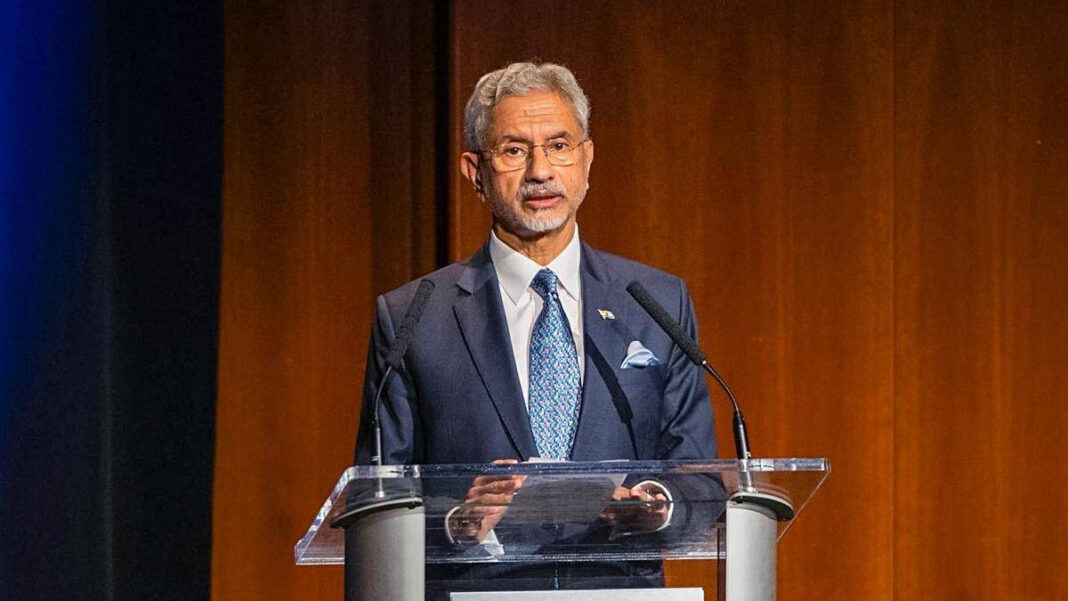
Speaking at the Asia Society in New York on Monday, September 28, 2026, following the United Nations General Assembly’s high-level week, Mr. Jaishankar said the wars in Ukraine and the Iran-Gulf region were already having a “devastating impact” on developing countries and risked aggravating instability further.
Energy markets under strain
Mr. Jaishankar said there is particular concern about global energy, describing the oil market as “very tight” and warning that political manoeuvring around supplies could exacerbate volatility and push up prices further.
“Part of it is actually the security of oil supplies, and part of it is the politics of oil supplies, and they are feeding into each other, and they are creating a double crisis or an aggravated crisis,” he said. He cautioned that playing politics with energy at a time when prices should be stabilised would “add to the complications in the market.”
Grain exports and fertiliser supplies disrupted
Turning to food security, the External Affairs Minister highlighted the mounting risks to global grain flows and fertiliser availability. “We are today looking at a situation where some of the major grain exporters will not be able to send out their shipments, particularly out to the Black Sea,” he said, referring to the ongoing disruptions stemming from the conflict in Ukraine.
He added that fertiliser shortages were becoming significant because key producers are located in West Asia and Russia, and their production had been impacted. Combined with climate phenomena such as a super El Niño, these disruptions, he warned, could converge into a far larger crisis. “There is going to be a major food crisis probably in the coming months,” he said.
‘Very very stressful’ for the Global South
Mr. Jaishankar underscored the cumulative impact of energy, food and fertiliser shocks — compounded by financial market dynamics — on developing economies. “If you have energy as a big crunch, and then food and fertilisers on top of it, and finance because every time there’s a conflict, money moves towards safe harbours and away from the Global South, the net result of it has been really very very stressful,” he said.
He argued that policymakers could not plead a lack of intent for these outcomes. “Countries should not be so self-centred that they’re in their own world and take your decision and say, ‘Well, it was not my intention to make your life difficult,’” he said, calling for decisions informed by “sound common sense” so that the basic needs of many countries are not neglected to the point of distress.
Instability already visible, further aggravation feared
Pointing to recent events, Mr. Jaishankar said the energy crisis had already translated into political instability in some regions following the Ukraine war. “We have already seen it after the Ukraine war. We saw in our neighbourhood the direct result of that in political instability, and my fear is what is happening in Iran and the Gulf is going to feed, is going to aggravate,” he said.
Autonomy under pressure
Addressing how countries might navigate mounting external pressures, the Minister said responses would vary. “There would be countries that would obviously maintain their independence and their autonomy. Some others would find it harder to do so,” he said. “It’s not a black-and-white scenario. It would depend on the issue and the stakes involved. There’ll be cases where countries would make adjustments. There’ll be cases where they would fight back.”
Call for responsible global decision-making
Throughout his remarks, Mr. Jaishankar emphasised that decisions affecting energy, food and finance have cascading effects on vulnerable economies. He urged greater responsibility and foresight from global actors to prevent avoidable distress, reiterating that the convergence of conflicts, climate shocks and market pressures was creating a fraught period for much of the developing world.
The Minister’s warning, delivered at the close of a week of high-level diplomacy in New York, adds urgency to calls from the Global South for more stable and predictable access to essential commodities and for international cooperation aimed at averting further destabilisation in the months ahead.