
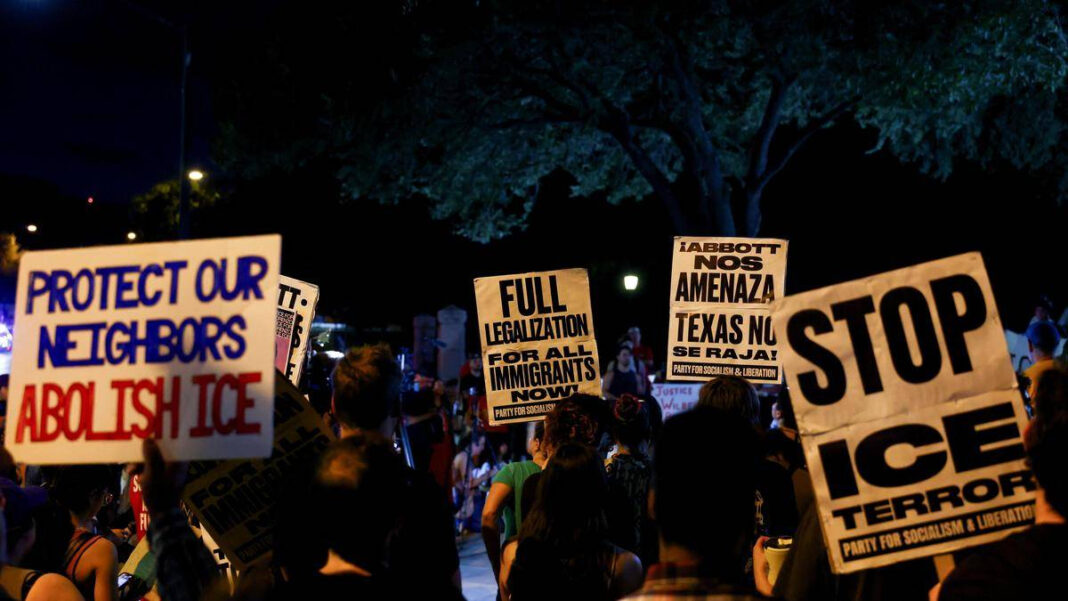

Understanding ICE and Its Controversies
Collaboration Between U.S. Big Tech and ICE
The Effectiveness of Tech Boycotts
Title: How Big Tech Powers Anti-Immigration Crackdowns
Introduction
In recent years, the intersection of technology and immigration policy has become increasingly apparent. As governments implement more stringent immigration measures, big tech companies unveil tools and systems that support these initiatives. We examine how technology is not merely providing ancillary support but actively shaping the narrative and enforcement of anti-immigration crackdowns.
The Role of Data Surveillance
One of the most significant ways in which big tech powers anti-immigration policies is through data surveillance. Government agencies increasingly rely on advanced surveillance technologies, often developed by prominent tech firms, to monitor migration patterns, conduct background checks, and track individuals. These systems can analyze vast amounts of data, from social media activity to financial transactions, enabling authorities to identify potential ‘threats’ more efficiently.
Facial recognition technology, for instance, is deployed in airports and urban areas, ostensibly to enhance security. However, its use disproportionately impacts immigrant communities, contributing to a perception of criminality among those seeking refuge or a better life. Data analytics tools can also assist in leveraging public records to filter out individuals facing deportation, enabling faster enforcement of immigration laws.
Digital Platforms and Information Sharing
Social media platforms and communication apps serve as crucial tools for organizing and disseminating information among immigrant communities. However, these same platforms can be exploited by governments to surveil and monitor undocumented individuals. Collaboration between tech companies and government agencies has led to information-sharing agreements, often without the consent or knowledge of the users.
This creates a chilling effect where immigrants may hesitate to reach out for help or express dissent due to fear of being targeted. Reports of Immigration and Customs Enforcement (ICE) using social media histories as evidence for deportation proceedings illustrate how digital footprints can contribute to the enforcement of anti-immigration policies.
Algorithmic Bias and Automation
Moreover, the algorithms driving many of these systems can perpetuate discrimination. Machine learning models trained on biased data can lead to outcomes that disproportionately affect immigrant populations, reinforcing stereotypes and systemic inequalities. For instance, the use of risk assessment tools in legal settings — often influenced by big tech pricing strategies — may lead to harsher penalties or deportations for certain immigrant groups based on flawed predictive logic.
Automation in the form of chatbots and virtual assistants has become an integral component of immigration services. While these tools can streamline processes, they can also dehumanize interactions and fail to accommodate the complexity and nuances of individual cases. Immigrants seeking legal counsel may find themselves navigating a labyrinth of automated systems, which neglect the personal touch necessary for sensitive discussions surrounding their status.
The Lobbying Landscape
In addition to technology’s direct implications, big tech companies exert substantial influence on immigration policy through lobbying efforts. Many of these corporations advocate for policies that favor a low-wage workforce and high-skilled immigration, framing their stance as a need for labor. However, they simultaneously support initiatives that criminalize undocumented immigrants, perpetuating a cycle of exploitation and marginalization while arguing for reforms beneficial to their business interests.
The Future of Immigration Policy
As technology continues to advance, the relationship between big tech and immigration enforcement is likely to deepen. The ongoing development of artificial intelligence and machine learning will undoubtedly yield new tools that can be utilized for surveillance, tracking, and enforcing immigration laws. This evolution poses a significant ethical question: How can societies balance utilizing technology for security and public safety while also protecting the rights and dignity of immigrants?
Conclusion
Big tech’s role in powering anti-immigration crackdowns highlights a growing concern: the integration of technology into governmental practices raises profound ethical and civil liberties questions. As we navigate the evolving landscape of immigration policy, it becomes increasingly important to scrutinize how these technologies are deployed, advocate for transparent practices, and ensure that the human element is not lost in the pursuit of efficiency and security. The implications of this dynamic are far-reaching, dictating not only public policy but the very nature of community, identity, and belonging in an era defined by rapid technological advancement.