 "
/>
"
/>

Increasing Tensions Ahead of Critical October Vote
Presidential Election Scheduled for Later Date
Title: Serbia’s President Aleksandar Vučić Resigns to Launch Prime Ministerial Bid Amid Early Elections
Introduction
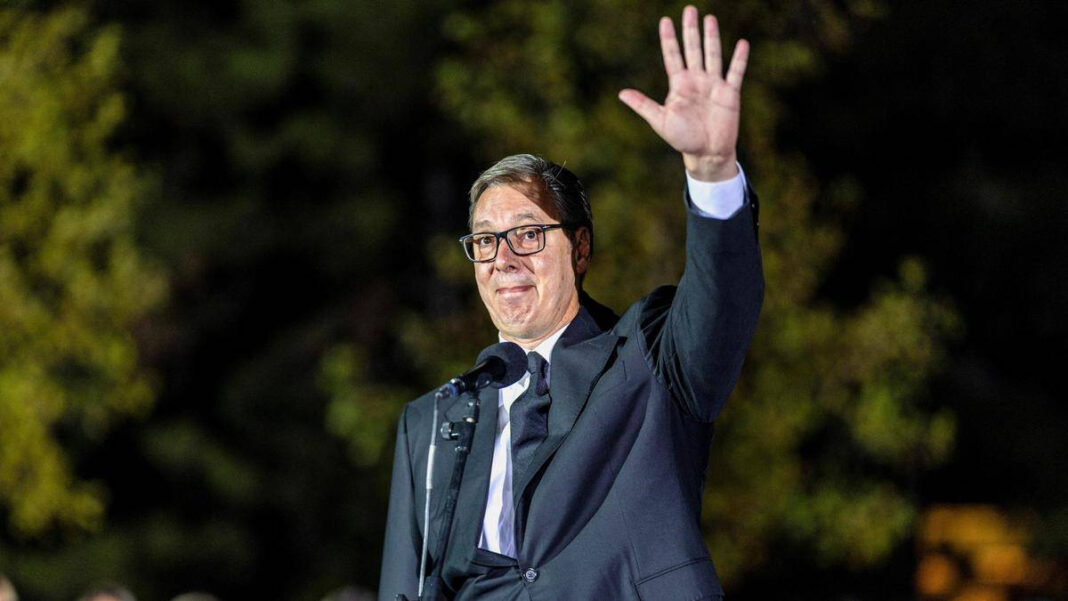
In a significant political shift, Serbian President Aleksandar Vučić has officially announced his resignation as the country’s leader in a strategic move to run for Prime Minister following the call for early elections. This decision comes amidst growing political tensions and public dissatisfaction, shaking the very foundations of Serbian politics. Vučić’s exit from the presidency marks a pivotal moment in Serbia’s political landscape, raising questions about the future direction of the country.
Background: The Rise of Vučić
Aleksandar Vučić, who has served as President since 2017, previously held the position of Prime Minister from 2014 to 2016. His tenure has been marked by a populist approach, characterized by strong media presence, infrastructural development, and a foreign policy closely aligned with both the European Union and Russia. However, his leadership has not been without controversy—his administration has faced accusations of authoritarianism, media censorship, and a crackdown on dissent.
Given Serbia’s complex historical and geopolitical context, Vučić has maintained a delicate balance in navigating relationships with international powers while addressing domestic challenges, including economic concerns and public unrest.
The Announcement and Its Implications
Vučić’s resignation lays the groundwork for an ambitious campaign as he seeks to secure a new mandate in a different capacity. During his resignation announcement, Vučić articulated his vision of continuing to lead Serbia, but under a new governmental structure aimed at tackling the pressing issues facing the nation.
The early elections, necessitated by a combination of political strategy and public demand for change, are expected to take place in a climate of heightened scrutiny. Critics suggest that Vučić’s shift to a parliamentary role is an attempt to consolidate power further and to secure a legislative majority that would allow him to govern with greater authority.
Public Sentiment and Opposition Response
Vučić’s move has ignited a wave of reactions among various political factions and the general populace. On one hand, his supporters view the resignation as a calculated decision that will enable him to implement more aggressive reforms and policies from the Prime Minister’s office. On the other hand, opposition leaders and civil society groups have seized the opportunity to criticize his administration, arguing that Vučić’s governance has exacerbated social divisions and stifled democratic norms.
The opposition, invigorated by the prospect of early elections, has rallied to present a united front against the ruling Serbian Progressive Party (SNS). Prominent figures have called for transparency in the electoral process, denouncing any attempts at manipulation or undermining of fair democratic engagement.
The Path Ahead: Challenges and Opportunities
As Vučić gears up for his Prime Ministerial campaign, he faces a myriad of challenges. Economic recovery following the global pandemic, addressing rising inflation, and countering increasing dissatisfaction among various social groups will be high on the agenda. Furthermore, the nuanced relationship with Kosovo and Serbia’s ambitions of EU integration will remain critical talking points.
The upcoming elections will test Vučić’s political acumen in maintaining the support of his base while attracting undecided voters. It is also an opportunity for the fragmented opposition to emerge as a credible alternative, potentially reshaping the future governance of Serbia.
Conclusion
Aleksandar Vučić’s resignation as President to run for Prime Minister signifies a crucial turning point in Serbia’s political narrative. As the country embarks on this electoral journey, the outcome will not only determine the direction of Vučić’s political career but will also shape the nation’s democratic trajectory. With pressing economic and social challenges ahead, the stakes in the forthcoming elections could not be higher, paving the way for a potentially transformative era in Serbian politics.