 "
/>
"
/>

Fahadh Faasil Interview: ‘Don’t Trouble The Trouble’ is a Kids’ Film for Grown-Ups
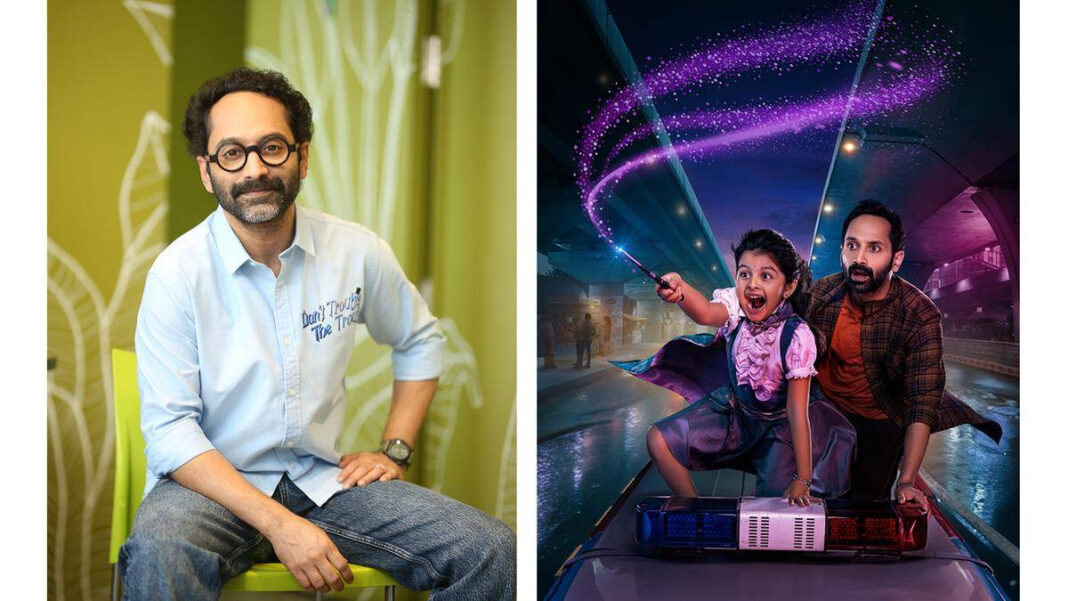
Renowned actor-producer Fahadh Faasil is known for his selective media interactions, making his latest gathering with journalists at the Arka Media Works office in Hyderabad a notable event. “I have been hearing this a lot,” he chuckles, as he discusses his new Telugu film, Don’t Trouble The Trouble, which is set for release on October 2. “It feels as though this is my first (Telugu) film. So I wanted to come and introduce myself,” he adds, highlighting a unique opportunity for engagement with his audience.
Background on the Film
While this may be Fahadh’s introduction to Telugu audiences, he is familiar with the industry, having gained significant acclaim for his role as the antagonist Bhanwar Singh Shekawat in the blockbuster Pushpa. His versatility spans across languages, with a dedicated fan base of cinephiles in Hyderabad who actively seek out his Malayalam films. The warm reception of his film Aavesham in the city serves as a testament to his cross-regional appeal. He expresses hope that Don’t Trouble The Trouble will resonate similarly with audiences.
The film, written and directed by Shashank Yeleti, boasts co-producers SS Karthikeya and Shobu Yarlagadda from the prestigious Baahubali team. The title draws inspiration from a captivating dialogue by legendary actor Balakrishna, with Faasil explaining, “There’s something in the story that spells trouble, hence the title.” The Telugu trailer features a voiceover by Balakrishna, which adds to the film’s intrigue.
A Unique Creative Process
Fahadh reveals a measured approach to his projects, rarely engaging with more than two scripts a year. “Karth (SS Karthikeya) called and said they had something interesting. The story was fresh,” he recalls, explaining why he couldn’t let this opportunity pass. He emphasizes that Malayalam cinema often presents subtle drama, whereas this film incorporates elements of magic and fantasy intertwined with themes of concern and love. “I did not want to miss this opportunity,” he stresses.
Filming took place across 79 diverse locations, including the vibrant scenes of Cyberabad and the Numaish industrial exhibition in Hyderabad. Reflecting on the process, he comments, “Almost all my Malayalam films have been shot on location. Pushpa is a rare film I shot on a set. I enjoy filming on location, and the production took care of crowd control.”
The narrative of DTTT centers around Fahadh’s character, Suri, along with a child actor, Ssara Palekar, and a beagle. Describing the film, he notes its unique focus: “a kids’ film for grown-ups. I hope the film can make people realize a few things they had neglected at some point in their lives.”
Overcoming Language Barriers
Though filmed in Telugu, DTTT is set to release in Malayalam and Tamil as well. Fahadh candidly shares that mastering his Telugu lines was challenging. “I think in Malayalam, translate it into English, and then perform in Telugu. So this process isn’t smooth,” he admits, emphasizing the effort it took to authentically convey his character’s dialogue. “I wanted to come across as someone who thinks and speaks the language,” he explains, crediting Shashank and Karthikeya for their support during the learning process.
He also praises child actor Ssara for her ability to improvise, noting her engaging presence on set. Additionally, he holds in high regard music composer Kaalabhairava, whose contributions are integral to the film’s atmosphere and narrative.
Valuing Writers and Learning from Other Industries
In light of a recent discussion sparked by actor-director Prithviraj Sukumaran regarding the significance of writers in Malayalam cinema, Fahadh shares, “I have always believed that writers are more important than actors. I rely equally on the writer and director; both have to work in tandem.” He highlights his collaborative discussions with Shashank, noting the unique dynamic of having the same person serve as both writer and director.
When asked whether Malayalam cinema can learn from Telugu and Tamil industries, Fahadh responds, “Malayalam cinema can learn from these industries, especially Telugu, on how to take a film to a bigger audience. A lot of planning is involved. I learned a few things from Arka and hope to explore this for some of my films.”
On Producing and Navigating Cinema
Beyond acting, Fahadh expresses pride in the positive reception of his production Bethlehem Kudumba Unit. He anticipated the film’s success but was surprised by the overwhelming audience response. His trust in director Girish A.D. is apparent as he reflects on their previous collaboration and the importance of flexibility in filmmaking: “I do not always go by the script, since I think there must be some room for change. I am particular about the structure: the beginning, middle, and the end.” He likens producing a film to playing a cricket match, remarking, “We don’t know if we will win but it’s fun to play the game.”
Fahadh asserts that veteran filmmakers and actors instinctively know when a project is veering off track. “There are times when we are all aware but helpless. As artists, we can only be honest to what we are doing,” he states, illuminating the complexities of creative work in cinema.
Collaborative Aspirations
Whether navigating the diverse landscapes of Malayalam, Tamil, and Telugu cinema or working with established actors, Fahadh is keen to absorb insights from his colleagues. During his experience filming Vikram, he gained valuable lessons from Kamal Haasan’s nuanced approach to acting. About collaborating with Vadivelu in Mamannan, he shares, “I studied in Ooty and thanks to my school friends, I had some exposure to Vadivelu sir’s comedy. One of the most exciting aspects of Mamannan was to work with him.”
In DTTT, Fahadh invested significantly in the evolution of his character from grey to white. After spending over a year in Hyderabad, he fondly recounts the friendships forged and his journey towards gaining the confidence to dub in Telugu. “I am used to sync sound (live) recording in Malayalam films. Here, though we dubbed, I insisted there be no prompting on sets. The silence on sets helps us focus better,” he explains.
Looking ahead, Fahadh is already working on another project produced by Arka Media, signaling his ongoing commitment to creativity across film industries.
As he reflects on his 24 years in cinema since his debut in September 2002, Fahadh admits that acting was never his initial ambition. He shares, “My first film flopped, after which I went to the US on a scholarship to study engineering. I dropped out and pursued philosophy. The pain of losing and going away bothered me. I returned after six years, during which I met so many people who introduced me to great books and world cinema. I wanted to do one successful film. I’ve continued for more than 60 films.”
As the release date for Don’t Trouble The Trouble approaches, anticipation continues to build around what promises to be a heartfelt and imaginative cinematic experience.