
 "
/>
"
/>

Call to End the Blockade on Cuba
China Pushes Back Against U.S. on Iran and Cuba in UN Speech
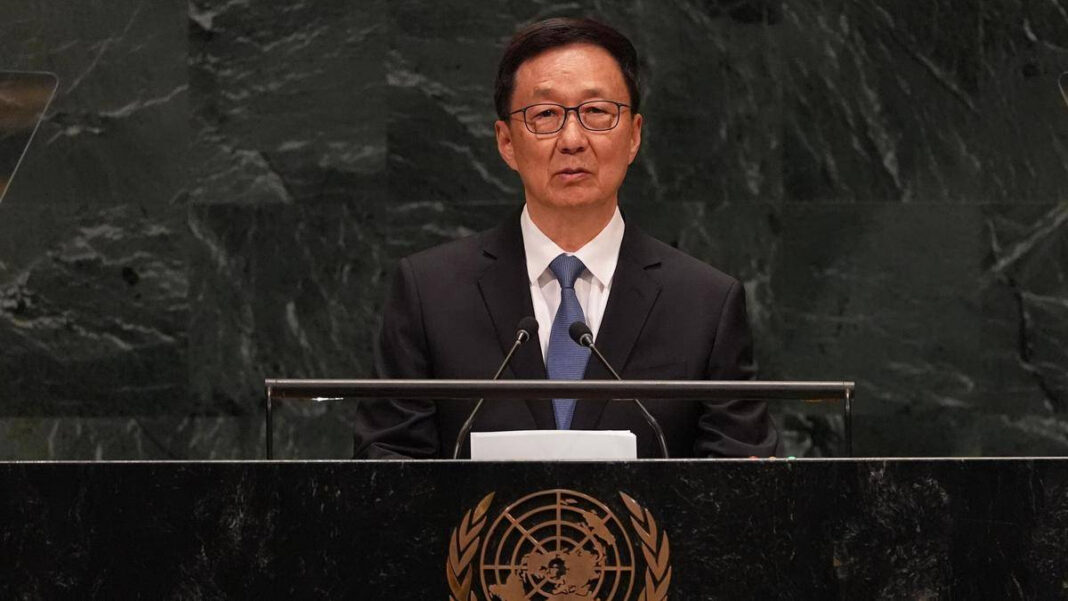
In a significant address at the United Nations General Assembly last week, Chinese Foreign Minister Qin Gang delivered a robust defense of China’s foreign policy while sharply critiquing U.S. actions regarding Iran and Cuba. This speech has underscored China’s increasingly assertive role in international diplomacy and its commitment to standing against what it perceives as unilateralism from Washington.
China’s Position on Iran
In his remarks, Qin emphasized China’s stance on Iran, particularly regarding the ongoing tensions surrounding the Iranian nuclear program. He reaffirmed China’s commitment to the Joint Comprehensive Plan of Action (JCPOA), the landmark agreement aimed at curbing Iran’s nuclear ambitions in exchange for sanctions relief. Qin expressed concern over the U.S. withdrawal from the JCPOA in 2018 and the subsequent re-imposition of sanctions, which he claimed have exacerbated regional tensions and obstructed diplomatic efforts.
“Dialogue and engagement, not sanctions and pressure, are the paths to resolve the Iran nuclear issue,” Qin stated. He urged all parties involved to return to the negotiating table and engage constructively, advocating for a multilateral approach to uphold international norms and respect for sovereign nations.
Critique of U.S. Policy Toward Cuba
The speech also addressed U.S. policies toward Cuba, where Qin condemned the ongoing trade embargo and economic sanctions imposed by Washington. He framed these actions as not only detrimental to Cuba’s development but also as violations of international law and a hindrance to the sovereignty of nations.
“Attempts to isolate Cuba through economic strangulation have failed,” Qin asserted, emphasizing the need for the international community to stand in solidarity with Cuba in its right to self-determination. He called for an end to the embargo, highlighting China’s support for Cuba in its quest for social and economic progress, and criticizing U.S. interference in Cuba’s internal affairs.
China’s Broader Foreign Policy Strategy
Qin’s address highlighted a broader strategy within China’s foreign policy—one that seeks to position the nation as a champion of multilateralism and an advocate for a new world order. By defending Iran and Cuba, China is not only seeking to strengthen its ties to these nations but also sending a message to the world that it will oppose perceived U.S. hegemony and unilateralism on the global stage.
This approach aligns with China’s Belt and Road Initiative (BRI), which emphasizes equitable partnerships and development. China’s growing influence in Latin America and the Middle East, where it has invested heavily in infrastructure projects and economic support, showcases its commitment to building alliances grounded in mutual respect and benefit.
Global Reactions and Implications
The address has drawn mixed responses from the international community. Supporters of China’s position argue that the U.S. has overstepped its bounds, using sanctions and military threats as tools of foreign policy rather than engaging in meaningful dialogue. Critics, however, caution that China’s interventions could destabilize existing balances in these regions.
Observers note that the speech signifies a firm rejection of the U.S. approach to foreign policy, particularly as tensions continue to escalate between the two global powers. China’s deference to multilateralism stands in stark contrast to the more aggressive tactics employed by the U.S., which could reshape alliances and influence in global governance.
Conclusion
China’s strong defense of Iran and Cuba during the UN speech reflects a strategic maneuver to bolster its influence on the world stage while challenging U.S. dominance in global affairs. As international dynamics evolve, the pushback from China highlights the complexities of diplomacy in the 21st century and underscores the importance of dialogue over confrontation. As both countries navigate their roles in an increasingly multipolar world, the reverberations of this confrontation will be felt for years to come.