 "
/>
"
/>

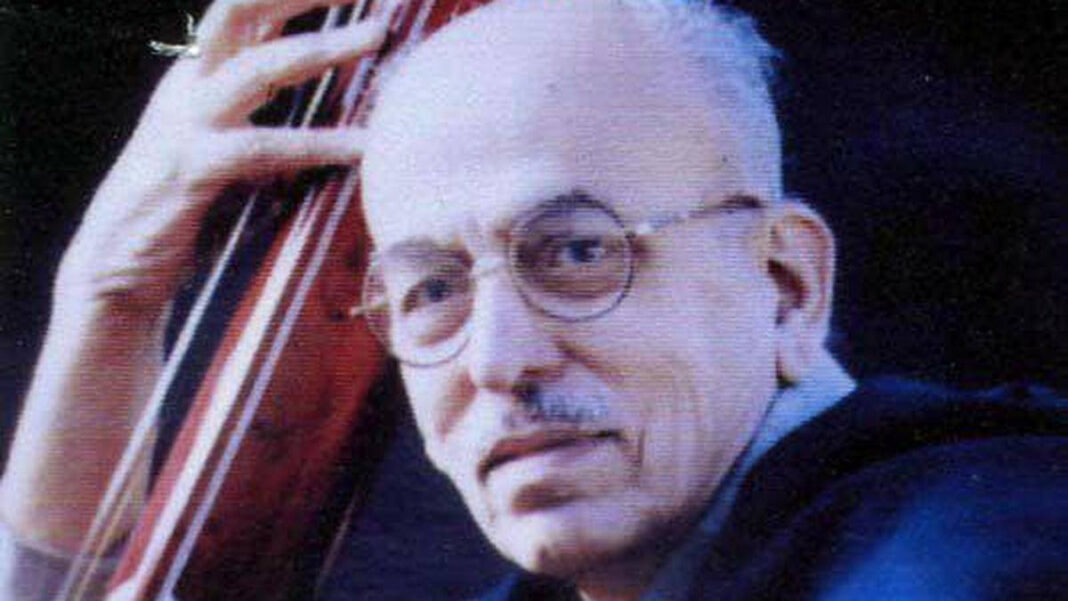
Tribute to Agra Gharana Maestro Pt. Indudhar Nirody
On September 22, the world of classical music mourned the loss of a great maestro as Pt. Indudhar Nirody passed away at the age of 91. Renowned for his profound influence as a vocalist, musicologist, and mentor, Pt. Nirody leaves behind a rich legacy characterized by an invaluable treasury of traditional wisdom, ragas, and bandishes.
Musical Legacy and Training
Firmly rooted in the Bhatkhande parampara, Pt. Nirody was dedicated to upholding the vision of Pt. Vishnu Narayan Bhatkhande, who revolutionized Indian music by framing Ragasangeet into a comprehensive Shastra while preserving an extensive collection of gharanedar bandishes for future generations. His rigorous musical training came under the tutelage of four key disciples of Acharya S.N. Ratanjankar – S.C.R. Bhat, K.G. Ginde, Pt. Chidanand Nagarkar, and Pt. Dinkar Kaikini. This education positioned him as a direct descendant of Annasaheb’s legacy, which was also shaped by the illustrious teachings of Gwalior stalwart Pt. Antubua Joshi.
His extensive training and apprenticeship with these masters allowed his artistry to evolve into a seamless synthesis of the Agra and Gwalior gayaki, with Gindeji serving as his primary ideal. His proficiency is epitomized in a memorable incident where Annasaheb challenged him to perform raag Hameer without its defining phrase ‘Ga ma dha,’ which he executed flawlessly, showcasing his command over raag development.
Commitment to Tradition and Education
While Khayal was Pt. Nirody’s predominant focus, his versatility extended to dhrupad-dhamar and thumri, both as a performer and educator. His teachings were steeped in traditional methodologies, and he was often critical of modern trends in music, advocating for the principle that the foundational grammar (shastra) should take precedence over superficial glamour. For him, true mastery was achieved through patient taalim, devotion, purity, and unwavering perseverance.
Alongside his artistic pursuits, Pt. Nirody dedicated a significant portion of his career to a senior executive role in a government insurance firm. Following his retirement, he intensified his focus on music education, serving as a visiting professor at esteemed institutions such as Dr. Gangubai Hangal Music University in Mysuru and Karnataka University in Dharwad. He mentored a host of disciples, including Aditi Kaikini-Upadhya, Veerabhadrayya, Sharada Bhat, and others. His scholarship extended to writing essays on important subjects such as samay chakra and thaat frameworks, as well as presenting a 13-episode program on the Agra Gharana that aired on Akashvani Bangalore.
A Lifelong Mission
One of his most ambitious projects was the creation of an audio reference for all 1,896 compositions encapsulated within Bhatkhandeji’s six-volume Kramik Pustak Malika. This extensive work, recorded under the title ‘Samarpan,’ served as a form of gurudakshina and was made accessible online as an archival resource for students. It garnered appreciation from legendary musicians such as Pt. Rajeev Taranath, Pt. Sharad Sathe, and Pt. Ajoy Chakrabarty.
Recognition and Achievements
As a highly respected figure in the field of Indian classical music, Pt. Nirody was recognized as a top-grade artist by All India Radio and Doordarshan. His illustrious career earned him numerous accolades, including the Central Sangeet Natak Akademi Award in 2014, presented by former President Pranab Mukherjee, the Rajya Sangeet Vidvan Puraskar in the same year, an honorary doctorate from Dr. Gangubai Hangal Music University in 2015, and several other prestigious honors. Notably, he was awarded the Gaurav Prashasthi in 2006 and won first prize in the All India Music Competition in 1955, which was presented to him by former President Rajendra Prasad.
A Personal Journey with a Maestro
My own journey as a disciple of Pt. Nirody began in November 2002. After leaving my IT profession in Bengaluru to pursue music full-time, I sought his guidance, having previously accompanied him on the harmonium. He welcomed me as his student on the condition that there would be no tuition fees, reflecting his belief that knowledge should be shared freely, as taught by his gurus. He also required me to travel bi-weekly from Bengaluru to Mysuru for intensive, two-day residential stays dedicated to my training.
These learning sessions continued until the pandemic, after which we transitioned to online lessons. In his final months, when vocal exertion had become challenging due to health issues, our exchanges remained resolute through text messages. My taalim began with raag Bhimpalas in November 2022, stretching for 11 months as he emphasized the importance of absorbing the subtle nuances of the raag. His initial lesson left me humbled, awakening me to the profound nature of vocal music—a world I suddenly realized was vast and intricate.
Throughout our interactions, he impressively passed on the intricacies of over a hundred raags and an extensive repertoire of compositions, illustrating how each bandish could unlock a distinct aesthetic pathway in raag development. His tailored approach to raaga badhat emphasized precision, encompassing every facet from swar shuddhata to breath control, thereby instilling in me a deep appreciation for both Dhrupad and Khayal styles.
A Lasting Legacy
During our stays in Mysuru, engaging musical discussions often stretched late into the night. Pt. Nirody never disparaged fellow musicians; instead, he emphasized their strengths and what I could learn from them. Whenever he reflected on his own gurus, he would express profound gratitude, stating, “You can’t imagine how fortunate I am to have learnt from such stalwarts. You will not understand.” These words resonate with me, custodied in my memory alongside the generous gifts of training, music, and philosophy he imparted.
As the classical music community honors Pt. Indudhar Nirody’s monumental contributions and his unwavering dedication to the art form, his teachings and legacy will undoubtedly continue to inspire countless musicians and students for generations to come.