
Pretty in pink, but Malarikkal’s lilies worry ecologists
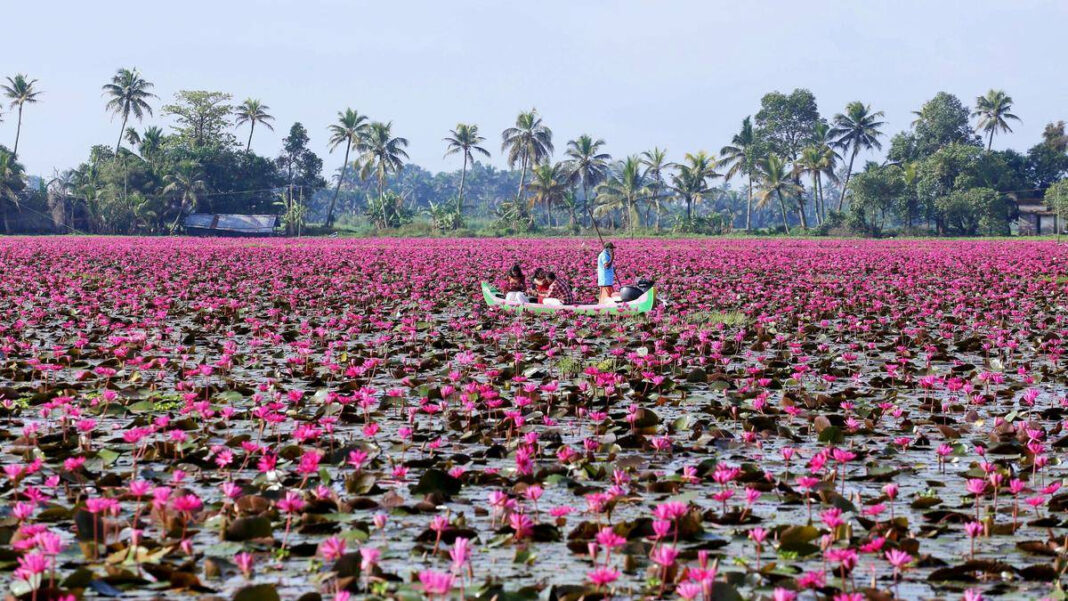
The vivid pink carpet of water lilies that has turned Malarikkal in Kottayam into a seasonal spectacle is drawing crowds and cash. But a two-year study commissioned by the Kerala State Biodiversity Board (KSBB) has raised red flags about the pace and scale of the plant’s spread and its mounting ecological costs.
A bloom that followed the floods
According to the study, the water lily first appeared in the paddy field canals and waterways of Malarikkal after Kerala’s devastating 2018 floods. What began as a picturesque surprise has since proliferated into what researchers describe as unprecedented and uncontrolled growth. The dense mats of lilies now dominate stretches of the aquatic landscape during the monsoon and immediately after, reshaping how these ecosystems function.
Study finds unchecked expansion
The KSBB-backed assessment reports that the lily’s colonisation has accelerated over a relatively short period. Ecologists involved with the study warn that the unchecked expansion is outpacing the capacity of local ecosystems to adapt. While the plant’s seasonal die-back offers a brief reprieve, the overall trajectory, the study indicates, is towards greater coverage and persistence year on year.
Ecological concerns mount
Biodiversity experts have flagged multiple risks associated with the lily’s spread:
• Native aquatic plants at risk: Thick lily mats can outcompete local aquatic vegetation by monopolising space and resources. The displacement of native species can simplify habitats, reduce biodiversity and alter food webs.
• Water flow impeded: The dense growth restricts the natural movement of water through canals and fields, potentially affecting irrigation efficiency and the health of wetland systems that depend on slow but steady circulation.
• Sunlight cut-off: Broad lily leaves shade the water column, reducing sunlight penetration. This can limit photosynthesis for submerged plants and disrupt oxygen levels, with cascading effects on fish and invertebrates.
• Methane emissions: As large volumes of plant biomass die and decay at the end of the season, ecologists are concerned about methane release from anaerobic decomposition. These emissions contribute to greenhouse gases and signal broader imbalances in wetland carbon cycles.
Tourism boom reshapes a village economy
Even as concerns grow among scientists, the lilies have become the engine of a flourishing local economy. The bloom, which typically begins in July and lasts for about three months, has transformed Malarikkal into a must-visit monsoon destination. Hundreds of visitors arrive daily at the height of the season, drawn by early-morning vistas of waterways washed in pink.
Farmers with canal-side plots, boat operators offering short rides through the flowers and local households catering to visitors all report additional income during the season. For many, the lily bloom has turned the monsoon months—traditionally a lean period for tourism—into a time of steady earnings and activity. The surge has also supported small vendors and informal guides who have woven themselves into the seasonal rhythm of the village.
The three-month “floral economy”
Local stakeholders and visitors refer to the period as a three-month floral economy. The lilies’ appearance sets off a predictable sequence: pre-dawn journeys to view the blooms, a spike in boat traffic, and a flurry of hospitality and retail activity that runs from early morning into late afternoon. When the lilies begin to wither, the crowds thin and Malarikkal’s waterways gradually return to their off-season calm—until the cycle restarts the following year.
A delicate balance between prosperity and preservation
For ecologists, the success story of Malarikkal’s lily tourism underscores a difficult balancing act. The same biological traits that make the spectacle so compelling—rapid growth, dense coverage and striking uniformity—also amplify the ecological pressures. Researchers caution that without careful monitoring and management, the long-term health of the waterways could be compromised, with consequences for fisheries, agriculture and the very aesthetic value that draws visitors.
What the findings signal
While the KSBB-linked study highlights alarming trends, it also provides a timely basis for informed decision-making. By documenting the lily’s post-2018 spread and its ecological footprint, the research frames the trade-offs at stake: a thriving seasonal economy on one hand and the need to protect native biodiversity and wetland function on the other. The study’s emphasis on water flow, light availability and greenhouse gas emissions offers clear metrics for tracking future change.
Local realities on the ground
On the canals and bunds of Malarikkal, the lilies’ dual identity is palpable. For boatmen and farmers, the bloom represents tangible opportunity. For conservationists and field biologists, the same sightline hints at a system under stress, with signs ranging from altered plant communities to the heavy organic load that accumulates as the season ends. The lily’s rise, they note, is inseparable from the flood legacy that reshaped Kerala’s hydrology in 2018—an environmental aftershock still unfolding in subtle and visible ways.
Looking ahead
With another season of blooms complete and tourism interest showing no sign of ebbing, the questions facing Malarikkal are becoming sharper. How can the village sustain the livelihood gains of its floral economy while addressing the ecological issues documented by researchers? The KSBB study adds urgency to that conversation by underscoring the scale of the lily’s expansion and the breadth of its impacts.
The pink horizons that have come to define Malarikkal capture a moment of beauty—and a complex ecological story. As visitors plan next monsoon’s trips and locals prepare their boats, ecologists are calling attention to the less visible currents beneath the petals: the native plants sidelined by shade, the slowed waterways and the gases rising from decaying blooms. Balancing these realities will shape what Malarikkal’s waters look like, and support, in the years ahead.