
Maharashtra declares drought in 265 talukas: what triggered the move and what relief is on offer
Maharashtra has declared drought in 265 of its 358 talukas following a sharp monsoon shortfall this year, triggering automatic relief measures for farmers, agricultural labourers and students in the affected areas. Between June 1 and September 26, the State received 798.2 mm of rainfall against a seasonal average of 970.9 mm — an 18% deficit. While 12 immediate measures have been activated without the need for individual applications, compensation for crop losses will follow a separate assessment and notification. The Opposition has urged the government to expand the list to include other affected talukas and to deliver relief before Diwali.
The order and what it means
On September 26, the government issued a resolution under the Drought Management Code, 2016, bringing 265 talukas across 32 districts under relief provisions. The Agriculture Commissioner’s review of the kharif season cited persistent rainfall deficiencies and other drought indicators since June. With this order, the first alert stage under the Code — known as Trigger-1 — has come into effect in the notified talukas. District administrations have been directed to immediately begin “panchnamas,” or formal field surveys, to document crop conditions. Ninety-three talukas remain outside the notified list.
How the Drought Management Code works
The Drought Management Code, 2016, lays down the criteria for assessing drought and the contours of government response. The Code sets out different triggers and thresholds, of which Trigger-1 is the initial alert stage. Among its tests is a dry spell of at least 21 days during the monsoon without significant rainfall. Once Trigger-1 is invoked in a taluka, District Collectors must initiate panchnamas, which involve on-ground inspection, photographs and GPS-coordinated records of crop status. The Agriculture Commissioner compiles these findings and forwards a report to the government. Financial assistance for crop damage — separate from the immediate concessions — is announced only after this procedure concludes.
Why a drought was declared now
The declaration comes as the monsoon winds down with an all-India weakening and a pronounced deficit in Maharashtra. Only five districts have recorded rainfall at or above the long-period average for the period to September 26.
Marathwada has been the worst hit, with its eight districts together showing a 38% deficit. Within the region, shortfalls range from 16% in Chhatrapati Sambhajinagar to 48% in Hingoli. Vidarbha has also been severely affected, registering an average deficit of 27% across 11 districts; deficits there range from 26% in Yavatmal to 42% in Amravati. The Agriculture Commissioner’s report concluded that drought-like conditions have persisted since June in 265 talukas based on rainfall data and corroborating field indicators, warranting action under Trigger-1.
Immediate relief: what farmers and residents receive now
Agriculture Minister Dattatray Bharne said the 12 notified measures apply automatically upon the declaration, and that more steps will follow after assessments. The current relief spans fiscal concessions, work and water provisioning, and basic supplies:
Financial and administrative concessions: Land revenue is exempted in the affected talukas. Crop loans will be restructured, and recovery of agriculture-related loans is deferred. Electricity bills for irrigation pumps above 7.5 horsepower will receive a concession; bills for pumps up to 7.5 horsepower had been waived earlier. School and college examination fees for students are waived.
Work and water security: Norms under the Employment Guarantee Scheme have been relaxed, with instructions to start the maximum possible number of works to provide wage employment. Drinking water tankers will be deployed where required. Electricity supply to irrigation pumps will not be disconnected in villages officially declared to be facing scarcity.
Food, fodder and conservation: Foodgrains will be distributed to farmers and agricultural labourers who depend on farm work for their livelihood. The government will ensure fodder availability for livestock. It will also initiate water conservation projects and prepare village-level drinking water plans for people and animals under earlier resolutions.
Compensation for crop losses will be announced separately
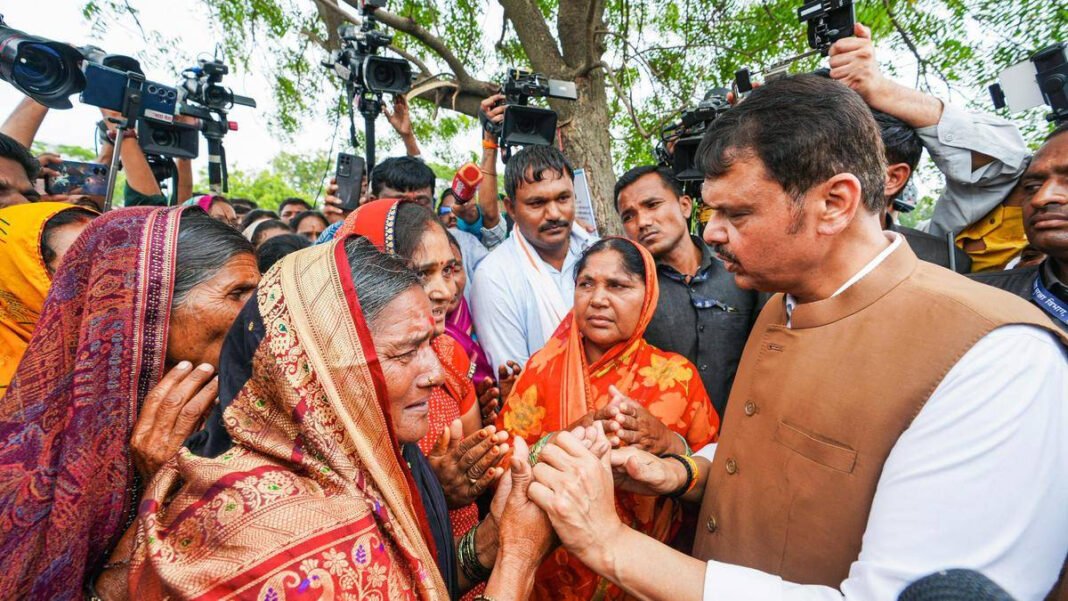
While the relief package has taken effect immediately, compensation for crop damage will be notified through a separate resolution once the Code’s survey process is completed. Devendra Fadnavis said assistance to the 265 talukas will be expedited, with the extent and eligibility determined by the panchnamas. The survey outcome will set both the quantum and reach of the compensation.
What the field survey will capture
Officials will photograph fields and record GPS coordinates in the affected areas to create a verifiable record of crop conditions. The Agriculture Commissioner will consolidate these reports for the government. Fadnavis has asked the Revenue and Agriculture departments to coordinate closely, prioritise fieldwork, and ensure that documentation moves quickly. He had visited several districts before the announcement and indicated that a decision was imminent.
Coverage: where the drought declaration applies
The 265 talukas fall under six revenue divisions: Thane (12), Nashik (49), Pune (35), Chhatrapati Sambhajinagar (74), Amravati (56) and Nagpur (39). In the Thane division, all notified talukas are in the coastal districts of Raigad, Ratnagiri and Sindhudurg; none from Thane or Palghar are on the list.
Konkan’s atypical shortfall and crop stress
Despite typically receiving the State’s heaviest rainfall, the Konkan region has recorded a deficit this year, which the government has linked to El Niño conditions. Sindhudurg received 2,148 mm of rain from June to September against an average of 2,896 mm (74%). Ratnagiri recorded 2,682 mm against 3,142 mm (85%). Raigad saw 91% of its average, though the talukas of Shrivardhan and Mhasala were about 20% short. Only July matched season norms; September rainfall was less than half the monthly average.
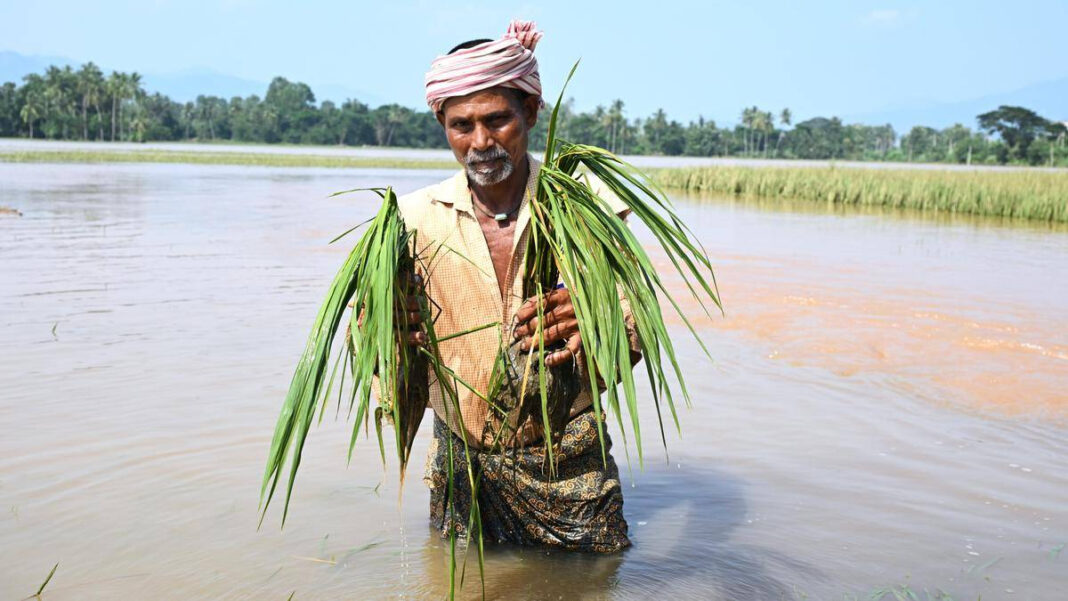
Rice and gram are the primary kharif crops in Konkan. Reports from the field note yellowing leaves and the appearance of scab disease in some pockets. Farmers fear outright crop loss in places, and reduced yields where crops survive. Eight talukas in Sindhudurg, three in Ratnagiri and one in Raigad have been brought under the drought notification, and the Agriculture Department has been tasked with surveying crop damage in these areas.
Political responses and demands
The Opposition has pressed for the inclusion of more affected talukas. Congress leader Vijay Wadettiwar cited crop damage in Brahmapuri taluka of Chandrapur district as a case for immediate addition. Shiv Sena (Thackeray) leader Bhaskar Jadhav argued that Konkan had been treated unfairly despite inadequate rain and damage to paddy and other kharif crops. Members from within the ruling side have also questioned exclusions.
NCP (SP) chief Sharad Pawar demanded that drought be declared in every taluka, that the legislature convene a special three-day session on the issue, and that relief reach people before Diwali. He called for financial assistance, waivers for women’s self-help group loans and farm-related loans, electricity bill waivers for pumps, compensation of Rs 1 lakh per hectare for farmers, and Rs 25,000 for agricultural labourers.
Responding to calls for expansion, Fadnavis said any taluka found to be facing drought conditions after inspection would be added and that no one would be denied assistance.
Water and fodder: government’s management plan
Water Resources Minister Radhakrishna Vikhe Patil said dam storage will be rationed until the next monsoon, with drinking water given priority over irrigation. He proposed supplying fodder to farmers and livestock owners through Direct Benefit Transfer, citing past allegations of irregularities in fodder camps. He added that Ahilyanagar district has a three-month fodder buffer in place.
What happens next
Districts are moving ahead with panchnamas under Trigger-1 to determine the scale of crop damage and fix compensation. The government has signalled that it will consider adding more talukas based on these inspections. In the interim, the 12 relief measures — from loan restructuring and fee waivers to water security and fodder support — are in force. The outcome of the surveys will shape the next phase of financial assistance and the extent of coverage across the State’s drought-stricken regions.
The declaration underscores the severity of this monsoon’s deficit, especially in Marathwada and Vidarbha, and marks the beginning of an intensive administrative push to stabilise livelihoods, safeguard drinking water, and prevent further agrarian distress as the kharif season nears its end.