
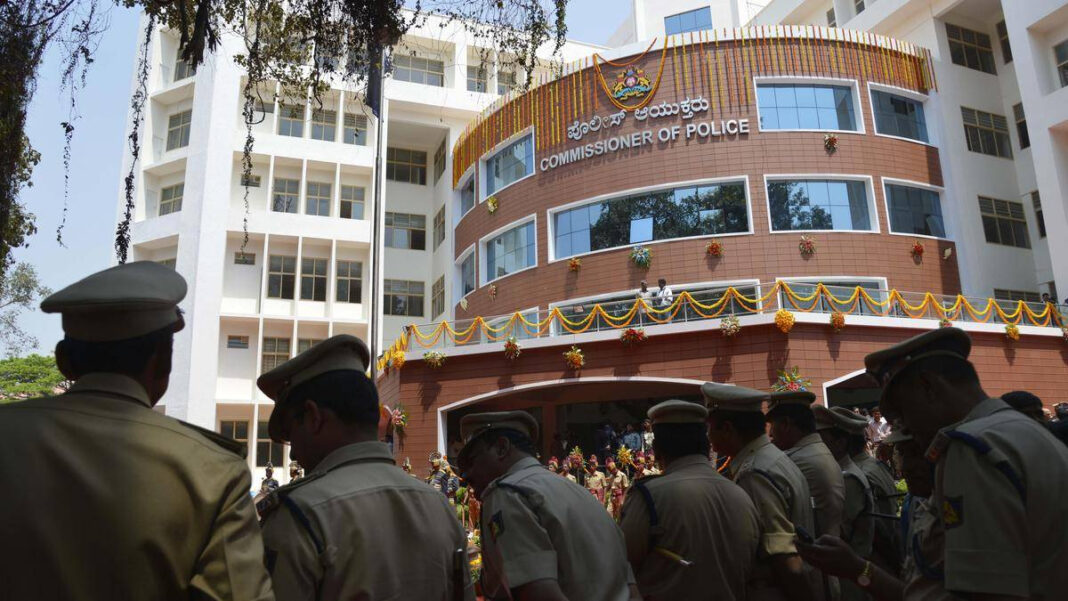

Karnataka Cabinet approves five commissionerates for Bengaluru; former officers warn of command, cost challenges
The Karnataka Cabinet on Tuesday, October 7, 2026, approved a sweeping reorganisation of the Bengaluru City Police into five separate commissionerates, overseen by a proposed Chief Police Commissioner. The move, aimed at aligning policing with the city’s expanding civic footprint, has sparked a sharp debate among serving and retired officers over its operational logic, costs and impact on public accountability.
Why the overhaul now
The restructuring comes amid Bengaluru’s rapid growth and the formation of the Greater Bengaluru Authority (GBA), which has divided the civic administration into five corporations. The new police model broadly mirrors this arrangement, with the government arguing that tighter alignment between police and civic bodies will improve coordination on local law and order, traffic management and public services.
But several former senior police officials questioned whether municipal boundaries should dictate policing jurisdictions. They contend that crime, law and order, traffic corridors and emergency responses routinely cut across civic divisions, requiring citywide strategies rather than segmented command structures.
The approved model
Under the Cabinet’s decision, Bengaluru will be divided into five commissionerates, each headed by its own police commissioner, with a Chief Police Commissioner providing overarching leadership. The plan envisages creating around 6,000 additional posts to staff the new establishments. The government is also expected to provide substantial new infrastructure—offices, vehicles, communications systems, accommodation and administrative support—to operationalise the structure.
Concerns over command and operations
A former Director General of Police (DGP) who previously served with Bengaluru city police said the plan risks weakening the clarity and speed of the existing command structure. “The existing system has a clear chain of command. The new arrangement could make these established positions less significant and create confusion at different levels,” the former officer said.
At present, the city police commissioner commands a unified force with well-understood roles for Deputy Commissioners of Police (DCPs), inspectors and constables. Multiple commissionerates, the officer argued, would create parallel command centres and overlapping responsibilities that could complicate day-to-day operations and slow decision-making, especially when incidents span multiple jurisdictions.
The former DGP also suggested the proposal may be influenced by the desire to “accommodate senior officials seeking postings in major metropolitan centres rather than by a clearly established operational requirement.”
Emergency mobilisation and VIP movements
One of the most frequently cited risks relates to citywide mobilisation. Currently, a single commissioner can swiftly deploy resources across Bengaluru during crises. In a five-commissionerate system, major emergencies could require coordination among multiple commissioners and their establishments, potentially delaying a consolidated response.
VIP movements were highlighted as another stress point. Today, visits by the Prime Minister, President or other VVIPs are managed seamlessly by the city commissioner across the full route. Under the proposed system, convoys passing through multiple commissionerates would require each to handle security and traffic within its boundaries, potentially leading to duplication of manpower and specialised units.
The City Armed Reserve (CAR), which is presently deployed and coordinated centrally for escorts and security, could face fragmented tasking if each commissionerate were to requisition personnel for its own stretch, the former DGP cautioned.
Cost and administrative overhead
Financial implications were another major concern. Beyond the 6,000 proposed additional posts, creating five commissionerates would necessitate setting up full-fledged administrative and operational infrastructure in each jurisdiction. “If the objective is better policing, the money should go towards strengthening police stations, investigation, beat policing and manpower rather than creating multiple administrative establishments,” the former DGP argued.
Impact on the public
Retired officers also questioned how the public would navigate a more complex senior command. Bengaluru residents today recognise a single city police commissioner as the force’s head. With five commissioners and an overseeing Chief Police Commissioner, citizens may face uncertainty about which authority is responsible for specific issues—particularly in cases that straddle boundaries. Rather than improving access, the change could introduce jurisdictional confusion, they warned.
A leaner alternative: Two commissionerates and empowered divisions
While acknowledging Bengaluru’s need for greater decentralisation, another former city police commissioner argued that five independent commissionerates are unnecessary. He said the city could be better served by two commissionerates—one for the urban core and another for the rapidly expanding areas and rural belts beyond the Outer Ring Road.
He suggested that an Additional Director General of Police (ADGP)-rank officer could head the new commissionerate, while existing Additional Superintendents of Police could be redesignated as DCPs with larger territorial responsibilities. Such a structure, he maintained, would deliver decentralisation without adding multiple layers of senior command.
Lessons from the 2016 restructuring
Pointing to the city’s last major reorganisation in 2016, the former commissioner noted that new divisions such as Whitefield and Electronic City were carved out as Bengaluru expanded, and several new police stations were created. The Central Crime Branch (CCB) was also given police-station powers. Despite initial political resistance, the changes helped distribute workloads, gave senior officers tighter control over their areas and reduced pressure on the central establishment, he said.
Crucially, that model was relatively cost-effective and allowed gradual reconfiguration as the city grew. The former official argued that the current system could be strengthened in the same way—by adding more DCP-led divisions where warranted by population, crime patterns and traffic flows—without resorting to a wholesale reconstitution into five commissionerates.
Supporters say smaller jurisdictions will improve policing
The Cabinet’s plan also has advocates among retired officers. Another former city police commissioner called the decision a positive step in light of Bengaluru’s rapid growth and future expansion. Dividing the city into five commissionerates, he said, could help address intensifying demands in law and order, traffic and local policing—so long as the government clearly defines jurisdictions, powers and responsibilities and ensures effective coordination among the commissionerates.
According to him, smaller jurisdictions would allow senior officers to focus more closely on local issues and collaborate better with their respective civic administrations. The success of the system, he added, will hinge on “clearly defining the jurisdiction, powers and responsibilities of each commissionerate and ensuring seamless coordination.”
Do five corporations mean five commissionerates?
The central policy question is whether the GBA’s five-corporation civic structure should automatically be mirrored by policing. Skeptics argue that organised crime networks, cybercrime, financial offences, narcotics trafficking and major law-and-order events frequently span multiple districts and require unified strategies. Similarly, key traffic corridors and citywide public events cut across local boundaries.
They contend that police jurisdictions should be determined by population density, crime trends, geography, traffic movement, police-station workload and emergency response needs, not by municipal lines. While few dispute that Bengaluru needs more personnel, officers opposing the five-commissionerate design say additional manpower should reinforce police stations, investigation teams, beat policing, traffic enforcement, cybercrime units and specialised squads.
A flexible, fewer-commissionerates model
Proponents of a leaner approach recommend two or three strong commissionerates supported by expanded DCP divisions. In this design, the existing urban core would constitute one commissionerate, while rapidly growing peripheral and semi-rural areas would be grouped under another. New divisions could be added over time as the city evolves. The key advantage, they say, is flexibility—allowing periodic reorganisation of jurisdictions without overhauling the entire city police hierarchy.
The larger question: Reform, but to what end?
Across the board, there is broad agreement that Bengaluru’s growth demands more manpower, stronger field-level supervision and better coordination. The debate is about the most effective way to get there: five independent commissionerates under a Chief Police Commissioner, or fewer, stronger territorial units under a unified city command with further decentralisation below.
The former DGP urged the government to scrutinise the operational consequences before rolling out a system that could be costly and difficult to reverse. Ultimately, retired officers said, success should be measured not by the number of senior posts or commissionerates created, but by outcomes—faster response times, effective mobilisation of forces, stronger investigations, improved traffic management, clear lines of accountability and better policing at the police-station level.
What happens next
With the Cabinet’s approval in place, attention will now turn to how the government defines boundaries, command responsibilities and inter-commissionerate coordination mechanisms, and how it funds and phases the rollout. Former officers urged a careful, consultative implementation to ensure that structural change translates into measurable gains in public safety and service delivery.
The coming months will test whether aligning police jurisdictions with the GBA’s civic map can deliver the promised gains—or whether a more incremental, flexible model would better suit a metropolis whose policing challenges seldom stop at municipal lines.