
As first Agniveer batch completes term, services suggest improvements to scheme
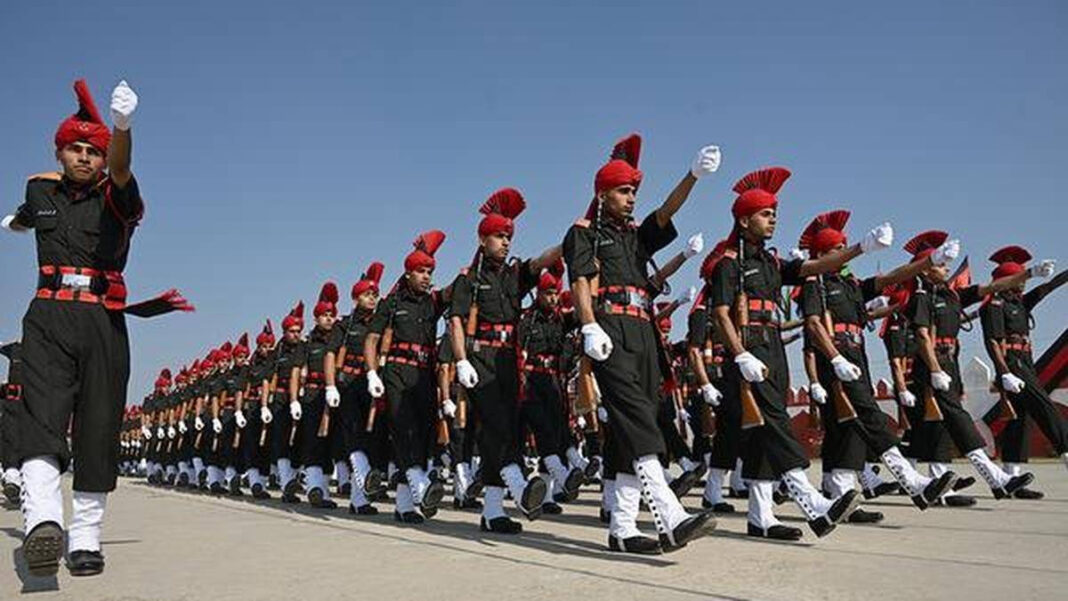
With the first cohort of Agniveers nearing the end of their four-year engagement, the Army, Navy and Air Force have submitted a set of recommendations to the Department of Military Affairs (DMA) aimed at refining implementation of the Agnipath recruitment scheme.
A senior Ministry of Defence official confirmed that the three services had shared their inputs after four years of operating under the new model. A consolidated report drawing on those submissions has been sent to the competent authority for consideration, the official said, without disclosing the specifics of the proposals.
Why the reassessment now
The renewed scrutiny comes as the first batch of Agniveers, who enrolled in 2023, is scheduled to complete its contractual tenure in October 2026. The services have now accumulated multiple cycles of training, deployment and evaluation under the scheme, and are seeking to balance its core objective of maintaining a youthful profile with the operational need for experience and continuity within units.
How the scheme works
Launched in June 2022, Agnipath overhauled the armed forces’ recruitment framework by inducting young men and women aged 17.5 to 21 years as Agniveers on four-year contracts, which include six months of training. At the end of the engagement, up to 25% of each cohort may be absorbed into the regular cadre based on organisational requirements and individual performance. Those retained transition to long-term service as regular personnel, while the remaining 75% exit after four years.
Exiting Agniveers receive a tax-free Seva Nidhi package, created through monthly contributions by the individual matched by the government. The corpus currently stands at around ₹11.71 lakh. Those who complete their four-year term but are not retained do not receive pension or gratuity benefits under the scheme.
Key developments and focus areas
According to the Ministry official, the services’ recommendations stem from practical experience of training and deploying Agniveers across operational and support roles since 2022. While the substance of the submissions has not been made public, they are expected to inform fine-tuning of processes and policies linked to recruitment, training, deployment and transition, in line with the stated goal of keeping the forces youthful without compromising on operational readiness.
At the same time, the government maintains that there is no proposal to alter the current cap that allows up to 25% of each batch to be inducted into the regular cadre, indicating that any changes under consideration are likely to address implementation rather than the scheme’s core parameters.
What happens next
The consolidated report compiled by the DMA is now with the competent authority for review. As the first batch approaches the end of its tenure in October 2026, the services’ feedback is expected to guide incremental improvements to the Agnipath framework derived from on-ground experience, even as the primary features of the model remain unchanged.
Significance
The move signals a maturing of the Agnipath scheme from launch to iterative refinement. With retention at up to 25% and a clear transition pathway for those exiting after four years, the services’ inputs underscore the effort to reconcile a younger force profile with the need to preserve hard-earned expertise and unit cohesion over time.