
After SC notice, BJP accuses Rahul Gandhi of ‘spreading lies and confusion’ over Form 6
The Bharatiya Janata Party (BJP) on Monday rejected Leader of the Opposition Rahul Gandhi’s allegation that changes to Form 6 — the application used to register new voters — were made illegally to benefit the ruling party, arguing that the Supreme Court’s decision to issue notices to the Union government and the Election Commission of India (ECI) reflects a healthy and functioning democratic process.
BJP counters Rahul Gandhi’s allegation
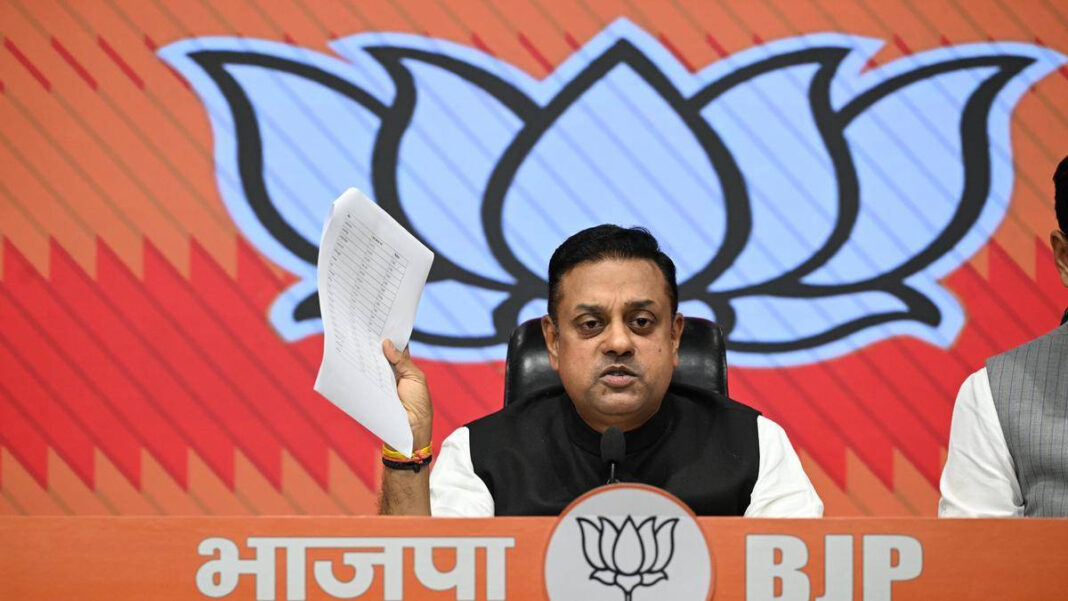
Addressing a press briefing on October 5, 2026, BJP MP and national spokesperson Sambit Patra accused Mr. Gandhi of “spreading lies and confusion regarding Form 6,” and maintained that the Supreme Court had neither termed the form illegal nor struck it down.
Responding to Mr. Gandhi’s post on X, in which the Congress leader alleged that Form 6 was “changed illegally and unilaterally” to help the BJP, Mr. Patra said: “Nowhere in court today did the Chief Justice say that Form 6 was illegal.” He added that the Supreme Court had earlier upheld the declaration attached to Form 6 for the Special Intensive Revision (SIR) of electoral rolls.
Supreme Court notice framed as due process
Mr. Patra underscored that the court’s issuance of notices to the Centre and the ECI was part of the normal judicial process. “Going to the Supreme Court with a PIL, having the Supreme Court hear it, and issuing notice so that the other side can also be heard, is a democratic and judicial process. Therefore, naturally, a process is taking place,” he said.
He stressed that the step signified institutional independence rather than any finding against the use of Form 6. “Expressing differences through letters, raising questions about a process, having a debate and discussion, and then moving forward with consensus, is democracy,” Mr. Patra said.
Context: Debate over election processes and oversight
The remarks came amid ongoing scrutiny of electoral processes and oversight mechanisms. Referring to the reported dissent notes by two Election Commissioners and their communication with Chief Election Commissioner (CEC) Gyanesh Kumar, Mr. Patra described such exchanges as a “healthy sign of democracy.”
He reiterated that diverse views within institutions and subsequent judicial review were indicative of robust checks and balances. “And after that, going to the Supreme Court regarding this entire process, and the Supreme Court issuing notice — that is democracy,” he said.
Institutional independence emphasized
Rejecting claims that an “atmosphere of fear” prevails in the country, Mr. Patra asserted that India’s institutions were functioning independently and within the constitutional framework. “There is no atmosphere of fear in the country. There is an atmosphere of democracy in the country… all institutions in the country are functioning independently, and all institutions are free to perform their duties within the framework of the Constitution of India. Today, the proof of this is before you,” he said.
What comes next
With the Supreme Court having issued notices to the government and the Election Commission, the parties are expected to present their responses as part of the ongoing proceedings. The BJP maintained that this step alone does not imply any adverse judicial finding on Form 6, even as the political back-and-forth over alleged unilateral changes to the voter registration process intensified.
Significance
The BJP’s pushback signals a sharpened political contest over electoral procedures ahead of forthcoming exercises to update voter rolls. While the opposition questions the integrity of changes to Form 6, the ruling party is positioning the Supreme Court’s notice and internal communications within the ECI as evidence of institutional robustness and procedural fairness.
Published: October 05, 2026