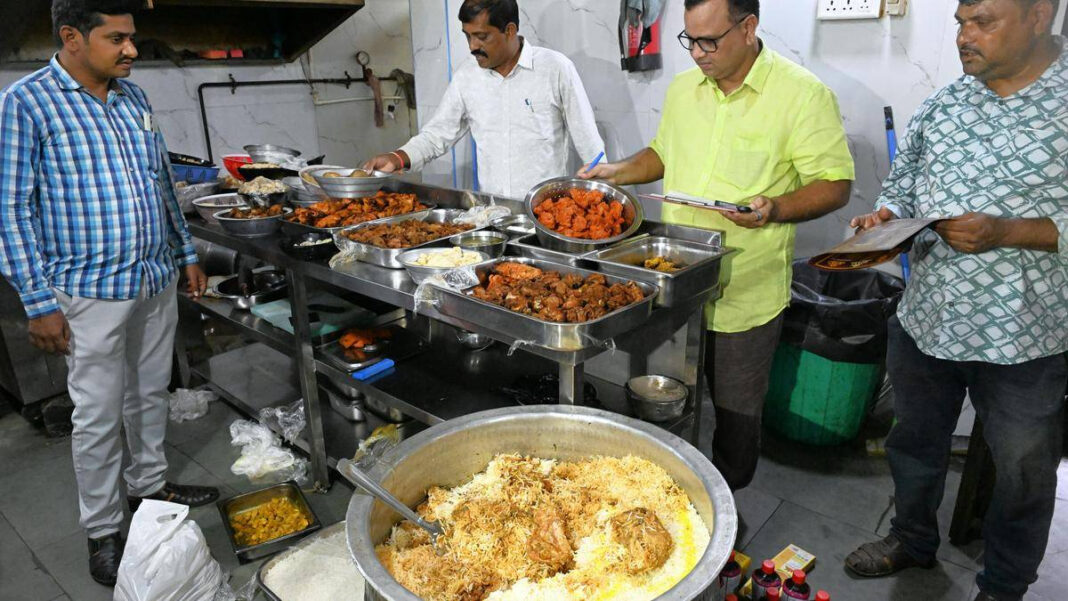

Food cooked days ago, frozen to be served again: inside Visakhapatnam’s restaurant kitchens
Eating out is routine for many in Visakhapatnam, from hurried weekday lunches to family dinners along Beach Road. Diners expect fresh meals served from clean kitchens. But recent surprise checks by the Greater Visakhapatnam Municipal Corporation (GVMC) have exposed troubling practices hidden behind kitchen doors—ranging from days-old cooked food stored for reuse to poor sanitation and questionable water quality—even at popular and highly rated establishments.
Surprise checks triggered by complaint
The latest round of inspections began after an online complaint about a paneer dish served at a well-known vegetarian restaurant on Beach Road. Acting on the grievance, GVMC’s Food Safety team conducted a surprise raid on October 13, 2026. While the kitchen at first appeared orderly, the picture changed when inspectors examined refrigerators and deep freezers.
Officials found multiple containers of previously cooked food—including vegetable biryani, dal, rice, vegetable manchurian, and various vegetarian starters such as samosas—stored at -18°C. Much of it had been prepared one to three days earlier, and was allegedly being retained for reheating and service later. Nearly 46 kilograms of stale food were seized and destroyed on the spot, and a case was filed against the establishment under the Food Safety and Standards Act (FSSA), 2006, according to officials.
The same inspection team visited another restaurant on the same stretch, a new crowd-puller known for its biryani priced at ₹400 per plate. Inspectors alleged that chicken used in the biryani was being stored separately in a refrigerator to be reheated and served the following day. The management was fined ₹70,000 and a case was registered.
Violations cut across the industry
Food safety officials say the lapses reach far beyond a handful of small eateries. Medium-sized restaurants, upscale venues and even star-category hotels have been booked for violations this year. Joint Collector G. Vidhyadhari and GVMC Commissioner Ketan Garg have directed sustained surprise checks at major hotels and restaurants across the city.
So far in 2026, cases have been filed against 128 establishments, with fines totaling nearly ₹28 lakh, officials said. The most frequent violations relate to stale food, unhygienic storage and handling practices, and poor sanitation.
Inside the kitchens: overproduction and risky reuse
GVMC Food Safety Inspector G. V. Appa Rao said many of the violations stem from poor planning by restaurant management. “The most recurring problem is the failure of restaurant management to estimate the quantity of food required for a day’s business. The tendency to cook more than demand often results in surplus food, and instead of disposing of it appropriately, some establishments store it for subsequent use,” he said.
He warned that the risks are greater for perishable items, especially meat. Inspectors have found cooked chicken held for extended periods and rice stored for two to three days and then repurposed to prepare chicken, egg and vegetable fried rice. “If a restaurant prepares food for 100 people but only 60 customers turn up, the remaining food should not simply be stored and served over the next few days,” he said.
Appa Rao added that even highly rated restaurants have been caught disregarding basic safety norms. He cited a recent raid in which inspectors found refrigerated samosas of indeterminate age. “If those stale samosas are served to a child who loves them, without anyone knowing how long they were stored or how they were handled—what happens then?” he asked, emphasizing the responsibility of food business operators to prevent such risks.
Sanitation, water quality and infrastructure gaps
Officials said that food safety is inseparable from the broader condition of the kitchen environment. Inspections have revealed poorly maintained floors; damaged tiles and walls; inadequate drainage; and rusted, worn-out knives and utensils. Personal hygiene among kitchen staff also remains a key area of concern flagged by the teams.
Water quality is another red flag. Some establishments rely on canned water without verifying its safety, while others draw from overhead tanks that are inadequately cleaned. Dirt and sludge in storage tanks raise serious doubts about water used for cooking and washing. In one inspection at a hotel on Beach Road, the team flagged poor kitchen drainage and noted the presence of a poultry unit with around 40–50 hens close to the kitchen, creating dust and contamination risks.
Officials also reported the use of artificial food colours, non-permitted additives, expired products, and repeatedly reheated cooking oil—practices that compromise both safety and quality.
Complaints from diners drive enforcement
Beyond raids, a steady stream of consumer complaints—lodged online and through conventional channels—continues to reveal lapses such as rotten chicken, undercooked food, and mixing of vegetarian and non-vegetarian items. Food safety teams say the most frequent grievances involve uncooked dishes, spoiled poultry, and cross-contamination between veg and non-veg preparations.
For Jeevana, a resident of Murali Nagar, the issue surfaced through a food-delivery order. After paying ₹300 for biryani that she alleged was stale and unfit to eat, she reported the matter to food safety authorities through her ward sachivalayam, spotlighting concerns over quality checks in cloud kitchens and restaurants serving online orders.
Rapid expansion tests enforcement capacity
Biryani outlets, takeaway counters and small kitchens have mushroomed across the city, including around GVMC headquarters, where several establishments draw hundreds of customers daily. But the sheer pace of growth has outstripped enforcement capacity. GVMC currently has only three food inspectors to cover its jurisdiction—responding to complaints, conducting inspections, issuing notices, filing cases and attending court proceedings tied to violations.
The shortage of support staff to assist with legal follow-up and service of notices has further strained the system, leaving inspectors with less time for regular field checks, officials said.
SHE teams step in to broaden oversight
To strengthen ground-level enforcement, GVMC has deployed Sanitation and Health Enforcement (SHE) teams across all 10 zones—20 teams in total, with two per zone. Each team includes a sanitary inspector, a sanitation secretary, a woman police personnel member, and other staff from the ward secretariat system. Assistant Health Officers oversee and monitor their functioning.
The SHE teams are tasked with inspecting two to four establishments daily in their respective zones, extending GVMC’s reach beyond the limited cadre of food inspectors. In addition to identifying violations and initiating enforcement action, the teams conduct awareness campaigns to educate business operators on maintaining clean premises, safe food handling and hygienic kitchens and serving areas. According to officials, the teams impose fines totaling at least ₹80,000 to ₹1 lakh each month for sanitation-related violations.
“The initiative is intended to strengthen ground-level enforcement and improve compliance among food businesses through a combination of inspections, penalties and awareness campaigns,” said S. Kiran Kumar, Assistant Medical Officer of Health (AMOH), Gajuwaka Zone.
What lies ahead
Officials say better compliance hinges on everyday rigor rather than one-off cleanups before inspections. That includes realistic production planning to avoid risky leftovers; strict temperature control and labeling for short-term storage; regular cleaning and maintenance of infrastructure; verified safe water sources; and robust staff hygiene protocols.
As enforcement widens and more cases come to light, the GVMC’s push—through surprise inspections, penalties and public awareness—aims to make kitchen safety a non-negotiable standard across Visakhapatnam’s diverse dining landscape. For consumers, the message is equally clear: what happens behind the kitchen door is as important as what arrives on the plate.