 "
/>

Title: Iran’s New Defense Minister Warns of Severe Consequences for Potential U.S. Aggression
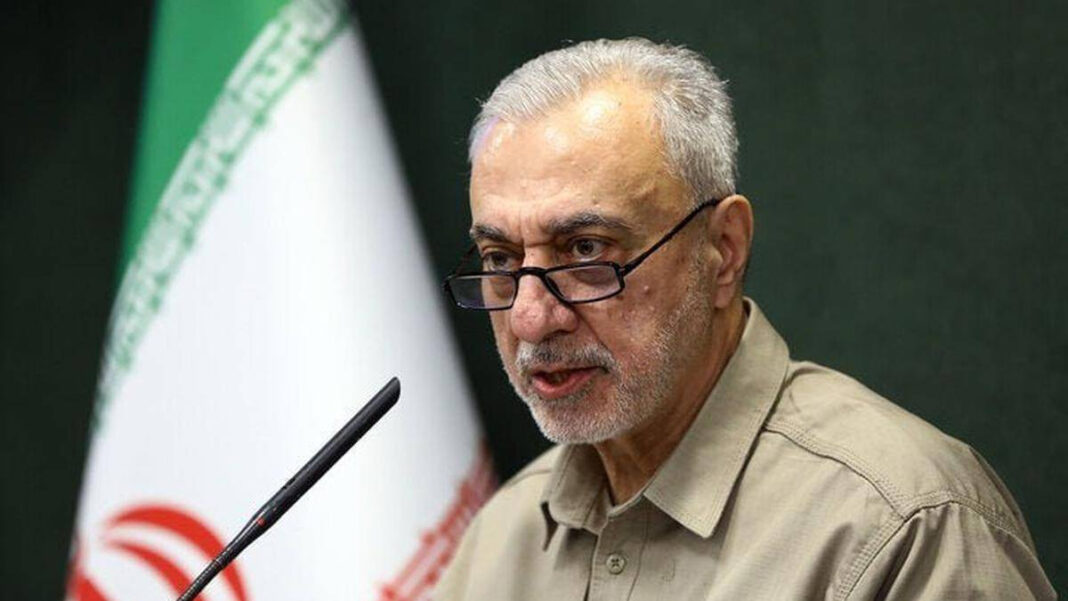
In a bold statement shortly after his appointment, Iran’s new Defense Minister, Mohammad Reza Akhlaghi, issued a stark warning to the United States regarding any potential military actions against Iran. As tensions between the two nations persist, Akhlaghi articulated that any attack would result in “enormous damage,” underscoring Iran’s commitment to its sovereignty and readiness to defend its territory.
Akhlaghi, a seasoned military figure with deep ties to Iran’s Revolutionary Guard and various defense positions, stepped into his role during a time of heightened scrutiny over U.S.-Iran relations. His appointment signals a continuation of hardline policies in Tehran, particularly as diplomatic avenues for engagement appear to be waning.
Rising Tensions
The Iranian government has long perceived the U.S. as a significant adversary, particularly since the Trump administration’s withdrawal from the Iran nuclear deal in 2018 and subsequent imposition of stringent sanctions on the Iranian economy. This animosity has been further fueled by U.S. military presence in the region, which Iran views as a direct threat.
Akhlaghi’s comments echoed sentiments previously expressed by Iranian officials, emphasizing the nation’s determination to respond robustly to any foreign aggression. “The U.S. should understand that any attack will not go unanswered, and we are prepared to inflict substantial damage on any aggressor,” he stated, reinforcing the Iranian military’s readiness to protect its interests.
Military Readiness and Capabilities
Iran has invested significantly in enhancing its military capabilities in recent years, focusing on asymmetric warfare strategies and missile technology. This includes developing drones and precision-guided missiles, which Tehran considers crucial for deterring adversaries in a region characterized by complex geopolitical rivalries.
Akhlaghi’s background in military strategy and defense operations suggests that Iran may continue to bolster its military posture to navigate threats from both regional and global powers. Analysts suggest that Iran may leverage its proxy groups in the region to exert its influence and retaliate against U.S. interests, a tactic it has employed in various conflicts over the past two decades.
The International Response
The international community is closely monitoring these developments, as any escalation could have significant ramifications not just for Iran and the U.S., but for regional stability overall. The Biden administration has sought to revive nuclear negotiations, but progress has been slow, with both sides seemingly stuck in a cycle of mistrust.
Countries in the region, particularly those in the Gulf Cooperation Council (GCC), are watching developments with trepidation, balancing their own security concerns with the need for diplomatic engagement with Iran. The possibility of conflict looms large, and many nations hope for a diplomatic resolution to avoid a potentially disastrous military confrontation.
Conclusion
Minister Akhlaghi’s warning serves as a reminder of the fragile state of U.S.-Iran relations and the potential for miscalculation that could lead to unintended escalation. As the region navigates this tense landscape, the call for dialogue and peaceful resolution remains more critical than ever. Navigating these complexities will require strategic diplomacy and a commitment to finding common ground to avoid the devastating consequences of conflict. The world watches closely as Iran consolidates its military stance and as the U.S. grapples with its strategy in the Middle East, with the hope that dialogue can prevail over aggression.